When families confront the challenging reality of addiction, their focus often gravitates toward visible signs like substance use, secrecy, or financial issues. However, an underlying issue that frequently goes unnoticed is emotional dissociation. Long before addiction manifests in an overt manner, many individuals experience an emotional disconnection from themselves and their surroundings. Families might observe behavioral changes without understanding the emotional dissociation that might be occurring beneath the surface.
Recognizing the signs of emotional withdrawal can be pivotal. It’s not merely a phase of moodiness or stubbornness but rather a critical early warning sign that can contribute to and result from substance abuse. Addressing emotional disconnection is vital for achieving lasting recovery, as it plays a significant role in healing and rebuilding relationships.
What Is Emotional Dissociation?
Emotional dissociation involves a sense of numbness or detachment from one’s emotions, experiences, or relationships. It is a protective psychological response that can arise from stress or emotional pain. This detachment often serves as a coping mechanism, allowing individuals to distance themselves from overwhelming feelings.
Dissociation exists on a spectrum. For some, it might manifest as a mild emotional disengagement, while for others, it can become a severe disconnect. It’s essential to understand that not all dissociation is debilitating, yet when it becomes a frequent coping strategy, it can hinder emotional well-being and personal relationships.
Unlike a clinical psychiatry discussion, the focus here is on understanding dissociation as an emotional response that impacts daily life. Emotional disengagement may initially seem like a helpful escape, but it can lead to deeper issues, especially when substances are used to reinforce this avoidance.
The Connection Between Emotional Dissociation and Addiction
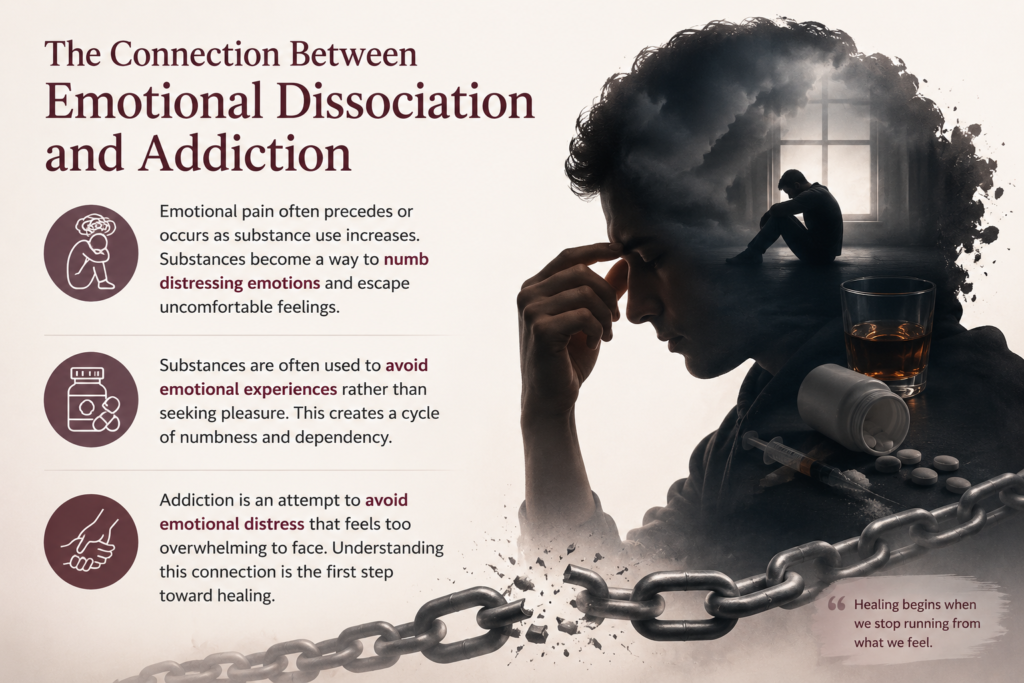
Emotional pain may often precede or occur as substance use increases . For many, substances become a means to temporarily numb distressing emotions and escape uncomfortable feelings. This self-medication creates a cycle where addiction reinforces emotional avoidance, making it difficult to confront the underlying emotional issues.
Substances often serve as tools for avoiding emotional experiences rather than solely seeking pleasure. This escape from emotions can create a reinforcing cycle of numbness and dependency, where individuals rely on substances to maintain an emotional distance.
The key insight here is recognizing that addiction is not just about substance use. It’s an attempt to avoid the emotional distress that feels too overwhelming to face. Understanding this connection can help families support their loved ones in breaking the cycle of emotional and substance dependence.
Why Families Often Misinterpret Emotional Dissociation
Families might misinterpret emotional dissociation with assumptions like, “They are being rude,” “They don’t care anymore,” or “They’ve changed completely.” Such assumptions overlook the internal distress and shame that often drive emotional withdrawal.
Emotional withdrawal may appear as indifference or selfishness, but it frequently reflects a struggle with internal distress. Addiction can create emotional barriers that make open communication and connection challenging, leading to misunderstandings within families.
Helping families develop empathy is crucial, even as they hold individuals accountable for their actions. Recognizing the emotional barriers addiction creates can foster understanding and encourage supportive, non-judgmental family dynamics.
Behavioral Signs Families May Notice
Families might observe reduced emotional expression, withdrawal from conversations, lack of interest in family activities, emotional flatness, or avoidance of difficult discussions. These signs can indicate emotional dissociation and substance use.
Emotional presence differs from physical presence; individuals may be physically present but emotionally absent. This disconnect can gradually erode relationships, as emotional engagement is vital for maintaining healthy connections.
Recognizing these signs as potential indicators of emotional dissociation can help families understand the deeper struggles their loved ones face, beyond mere behavioral changes. This awareness is the first step toward meaningful support and intervention.
How Emotional Dissociation Impacts Relationships
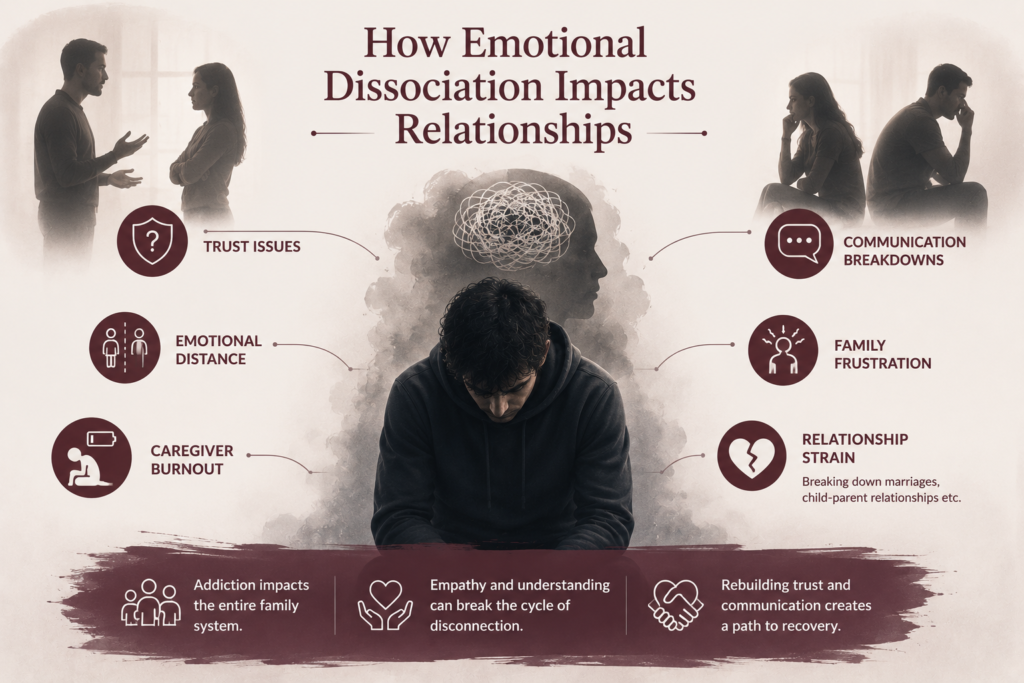
Emotional dissociation can lead to
- trust issues,
- communication breakdowns,
- emotional distance,
- family frustration,
- caregiver burnout, and
- relationship strain breaking down marriages, child-parent relationships etc.
Addiction impacts the entire family system, creating an environment where emotional disconnection fosters misunderstanding and resentment.
Families may unknowingly respond in ways that increase isolation, such as withdrawing support or expressing frustration without understanding the underlying emotional struggles. Itis essential to approach these situations with empathy and a willingness to address emotional disconnection.
By acknowledging the role of emotional dissociation in addiction, families can work towards rebuilding trust and improving communication, creating a supportive environment conducive to recovery.
Supporting Recovery Through Emotional Reconnection
Recovery should be seen as a journey of emotional reconnection- first with oneself and then with those around. Therapy and counseling can facilitate identifying incidents that were perceived to be painful, identifying emotions felt, naming them, understanding them, emotional awareness, and navigating emotions . Thereby an understanding of one’s patterns of thinking and emoting emerge. Healthy communication with oneself is forged first, then build with the family.
Family involvement, happens through regular parallel family counselling, for the families to understand and deal with their emotional baggageall of which are crucial for rebuilding trust and supporting recovery.
Reconnecting with emotions safely, learning emotional regulation, and developing healthy coping strategies are essential components of recovery. These elements help individuals rebuild meaningful relationships and achieve lasting behavioral transformation.
Anatta’s philosophy aligns with this approach, emphasizing individualized healing and the importance of family involvement in the recovery process. Emotional healing plays a critical role in creating a strong foundation for sustainable change.
When Families Should Seek Professional Support
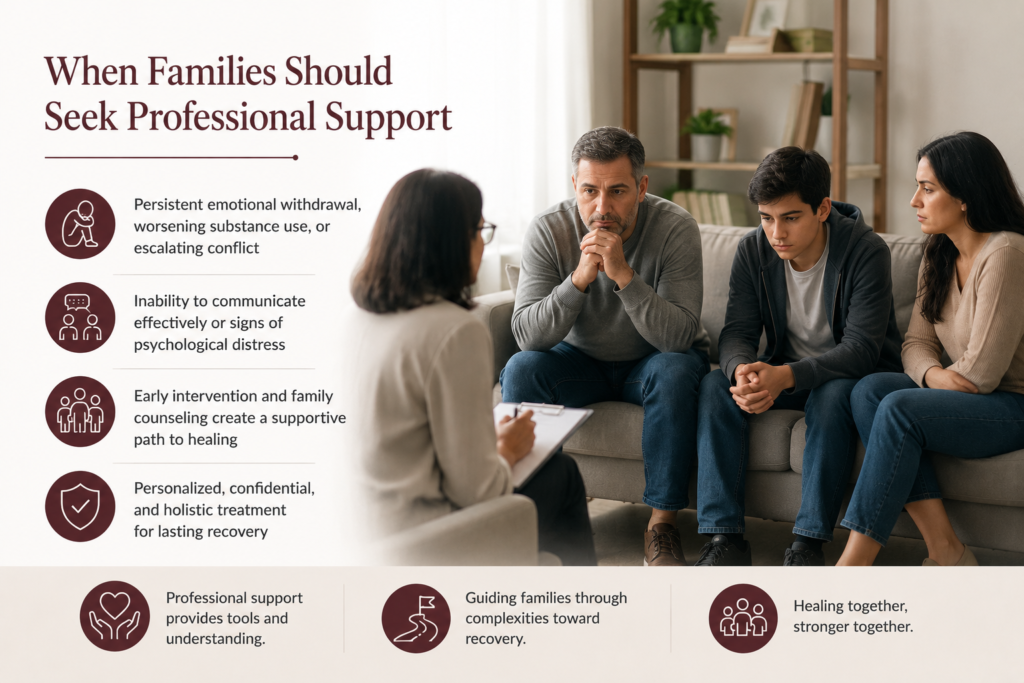
Families should consider seeking professional support in cases of persistent emotional withdrawal, worsening substance use, escalating conflict, or an inability to communicate effectively. Signs of psychological distress should also prompt intervention.
Early intervention is key, and family counseling can offer a supportive environment for addressing emotional disconnection and substance use.
Personalized treatment approaches, such as those provided by Anatta, focus on individual needs and emphasize confidentiality and holistic healing.
By seeking professional support, families can gain the tools and understanding needed to navigate the complexities of addiction and emotional dissociation, fostering a path towards recovery and healing.
Conclusion
Families often focus on substance use, while emotional dissociation remains hidden beneath the surface. Recognizing signs of emotional withdrawal, numbness, and disconnection can help families better understand what their loved one may be experiencing. Lasting recovery involves not only overcoming addiction but also healing emotionally and rebuilding meaningful relationships.
At Anatta, we support this journey through personalized treatment, emotional healing, and family involvement. Our rehabilitation centers across India provide confidential, compassionate care for individuals seeking long-term recovery. Whether you are looking for a Rehabilitation Centre in Mumbai, Rehabilitation Centre in Delhi, Rehabilitation Centre in Pune, Rehabilitation Centre in Kolkata, Rehabilitation Centre in Bengaluru, Rehabilitation Centre in Chennai, Rehabilitation Centre in Hyderabad, Rehabilitation Centre in Nagpur, or Rehabilitation Centre in Jalandhar, professional support is available to help individuals and families begin the path toward healing and long-term recovery.
Further reading:
families might observe behavioral changes – Understand family dynamics in addiction