Many people mistakenly associate alcohol dependence with daily drinking. However, alcohol dependence is defined not just by the frequency of consumption but by the loss of control, psychological reliance, and the behavioral patterns it creates. Even if you only drink on weekends, recurring binge drinking can indicate a pattern of alcohol dependence, especially when alcohol becomes a primary coping mechanism or emotional outlet.
It is a common misconception that if you are not drinking every day, you cannot have an alcohol problem. However, weekend binge drinking poses serious physical and psychological risks. Dependence often develops through patterns rather than frequency alone, meaning that your drinking habits might be more about how and why you drink rather than how often. Understanding this can be the first step towards healthier coping mechanisms and emotional awareness.
What Is Considered Weekend Binge Drinking?
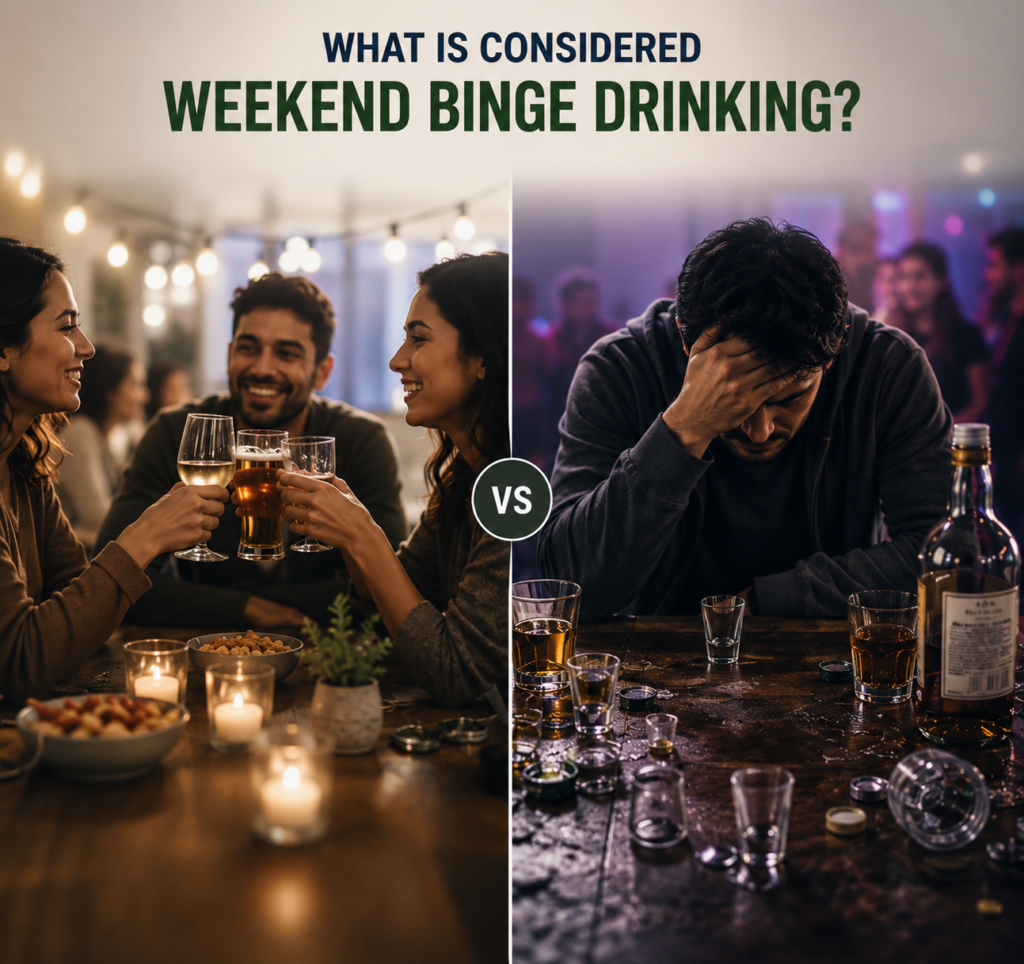
Binge drinking is commonly defined as consuming a large amount of alcohol in a short period, typically resulting in a blood alcohol concentration (BAC) of 0.08% or higher. For men, this usually means drinking five or more drinks in about two hours, while for women, it’s about four drinks within the same timeframe. This pattern often leads to intoxication and is significantly different from moderate social drinking.
While social drinking involves consuming alcohol in a controlled manner during social settings, binge drinking is characterized by rapid consumption that often leads to a lack of control. The level of intoxication attained matters more than simply drinking socially, as it can create long-term behavioural patterns. Recurring binge drinking episodes, even if limited to weekends, can reinforce these patterns, affecting both mental and physical health over time.
It i important to note that binge drinking is not just a phase or a harmless social activity. It can have serious consequences, including alcohol poisoning and long-term health issues. The effects on one’s mental health and behavior can be profound, leading to an increased risk of developing alcohol dependence.
Why Frequency Alone Does Not Define Alcohol Dependence
Alcohol dependence is not merely about how often you drink but about the role alcohol plays in your life. Psychological reliance can develop even in individuals who drink only on weekends, as the anticipation and planning of these drinking sessions can indicate a loss of control. Dependence can manifest as difficulty in limiting intake once drinking has started, or planning weekends around alcohol consumption.
Many people believe they are safe from alcohol dependence because they only drink on weekends. However, the anticipation of these drinking sessions can be an indicator of dependence. Emotional anticipation, such as feeling excited or relieved at the thought of drinking, suggests a psychological reliance that can be problematic. Being unable to focus on one’s daily activities and work in order to plan for the weekend is a red flag.
Challenging the myth that “I only drink on weekends, so Iam fine” is crucial. Alcohol dependence can sneak up on those who believe their controlled drinking schedule protects them. Recognizing the signs early can prevent the escalation of dependence and its consequences.
The Psychological Dependence Behind Weekend Drinking
For many, alcohol serves as a stress relief, a means of emotional escape, or a way to enhance social confidence. This psychological dependence often develops before physical dependence, as alcohol becomes associated with relaxation, celebration, or emotional release.
When alcohol is used consistently as a coping mechanism, it can become an entrenched habit. Repeated reinforcement of this behavior strengthens the habit, making it part of one’s routine. Over time, the individual may find it challenging to relax or socialize without alcohol, indicating a deeper emotional reliance.
This type of dependence is highly relatable, as many people might not even realize they are using alcohol as an emotional crutch. Acknowledging this can help individuals seek healthier coping mechanisms and reduce their reliance on alcohol for emotional well-being.
Common Warning Signs That Weekend Drinking Is Becoming Problematic
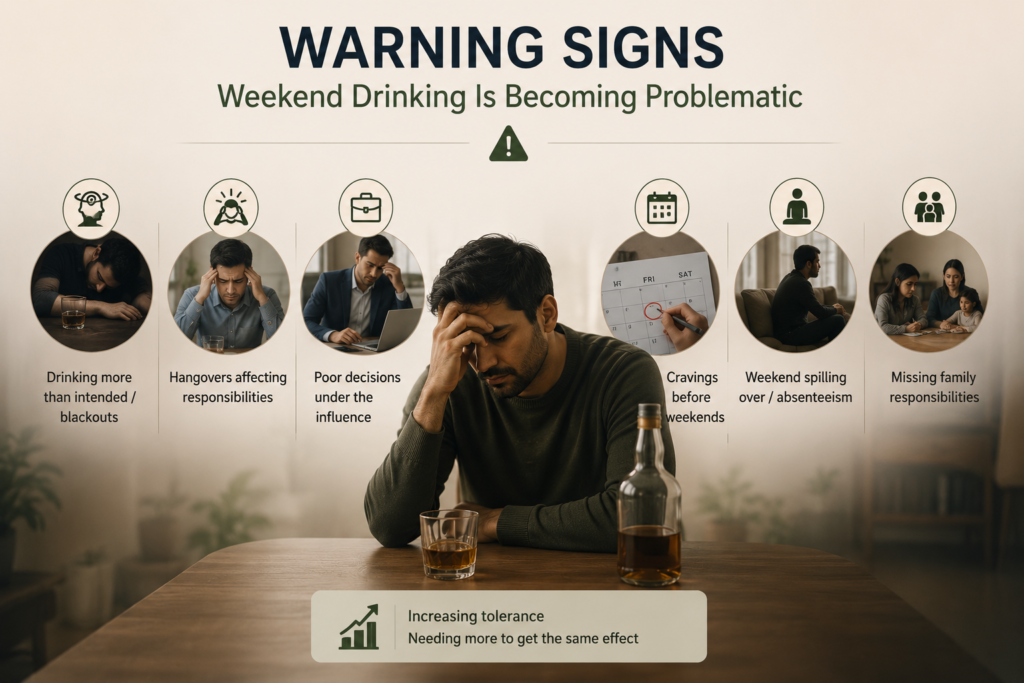
There are several warning signs that weekend drinking might be becoming problematic.
- Drinking more than intended, experiencing blackouts, and
- Having hangovers that affect responsibilities is a red flag.
- Making business decisions that are rash and wrong under the influence
- Additionally, cravings before weekends or repeated regret after drinking can indicate an issue.
- The weekend spilling over to the week leading to absenteeism
- Absenteeism from family functions and responsibilities- depriving family of their presence.
An increasing alcohol tolerance, where more alcohol is needed to achieve the same effects, is another sign of developing dependence. Often, these behaviors are normalized among peers, leading to minimization of consequences and rationalization patterns that prevent self-recognition of the problem.
Self-recognition is key, and understanding these signs can help individuals reflect on their drinking habits without feeling judged. The goal is not to diagnose but to encourage honest self-assessment and early intervention.
How High-Functioning Individuals Often Overlook Alcohol Dependence
High-functioning individuals with successful careers, stable finances, and active social lives may believe they are immune to alcohol dependence. However, outward functionality does not eliminate the risk of dependence. Alcohol dependence can remain hidden for years, masked by professional success and a busy lifestyle.
In many corporates weekend drinking and off-sites meets where drinking alcohol is an integral part is common.
This demographic may overlook unhealthy coping patterns, as their achievements and responsibilities seem unaffected. Yet, the emotional and psychological impact of weekend binge drinking can still be significant. Understanding that functioning well does not equate to being free from dependence is crucial for early intervention.
For this audience, recognizing the subtle signs of alcohol misuse can lead to proactive steps towards healthier lifestyle choices. It’s about embracing self-awareness and making informed decisions about alcohol consumption.
The Impact of Weekend Binge Drinking on Mental and Emotional Health
Weekend binge drinking can significantly impact mental and emotional health. It often leads to anxiety after drinking, mood instability, and poor sleep quality. These factors can contribute to difficulties in emotional regulation and increased stress sensitivity.
Alcohol affects brain chemistry, causing emotional rebound effects that can perpetuate a cycle of stress and drinking. The temporary relief that alcohol provides is often followed by emotional and psychological consequences that can be detrimental to overall wellbeing.
Connecting alcohol use to emotional wellbeing rather than just physical health is essential. Understanding these impacts can motivate individuals to seek healthier coping strategies and reduce their reliance on alcohol for emotional support.
When to Consider Seeking Support
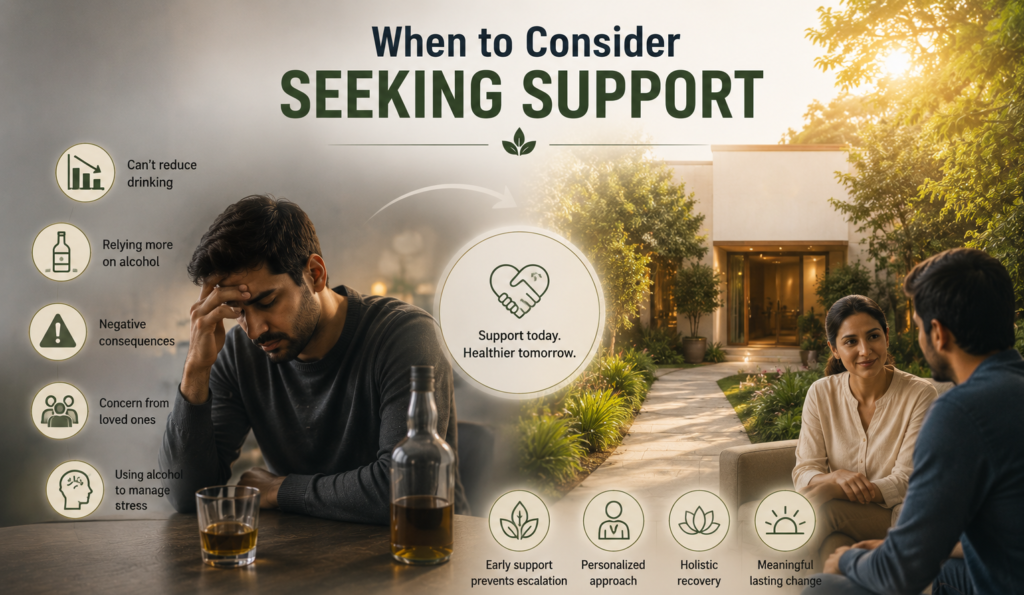
Recognizing the need for support is not a sign of weakness but a step towards healthier living. If there is an inability to reduce drinking, increasing reliance on alcohol, or recurring negative consequences, it may be time to seek help. Concern from loved ones and dependence on alcohol to relieve emotional stress are also indicators.
Early support can prevent the escalation of alcohol dependence. Personalized recovery approaches can help address the underlying drivers of problematic drinking habits, fostering a healthier relationship with one’s emotional wellbeing.
Anatta offers a voluntary, non-medical, holistic approach to recovery, focusing on individualized treatment rather than group therapy. This personalized support can empower individuals to make meaningful changes before alcohol begins to affect their health, relationships, or emotional wellbeing.
Weekend binge drinking may appear harmless because it is limited to certain days, but dependence is often defined by the role alcohol plays in a person’s emotional life rather than the number of days they drink. Recognizing problematic drinking patterns early can create opportunities for meaningful change. Understanding the reasons behind alcohol use is often the first step toward healthier and more sustainable coping strategies.
Further reading:
Understanding the disease of addiction: https://anatta.in/substance-use-disorder-symptoms-causes-treatment/