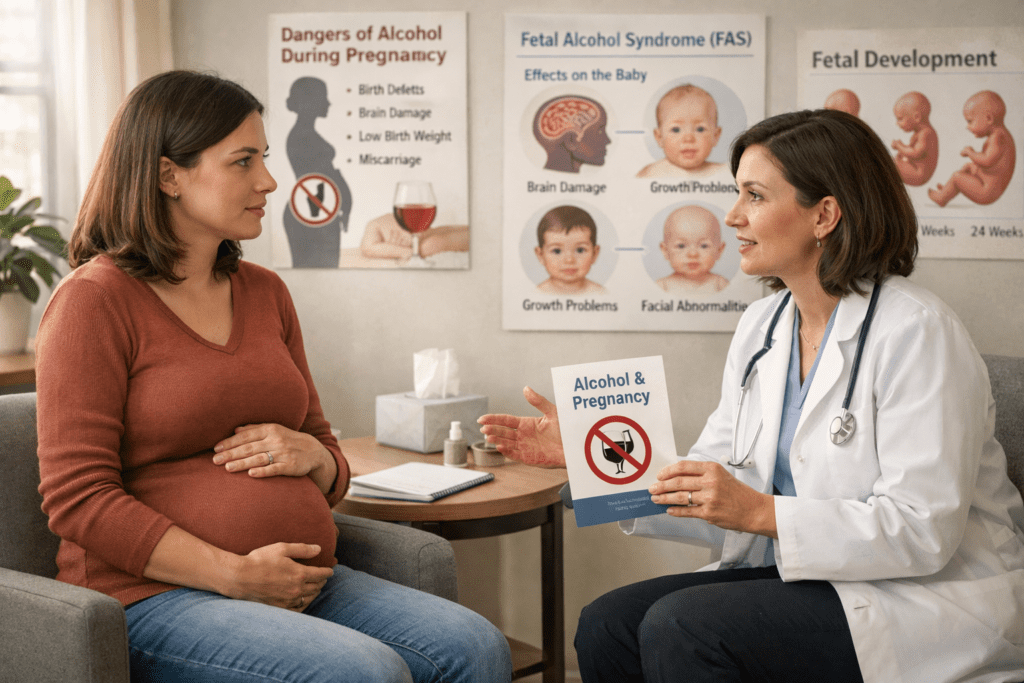
Foetal Alcohol Syndrome (FAS) is a serious condition resulting from alcohol exposure during pregnancy. It affects the physical and mental development of the child. Understanding FAS is crucial, especially for families dealing with addiction. This article explores the signs, effects, and prevention of Fetal Alcohol Syndrome FAS in a straightforward manner. We focus on the non-medical approaches that Anatta offers, emphasizing individual treatment and family involvement.
What is Foetal Alcohol Syndrome?
The National Organization on FAS (NOFAS 2004), US, defined fetal alcohol spectrum disorders as the range of effects that can occur in a person whose mother drank alcohol during pregnancy, including physical, mental, behavioural, and learning disabilities, with possible lifelong implications. As this definition implies, multiple diagnostic categories – e.g. fetal alcohol syndrome (FAS), alcohol-related neurodevelopment disorder (ARND), and alcohol-related birth defects (ARBD) are included under the term FASD. When signs of brain damage appear following fetal alcohol exposure in the absence of other indications of FAS, the condition is termed “alcohol related neurodevelopmental disorder” (ARND)(11).
It is important to understand that FAS is preventable. Not drinking alcohol during pregnancy is the best way to prevent it.
Anatta’s approach to dealing with addiction includes educating families about the risks and encouraging support systems that can help prevent such conditions from occurring.
Identifying Features of Foetal Alcohol Syndrome
Specific facial features often identify FAS. These include a smooth ridge between the nose and upper lip, small head size, and narrow eye openings. These features can help in diagnosing the condition early.
Beyond facial characteristics, FAS may cause heart defects, kidney problems, and issues with bones and joints. Recognizing these features is important for providing the right support to affected children.
Anatta’s non-medical treatment focuses on creating awareness among families about these early signs, enabling them to seek help promptly.

Causes and Effects
The primary cause of FAS is alcohol consumption during pregnancy. The developing brain is highly sensitive to alcohol, which can lead to lifelong complications.
Children with FAS may experience developmental delays, learning disabilities, and behavioural issues. These effects are not only challenging for the child but also impact the entire family.
Anatta emphasizes the importance of family involvement in treatment, helping families to support their child and adapt to the challenges posed by FAS.
Impact of Foetal Alcohol Syndrome on Adults
The effects of FAS are not limited to childhood. Adults with FAS may face ongoing challenges. These can include difficulties with employment, social relationships, and independence.
Signs in Adults of FAS, hypertension, physical constitutional anomalies can be present, can have irritability, ADHD, anger issues, depressive traits, suicidal tendencies, prone to addiction, low IQ, etc
Understanding the long-term impact of FAS is crucial for developing effective support systems. Adults may require continuous assistance to manage their condition effectively.
Anatta’s holistic, alternative life therapy is designed to provide ongoing support, helping individuals lead fulfilling lives despite the challenges posed by FAS.
The Role of Family in Managing Foetal Alcohol Syndrome
Family plays a crucial role in managing FAS. Supportive family environments can significantly improve outcomes for those affected.
Co-dependency within families can be challenging, but addressing these issues is part of Anatta’s treatment approach. Families learn to create a nurturing environment that promotes healing and growth.
Through education and counselling, families can become powerful allies in the journey towards managing FAS effectively.

Non-Medical Approaches to Foetal Alcohol Syndrome
Anatta specializes in non-medical treatments, focusing on individual therapy rather than group settings. This personalized approach ensures confidentiality and tailored support.
Alternate Life Therapy, practiced by Anatta, helps individuals explore new ways of living and coping with challenges. This holistic approach addresses the mind, body, and spirit.
This method has been shown to be effective, with Anatta boasting an 80-85% success rate in helping clients overcome addiction and related challenges such as FAS.
Prevention Strategies for Foetal Alcohol Syndrome
Preventing FAS involves abstaining from alcohol during pregnancy. Education and awareness are key components in preventing this condition.
Anatta provides resources and support to individuals and families, helping them understand the risks associated with alcohol consumption during pregnancy.
By fostering a supportive community, Anatta empowers families to make informed decisions and prevent FAS from occurring.
The Importance of Confidential and Destination Treatment
Anatta’s treatment process is voluntary and confidential, offering individuals and families privacy and peace of mind. Seeking support through discreet rehabilitation in Mumbai ensures a safe, stigma-free environment for recovery.
Destination treatment enables individuals to concentrate entirely on healing, free from everyday distractions, thereby fostering lasting transformation.
Frequently Asked Questions
Ques. How can Foetal Alcohol Syndrome be prevented?
Ans. Foetal Alcohol Syndrome is completely preventable by avoiding alcohol throughout pregnancy. Awareness, early recovery support, and access to alcohol dependence treatment options play a crucial role in prevention.
Ques. Can occasional drinking during early pregnancy cause Foetal Alcohol Syndrome?
Ans. Yes. Even occasional drinking during early pregnancy can disrupt fetal brain development. Understanding the effects of alcohol on women’s bodies highlights why complete abstinence is essential.
Ques. Is Foetal Alcohol Syndrome common in India?
Ans. Foetal Alcohol Syndrome is widely underdiagnosed in India due to stigma and limited awareness. Many children remain misdiagnosed without access to timely, supportive interventions.
Ques. Can Foetal Alcohol Syndrome be detected before birth?
Ans. FAS cannot be conclusively diagnosed before birth, but identifying alcohol exposure early allows counselling and preventive steps that reduce further harm during pregnancy.
Ques. Are there specific facial features linked to Foetal Alcohol Syndrome?
Ans. Yes. Common features include a smooth upper-lip ridge, small head size, and narrow eye openings. A detailed overview is available in Foetal Alcohol Syndrome signs and effects
Ques. Does Foetal Alcohol Syndrome worsen as the child grows?
Ans. The condition itself does not worsen, but learning, behavioural, and emotional challenges often become more visible as the child faces increasing academic and social demands.
Ques. What are the long-term effects of Foetal Alcohol Syndrome on adults?
Ans. Adults may struggle with employment, relationships, impulse control, and independence. Ongoing emotional and behavioural support improves stability and long-term quality of life.
Ques. Can therapy improve life outcomes for someone with Foetal Alcohol Syndrome?
Ans. Yes. Structured therapy and non-medical, holistic rehabilitation approaches help improve emotional regulation, coping skills, and daily functioning.
Ques. Are behavioural issues in FAS children often mistaken for poor parenting?
Ans. Yes. Neurological effects are frequently misunderstood as discipline problems, increasing stigma. Education and family-centred healing approaches reduce blame and stress.
Ques. How does addiction recovery help prevent Foetal Alcohol Syndrome?
Ans. Addiction recovery before or during pregnancy reduces alcohol exposure risks and strengthens family-centred addiction recovery, helping prevent Foetal Alcohol Syndrome in future generations.