Cocaine has been the party drug of choice of the movers and shakers for a long time now. Currently it has insidiously become a part of high end weddings, parties, birthday parties across the country.
As is wont with any substance use, one rarely can limit oneself to a single substance. Eg, alcohol with cigarettes, or tobacco products, weed with pills, etc. Likewise Cocaine is combined many times with alcohol too, as with other substances like marijuana, or pills to balance the downer that sets in soon after snorting .
However, the concurrent use of alcohol and cocaine is very dangerous. As a consequence, the use abuse and addiction to both cocaine and alcohol simultaneously is on the rise.
Many concurrent users need alcohol in order to use cocaine. Alcohol is a downer. Snorting cocaine causes an instant high; however the quantum of cocaine consumed can be more as the person is already intoxicated with alcohol. Most times in order to bring down the high of cocaine and to sleep, also to enhance the effect of cocaine and ease out the negative effects of a cocaine dip as the effect reduces, alcohol is again drunk. The quantum of alcohol required to be consumed in order to bring down the high is also quite a bit.
Thus, because alcohol and cocaine are so dissimilar this is extremely dangerous and can lead to alcohol poisoning that is fatal.
THE BIOCHEMISTRY OF COCAINE AND ALCOHOL TOGETHER
[ref https://pmc.ncbi.nlm.nih.gov/articles/PMC8956485/]
Cocaine on its own blocks the re-uptake of dopamine receptors and serotonin receptors in the brain. Combining cocaine with alcohol produces a substance called cocaethylene. Cocaethylene is an esterase that forms due to the combination of cocaine with alcohol. It has a longer half life than cocaine and has a long lasting psychoactive effect. This happens because it affects the re uptake of dopamine, thus providing more quantum of dopamine for a longer duration.
Cocaine affects the heart resulting in elevated blood pressure, cardiovascular diseases, myocardial infarctions, arrhythmias etc. Cocaethylene is 10 times more cardiotoxic than cocaine.
There have been numerous incidents of death due to this, owing to cardiovascular events that are fatal.
Signs and Symptoms of Simultaneous Use
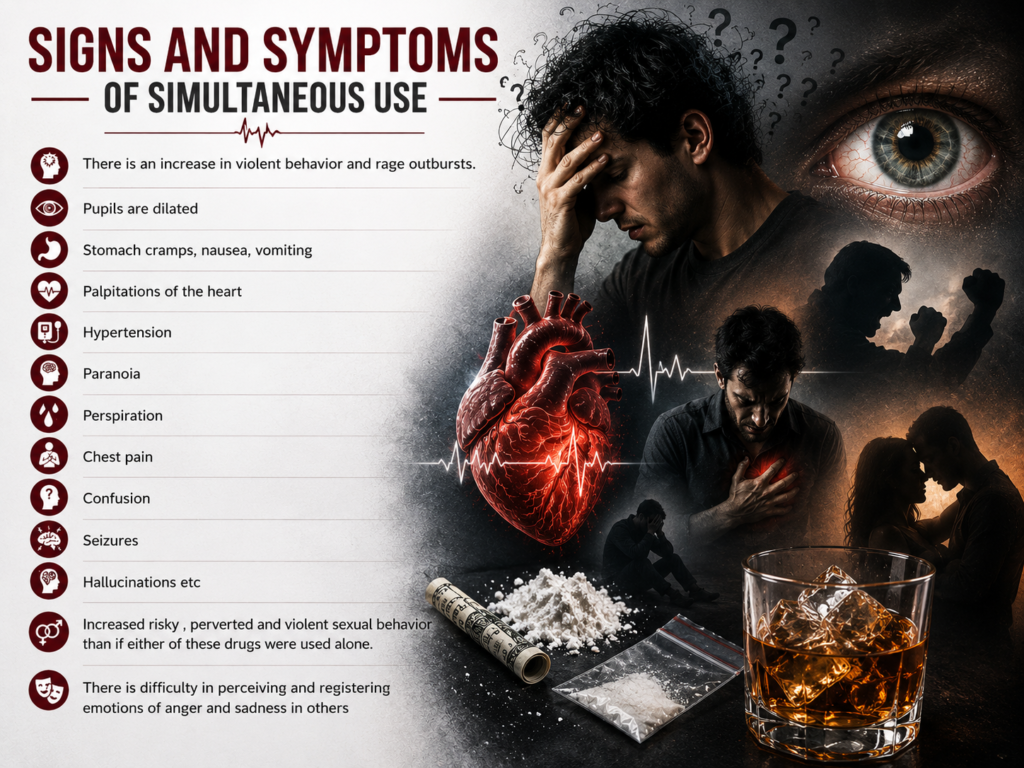
- There is an increase in violent behavior and rage outbursts.
- Pupils are dilated
- Stomach cramps, nausea, vomiting
- Palpitations of the heart
- Hypertension
- Paranoia
- Perspiration
- Chest pain
- Confusion
- Seizures
- Hallucinations etc
- Increased risky, perverted and violent sexual behavior than if either of these drugs were used alone.
- There is difficulty in perceiving and registering emotions of anger and sadness in others
Long Terms Effects of Simultaneous Use
- Anosmia
- Nose bleed due to damage to nasal septum
- Hypertension
- Chronic runny nose
- Problems in swallowing
- Cardiomyopathy
- Liver damage, cirrhosis
- Cardiac arrests
- Psychosis
- Gross mood swings
- Depression
Treatment
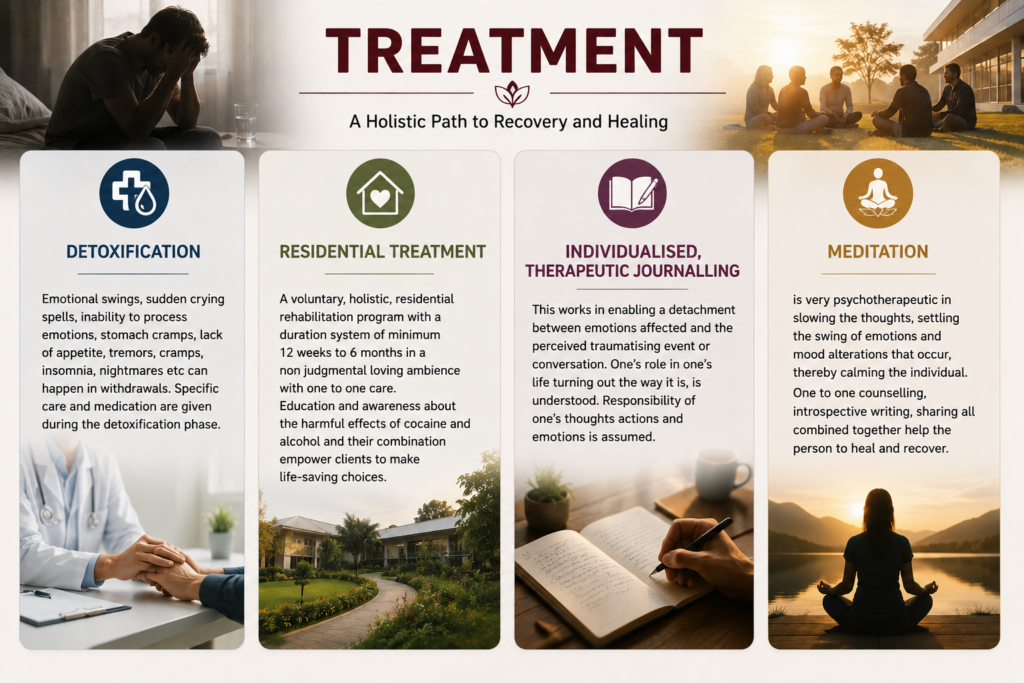
Detoxification
Emotional swings, sudden crying spells, inability to process emotions, stomach cramps, lack of appetite, tremors, cramps, insomnia, nightmares etc can happen in withdrawals. Specific care and medication are given during the detoxification phase.
Residential treatment
A voluntary, holistic, residential rehabilitation program with a duration system of minimum 12 weeks to 6 months can be required depending on the quantum, frequency and duration of use, in a non judgmental loving ambience wherein one to one care is given. Education of clinicians and the clients regarding the harmful effects of cocaine and alcohol and their combination is essentials. This is to ensure awareness amongst clinicians to enable them to treat patients better and as the right questions. The patient benefits, by making them aware of the race to death which they will win if they use these substances.
Individualised, therapeutic journalling
This works in enabling a detachment between emotions affected and the perceived traumatising event or conversation. One’s role in one’s life turning out the way it is, is understood. Responsibility of one’s thoughts actions and emotions is assumed.
Meditation
Meditation is very psychotherapeutic in slowing the thoughts, settling the swing of emotions and mood alterations that occur, thereby calming the individual.
One to one counselling, introspective writing, sharing all combined together help the person to heal and recover.
We at Anatta Humanversity provide such an ambience.
Awareness of the right solutions need to spread. Help is available.