
Recovery from addiction is about more than stopping alcohol or drug use. It also involves rebuilding relationships, managing emotions, and learning to enjoy everyday life again.
However, some people feel empty or disconnected during recovery. They may find it hard to feel happiness, sadness, excitement, or love. Even when life starts to improve, they may feel as if something is missing.
This experience is called emotional numbness.
Emotional numbness can make recovery confusing. You may want to feel happy but struggle to enjoy the things you once loved. You may care about your family but find it difficult to express your feelings.
These experiences do not mean that recovery is failing. Emotional numbness can have different causes, and understanding them is an important step toward healing.
In this guide, we explain what emotional numbness means, why it may happen during addiction recovery, and how to find the right support.
What Is Emotional Numbness?
Emotional numbness is a feeling of being disconnected from your emotions. You may find it difficult to recognise, express, or fully experience what you feel.
For example, a person experiencing emotional numbness may:
- Feel empty even when good things happen.
- Lose interest in hobbies and activities.
- Find it hard to cry or express sadness.
- Feel distant from friends and family.
- Feel little excitement about the future.
- Struggle to explain their feelings.
- Feel as if they are watching life instead of taking part in it.
Emotional numbness can affect people in different ways. Some may experience it for a short time, while others may need professional help to understand why it is happening.
It is a symptom, not a diagnosis by itself. A healthcare professional can help identify its possible cause.
Why Does Emotional Numbness Happen During Addiction Recovery?
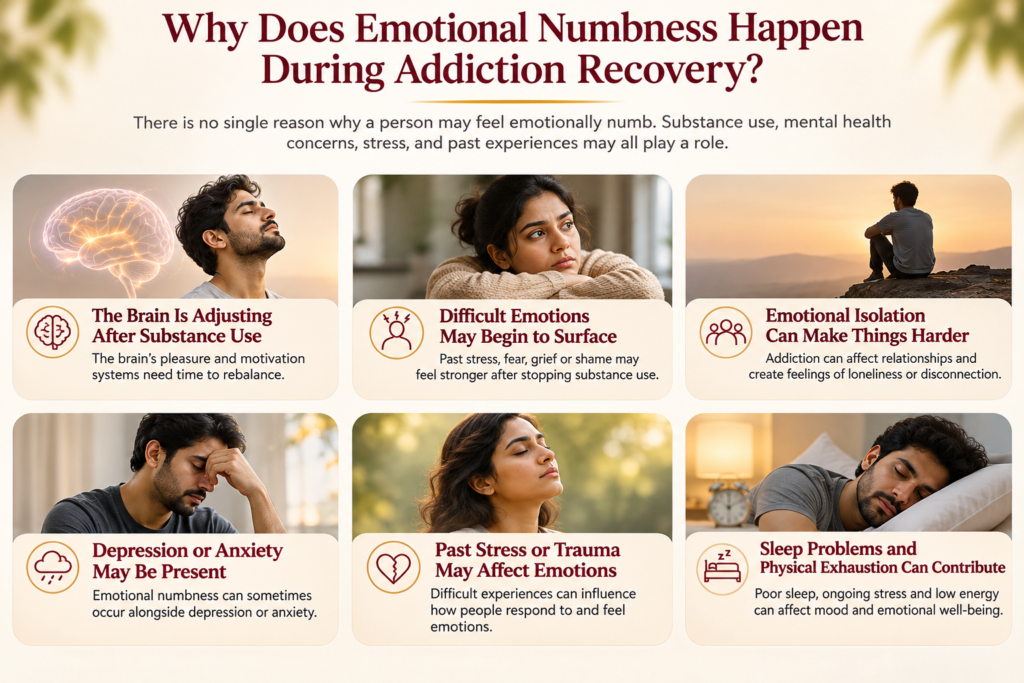
There is no single reason why a person may feel emotionally numb. Substance use, mental health concerns, stress, and past experiences may all play a role.
1. The Brain Is Adjusting After Substance Use
Alcohol and drugs affect brain systems linked to pleasure, motivation, stress, and emotions.
After stopping substance use, some people find that everyday activities no longer feel as enjoyable as before. Spending time with family, listening to music, eating favourite foods, or meeting friends may not bring the same pleasure.
This can be linked to a condition called anhedonia, which means having less ability to feel pleasure.
The brain and body may need time to adjust, but recovery experiences differ from person to person. Ongoing symptoms should not be ignored.
2. Difficult Emotions May Begin to Surface
Some people use alcohol or drugs to cope with stress, fear, grief, shame, or painful memories.
When substance use stops, these feelings may become harder to avoid. A person may feel overwhelmed and begin to shut down emotionally.
They may struggle to explain what is wrong or feel unable to respond to situations as they once did.
Learning healthier ways to manage difficult emotions can help support recovery.
3. Emotional Isolation Can Make Things Harder
Addiction can affect relationships and create feelings of shame, loneliness, or disconnection.
Even when people are surrounded by others, they may feel alone or believe that nobody understands what they are going through.
Understanding the connection between emotional isolation and addiction can help readers explore why emotional connection matters during recovery.
Supportive relationships can make it easier to share difficult feelings and ask for help.
4. Depression or Anxiety May Be Present
Emotional numbness can sometimes occur alongside depression or anxiety.
A person may feel empty, lose interest in daily activities, experience low energy, or find it difficult to connect with others.
The US Substance Abuse and Mental Health Services Administration (SAMHSA) explains that substance use and mental health concerns can occur together and may need attention as part of recovery.
Emotional numbness alone does not confirm depression. A qualified healthcare professional can assess the symptoms and recommend suitable care.
5. Past Stress or Trauma May Affect Emotions
Difficult experiences can influence how people respond to emotions. Some may feel disconnected when they are stressed, frightened, or reminded of painful events.
This does not mean that every person experiencing emotional numbness has a history of trauma.
If past experiences seem to affect recovery, a trained mental health professional can help the person explore them safely and at their own pace.
6. Sleep Problems and Physical Exhaustion Can Contribute
Poor sleep, ongoing stress, low energy, and changes in daily routines can affect mood and emotional well-being.
Some medicines may also affect how a person feels. Never stop or change prescribed medication without speaking to the prescribing clinician.
If emotional numbness continues, a healthcare professional can assess possible physical, psychological, and treatment-related causes.
What Are the Common Signs of Emotional Numbness?
Emotional numbness may affect thoughts, behaviour, relationships, and daily life.
Common signs include:
- Feeling empty: Life may feel dull or without meaning.
- Loss of interest: Activities that once felt enjoyable may no longer bring pleasure.
- Difficulty expressing feelings: You may struggle to explain what is happening inside.
- Feeling disconnected: You may feel distant from friends, family, or your surroundings.
- Reduced emotional response: Good or bad news may not affect you as expected.
- Avoiding conversations: Talking about feelings may feel uncomfortable.
- Difficulty enjoying relationships: You may care about loved ones but struggle to feel close to them.
- Feeling detached from yourself: You may feel as if you are not fully present in your own life.
These signs can have different causes. They should not be used alone to diagnose a mental health condition.
Is Emotional Numbness Normal During Addiction Recovery?
Some emotional changes can happen during recovery as the body and mind adjust after substance use. However, persistent emotional numbness should not automatically be considered a normal part of recovery.
Consider speaking to a healthcare professional if emotional numbness:
- Continues or gets worse.
- Affects your work, relationships, or daily responsibilities.
- Comes with ongoing sadness, hopelessness, or loss of interest.
- Makes it difficult to care for yourself.
- Increases your desire to return to alcohol or drugs.
- Appears with other new or concerning symptoms.
You do not need to wait until the problem becomes severe before asking for help.
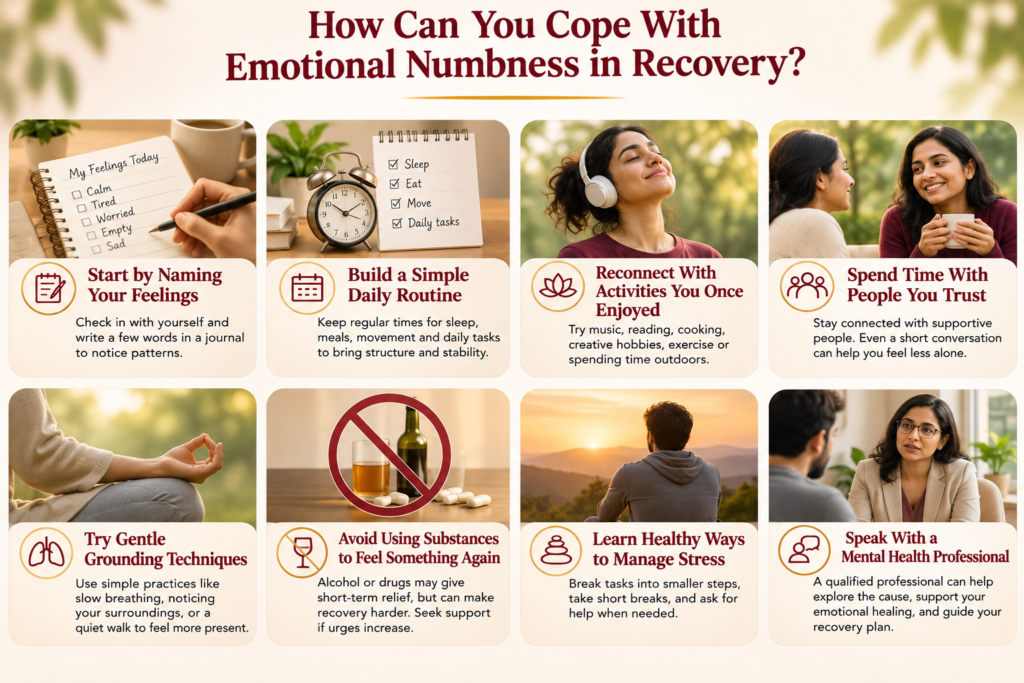
How Can You Cope With Emotional Numbness in Recovery?
Emotional healing takes time. You do not need to force yourself to feel happy or pretend that everything is fine. Small, steady steps may help you reconnect with yourself.
1. Start by Naming Your Feelings
You may not know exactly what you feel at first. That is okay.
Once or twice a day, take a moment to ask yourself:
- Do I feel calm, tired, worried, empty, or sad?
- Did anything today make me feel more connected?
- Did any situation make me feel uncomfortable or withdrawn?
Writing a few words in a journal can help you notice patterns without judging yourself.
You can also explore different ways of using journaling to support addiction recovery.
2. Build a Simple Daily Routine
A regular routine can provide structure when emotions feel unclear.
Try to keep consistent times for sleeping, eating, moving your body, and completing daily tasks.
Start with small goals. For example, take a short walk, prepare a meal, or spend ten minutes on an activity you once enjoyed.
A routine cannot treat every cause of emotional numbness, but it may support your overall well-being.
3. Reconnect With Activities You Once Enjoyed
You may not feel excited about hobbies right away. Still, taking part in enjoyable or meaningful activities can help you rebuild a sense of connection.
Consider:
- Listening to music.
- Spending time outdoors.
- Cooking or reading.
- Doing something creative.
- Taking part in a gentle exercise.
- Spending time with a trusted friend.
Focus on taking part rather than expecting an immediate emotional response. Not enjoying an activity at first does not mean you have failed.
4. Spend Time With People You Trust
Emotional numbness can make you want to withdraw from others. However, safe and supportive relationships can help reduce isolation.
You do not have to explain everything at once. You could simply tell a trusted person, “I have been feeling disconnected lately, and I am trying to understand why.”
If talking feels difficult, start with a short conversation or a shared activity.
5. Try Gentle Grounding Techniques
Grounding techniques can help you pay attention to the present moment.
You could try:
- Naming five things you can see.
- Noticing how your feet feel on the floor.
- Taking slow, comfortable breaths.
- Paying attention to the sounds around you.
- Taking a quiet walk and noticing your surroundings.
These techniques may help some people feel more present. They are not a replacement for professional care, especially if numbness is severe or linked to trauma.
6. Avoid Using Substances to Feel Something Again
When emotions feel distant, a person may be tempted to use alcohol or drugs to seek excitement, comfort, or relief.
This can make recovery harder over time. Substance use may offer a short-term change in mood without addressing the reason for emotional numbness.
If these feelings increase your urge to use, speak with your counsellor, therapist, or recovery support person. You deserve help with the feelings behind that urge.
7. Learn Healthy Ways to Manage Stress
Stress can make it harder to understand and manage emotions.
Try breaking large tasks into smaller steps, taking short breaks, and asking for help when you need it.
You may also find it useful to understand the link between stress and addiction.
If stress feels overwhelming or continues to affect your daily life, consider seeking professional support.
8. Speak With a Mental Health Professional
A psychologist, psychiatrist, or another qualified healthcare professional can help explore why you feel emotionally numb.
Depending on your needs, support may include:
- Individual counselling or psychotherapy.
- Assessment for depression, anxiety, or trauma-related symptoms.
- Review of sleep, physical health, and medication.
- Skills for managing difficult emotions.
- Addiction treatment and ongoing recovery support.
Treatment should be based on your needs and circumstances. There is no single approach that works for everyone.
How Can Therapy Help With Emotional Numbness?
Therapy can provide a safe space to explore emotions without pressure or judgement.
A therapist may help you:
- Recognise and name your feelings.
- Understand situations that lead to emotional withdrawal.
- Develop healthier coping skills.
- Work through difficult experiences at a manageable pace.
- Improve communication and relationships.
- Build a plan for handling emotional challenges during recovery.
Some people may need support for depression, anxiety, trauma, or another health concern. Others may benefit from learning how to recognise emotions before they become overwhelming.
How Can a Supportive Rehabilitation Environment Help?
A supportive rehabilitation environment can provide time and space to focus on recovery away from daily pressures and substance-related triggers.
Depending on the programme, support may include counselling, structured routines, emotional awareness exercises, family sessions, and ongoing recovery planning.
For someone who needs a structured setting, learning about a rehabilitation centre in Mumbai may be one step in exploring available support. The right programme should match the person’s health needs, preferences, and level of care.
Ongoing support can also matter when a person returns to everyday life. Exploring drug rehabilitation support in Pune can help individuals and families learn more about structured recovery options.
Rehabilitation is not an instant or guaranteed solution to emotional numbness. A suitable programme should help identify concerns, provide appropriate support, and arrange further medical or mental health care when needed.
How Can Family Members Support Someone Experiencing Emotional Numbness?
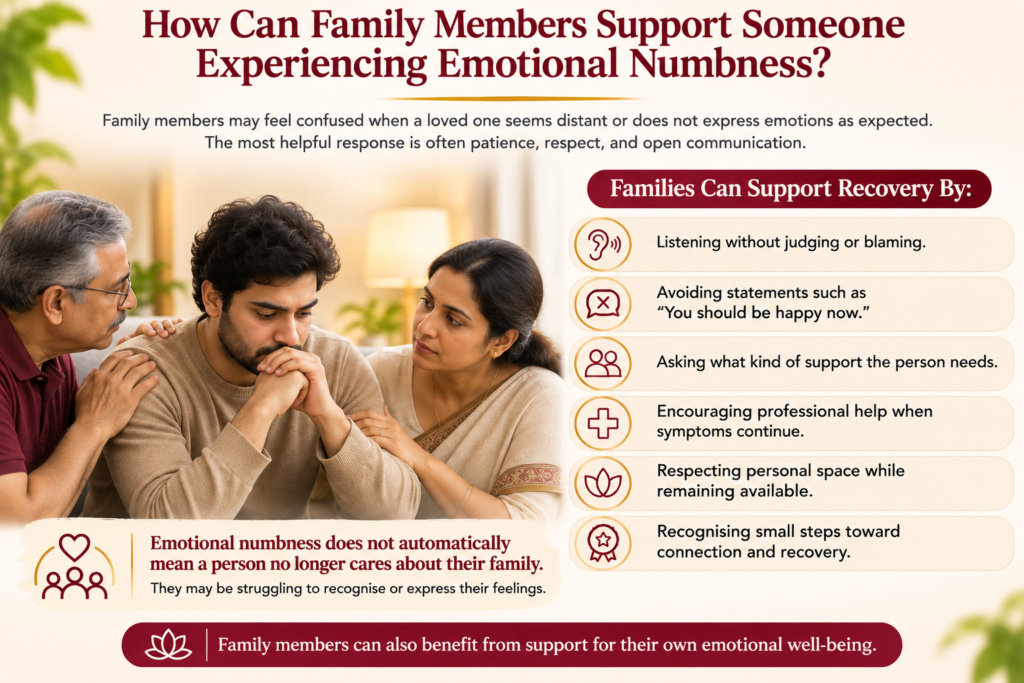
Family members may feel confused when a loved one seems distant or does not express emotions as expected.
The most helpful response is often patience, respect, and open communication.
Families can support recovery by:
- Listening without judging or blaming.
- Avoiding statements such as “You should be happy now.”
- Asking what kind of support the person needs.
- Encouraging professional help when symptoms continue.
- Respecting personal space while remaining available.
- Recognising small steps toward connection and recovery.
Emotional numbness does not automatically mean a person no longer cares about their family. They may be struggling to recognise or express their feelings.
Family members can also benefit from support for their own emotional well-being.
When Should You Seek Urgent Help?
Seek urgent medical help if emotional numbness occurs with severe confusion, a sudden change in awareness, or other serious new symptoms.
If you or someone you know is thinking about suicide or self-harm, take it seriously. Contact local emergency services or go to the nearest emergency department. In India, call 112 for emergency assistance.
Do not wait for a routine appointment if there is an immediate risk to safety.
Reconnecting With Yourself During Recovery
Emotional numbness can make recovery feel lonely, especially when you expect to feel better but still feel disconnected inside. It does not mean you are weak or that your progress does not matter.
Understanding the possible causes is an important first step. With patience, supportive relationships, and suitable professional care, you can work toward recognising your emotions and rebuilding a sense of connection.
If you or someone you love is struggling with addiction and emotional changes during recovery, consider speaking with a qualified professional. You do not have to understand everything before asking for help.
Explore recovery support and available programmes at Anatta Humanversity.
Frequently Asked Questions
1. What is emotional numbness in addiction recovery?
Emotional numbness is a feeling of being disconnected from emotions. During addiction recovery, a person may struggle to feel happiness, sadness, excitement, or closeness with others. It can have several causes and may need professional assessment.
2. Why do I feel nothing after quitting drugs or alcohol?
The brain and body may need time to adjust after substance use. Emotional numbness can also be linked to stress, poor sleep, depression, trauma, medication effects, or other health concerns. A healthcare professional can help identify the likely cause.
3. How long does emotional numbness last during recovery?
There is no fixed timeline. It depends on the person’s health, substance use history, mental health, and other factors. If numbness persists, gets worse, or affects daily life, seek professional advice.
4. Can emotional numbness be a sign of depression?
Yes, emotional numbness or a loss of interest in activities can occur with depression. However, numbness alone does not confirm depression. A qualified mental health professional can assess the symptoms and recommend suitable care.
5. Is emotional numbness the same as emotional dissociation?
Not exactly. Emotional numbness means feeling little or no emotion. Dissociation can involve feeling disconnected from emotions, thoughts, memories, or one’s surroundings. The experiences can overlap, but they are not identical.
6. Can therapy help me feel emotions again?
Therapy may help you understand emotional numbness, recognise feelings, and develop coping skills. The approach depends on the cause of the symptoms and your individual needs. Improvement may take time.
7. Should I force myself to feel happy during recovery?
No. Forcing yourself to feel happy can create extra pressure. Focus on small, meaningful activities and honest conversations instead. Seek professional help if numbness continues or makes daily life difficult.
8. Can emotional numbness increase the risk of relapse?
It may make recovery harder for some people, especially if they return to substance use to seek relief or feel something again. Sharing these feelings with a counsellor or recovery support person can help you address them.
9. How can family members help someone who feels emotionally numb?
Listen without judgement, avoid pressuring the person to express emotions, and offer steady support. Encourage professional assessment if symptoms continue or affect daily life.
10. When should I seek professional help for emotional numbness?
Seek help if the numbness persists, worsens, affects relationships or responsibilities, or occurs with ongoing sadness, hopelessness, or loss of interest. Seek urgent care if there is an immediate risk of harm or a sudden, severe change in awareness.
Medical Disclaimer
This article is for general educational purposes only. It does not replace medical advice, diagnosis, or treatment. Emotional numbness can have different causes, so consult a qualified healthcare professional for an appropriate assessment. Do not stop prescribed medication or change addiction treatment without professional guidance.