Alcohol cravings can make it hard to stop drinking, even when you want to change your habits. You may feel a strong urge to drink after work, during stressful moments, when meeting friends, or at a time when you usually have alcohol.
These urges can feel difficult, but learning to become aware of and how to control alcohol cravings can help you make healthier choices and work towards recovery.
Alcohol cravings are not a sign of weakness. They can be linked to changes in the brain, stress, daily habits, and situations associated with drinking. With the right support and practical steps, many people learn to manage these urges.
In this guide, we explain how to control cravings for alcohol, what causes them, which coping methods may help, and when to seek professional support.
What Are Alcohol Cravings?
Alcohol cravings are strong urges or desires to drink alcohol. They may begin with a thought about having a drink or develop into a feeling that is difficult to ignore.
For example, you may feel like drinking when you are stressed, lonely, bored, or spending time with people who drink.
Cravings may also happen at certain times of the day, such as after work or before going to bed, if drinking has become part of your routine.
According to the National Institute on Alcohol Abuse and Alcoholism (NIAAA), cravings can be linked to both external triggers, such as places and people, and internal triggers, such as thoughts, emotions, and physical feelings.
Understanding these triggers is an important step towards managing alcohol cravings.
Why Do Alcohol Cravings Happen?
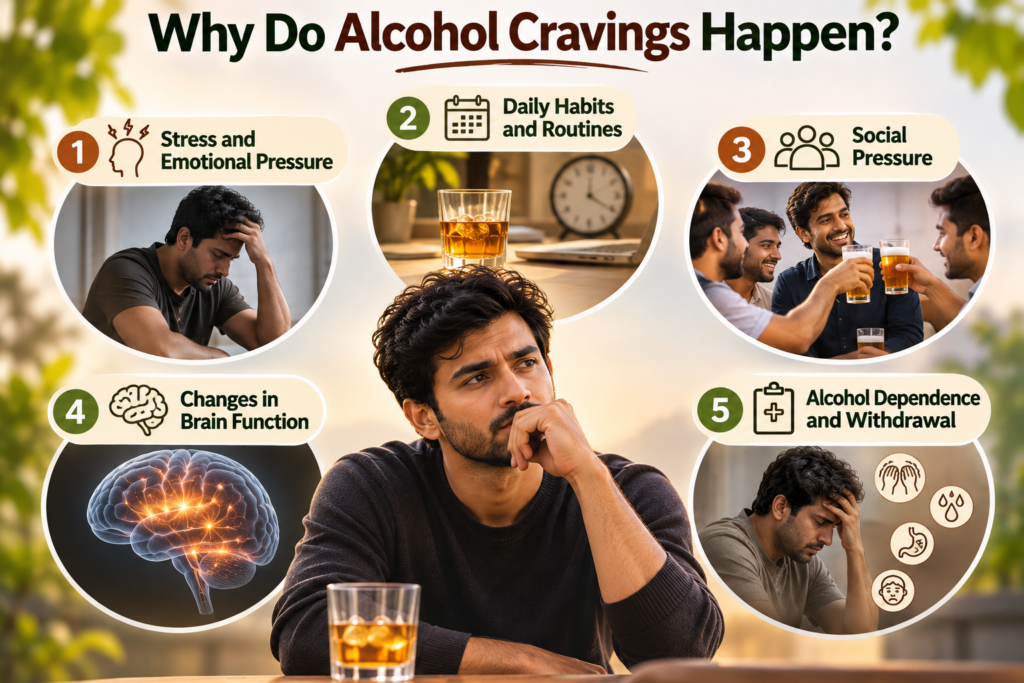
There is no single reason why a person experiences alcohol cravings. They may develop due to several factors.
1. Stress and Emotional Pressure
Some people use alcohol to cope with stress, sadness, anger, or anxiety. Drinking may seem to provide short-term relief, but it can create a pattern in which the person begins to depend on alcohol to manage difficult feelings.
2. Daily Habits and Routines
If you usually drink after work, during weekends, or before social events, your brain may begin to connect these situations with alcohol.
Over time, simply entering the same situation may trigger an urge to drink.
3. Social Pressure
Friends, family members, or colleagues may offer alcohol or expect you to join them when drinking.
Being around alcohol can also trigger cravings, even when nobody directly asks you to drink.
4. Changes in Brain Function
Repeated alcohol use can affect the brain systems involved in reward, motivation, and self-control. These changes may make cravings harder to manage.
5. Alcohol Dependence and Withdrawal
People who have developed physical dependence on alcohol may experience cravings along with symptoms such as shaking, sweating, anxiety, or nausea when they reduce or stop drinking.
These symptoms may require medical care.
If you find it difficult to control how much you drink, read Anatta’s guide on why weekend binge drinking can still be a sign of alcohol dependence.
How to Control Alcohol Cravings: 10 Practical Strategies
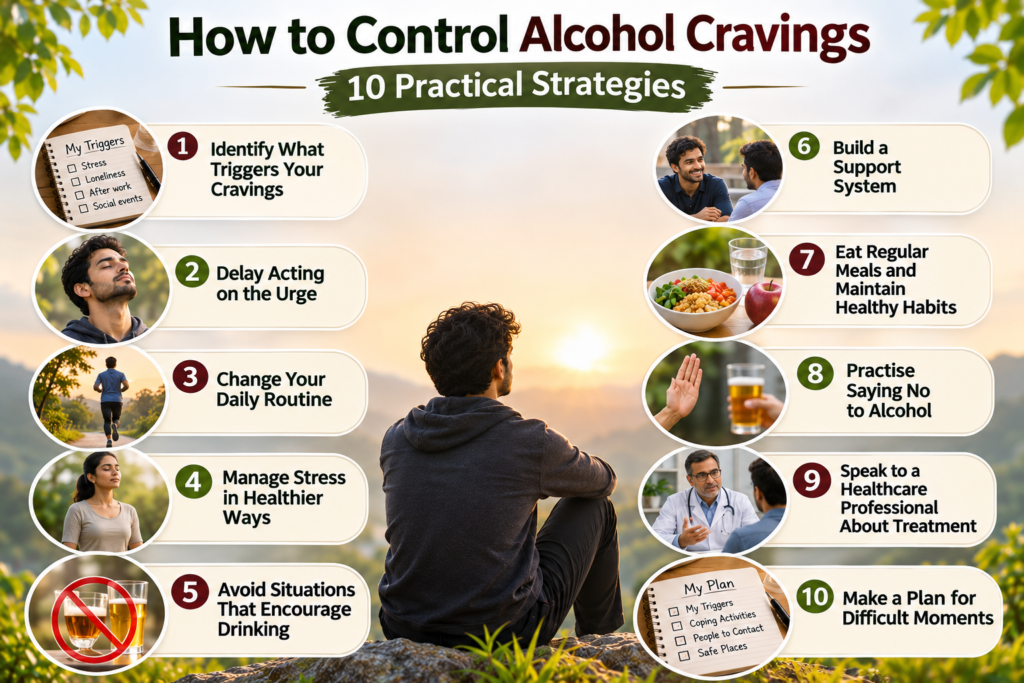
Managing alcohol cravings often takes practice. Different methods work for different people, so it can help to try several safe strategies and discuss persistent cravings with a healthcare professional.
1. Identify What Triggers Your Cravings
The first step is to understand when and why you feel like drinking.
For a few days, make a simple note of:
- When the craving starts.
- What you were doing at the time.
- How you were feeling.
- Who you were with.
- What happened before the urge began.
For example, you may notice that cravings often happen when you feel lonely or return home from work.
Once you know your triggers, you can plan how to respond to them.
2. Delay Acting on the Urge
When a craving appears, you may feel that you need to drink immediately. Instead, pause and give yourself time before acting.
Try these steps:
- Tell yourself that you do not need to act on the urge right now.
- Move away from alcohol if it is nearby.
- Take a few slow breaths.
- Choose a different activity.
- Contact someone you trust if you need support.
Cravings can rise and fall rather than remain at the same level. Allowing yourself time to respond can help you make a more thoughtful choice.
However, do not rely on delay techniques alone if you have severe cravings or signs of alcohol withdrawal.
3. Change Your Daily Routine
If drinking has become part of your daily routine, changing that pattern may help reduce reminders of alcohol.
For example, if you usually drink after work, plan another activity during that time.
You could:
- Take a walk, if you feel well enough.
- Spend time with a supportive friend.
- Listen to music.
- Read a book.
- Work on a hobby.
- Join an activity that does not involve alcohol.
The aim is to build new routines that do not depend on drinking.
4. Manage Stress in Healthier Ways
Stress can trigger cravings, especially if you have used alcohol to cope with difficult emotions.
Try to find healthier ways to respond to stress, such as:
- Slow breathing exercises.
- Gentle physical activity.
- Meditation or relaxation.
- Talking to a trusted person.
- Writing down your thoughts.
- Speaking with a counsellor.
These activities may help you handle difficult feelings without turning to alcohol.
They are supportive tools, not replacements for treatment when alcohol dependence is present. When alcohol dependence surfaces residential rehabilitation care is the only remedy.
5. Avoid Situations That Encourage Drinking
Certain people, places, and events may make cravings stronger.
If you find it difficult to avoid drinking in these situations, consider changing your plans while you build confidence in managing cravings.
You may choose to:
- Avoid places where drinking is the main activity.
- Spend less time with people who pressure you to drink.
- Ask friends to support your decision.
- Choose social activities that do not involve alcohol.
- Keep alcohol out of your home if it is safe for you to do so.
If you are physically dependent on alcohol, removing alcohol and stopping suddenly without medical advice can be dangerous. Seek medical guidance first.
6. Build a Support System
Managing cravings can feel harder when you try to handle everything alone.
Speaking with someone you trust may help you manage difficult moments and stay focused on your recovery goals.
Your support system may include:
- A trusted friend.
- A family member.
- A counsellor.
- A qualified healthcare professional.
- A suitable recovery support group.
You can also let trusted people know what kind of support helps you most, such as listening without judgment or helping you find professional care.
7. Eat Regular Meals and Maintain Healthy Habits
Hunger, poor sleep, and tiredness can make stressful moments more difficult to manage.
Try to maintain regular meals, drink water, and follow a consistent sleep routine.
Balanced meals, enough rest, and suitable physical activity can support your overall health during recovery.
However, food, water, or exercise cannot treat alcohol withdrawal or replace medical care when dependence is present.
For more information, explore Anatta’s article on the role of nutrition and exercise in alcohol and drug rehabilitation.
8. Practise Saying No to Alcohol
Social pressure can make it difficult to turn down a drink, especially when people around you are drinking.
Preparing a simple response in advance may help.
For example, you could say:
- “No, thank you. I am not drinking today.”
- “I don’t drink “
- “I would prefer a soft drink.”
- “I am focusing on my health right now.”
- “Let’s do something that does not involve alcohol.”
You do not need to explain your decision in detail.
If certain social settings make it difficult to manage cravings, it is okay to leave early or choose a different activity.
9. Speak to a Healthcare Professional About Treatment
If cravings happen often, feel difficult to control, or lead you to drink more than you planned, professional support may help.
A healthcare professional can assess your drinking pattern, physical health, and possible signs of alcohol dependence.
Treatment may include counselling, behavioural therapy, recovery support, and medication when appropriate.
Some medicines can help reduce alcohol cravings or support recovery. They should only be considered with a qualified prescriber who can assess whether they are suitable for you.
Learn more about Anatta’s treatment options for alcohol dependence.
10. Make a Plan for Difficult Moments
Cravings can be easier to manage when you know what you will do before they happen.
Create a simple plan that includes:
- Your most common triggers.
- Activities that help you manage urges.
- People you can contact for support.
- Places you can go where alcohol is not present.
- The professional you can contact if cravings become difficult to manage.
Keep the plan somewhere easy to access, such as a note on your phone.
If you experience a setback, try to understand what happened and seek support rather than giving up on recovery.
What Can You Do When an Alcohol Craving Starts?
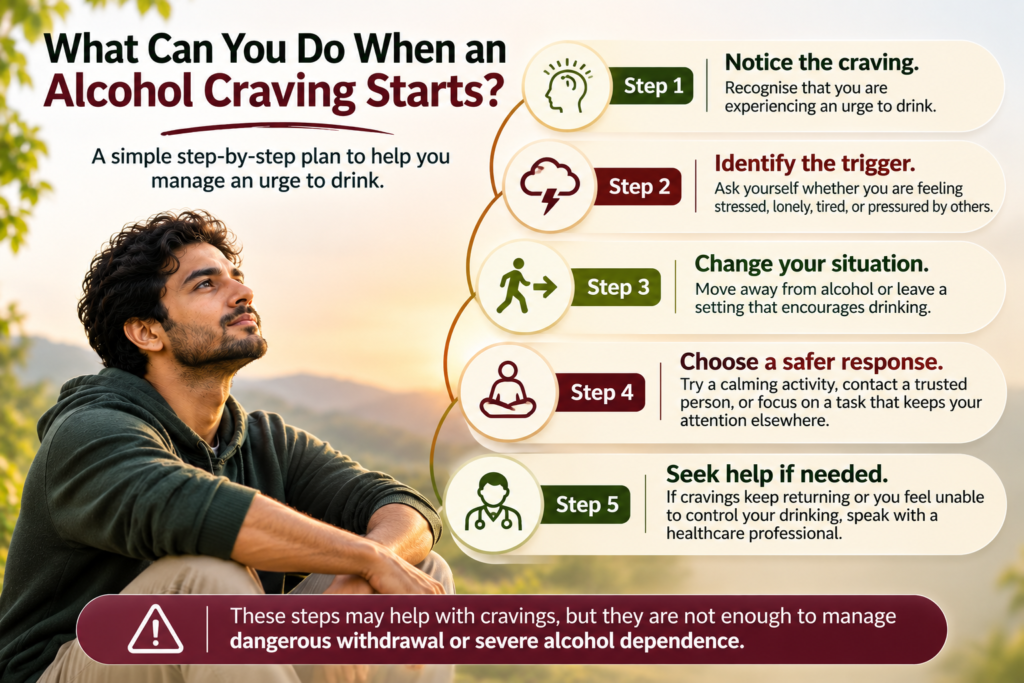
When an urge to drink appears, it may help to follow a short, simple plan.
Step 1: Notice the craving. Recognise that you are experiencing an urge to drink.
Step 2: Identify the trigger. Ask yourself whether you are feeling stressed, lonely, tired, or pressured by others.
Step 3: Change your situation. Move away from alcohol or leave a setting that encourages drinking.
Step 4: Choose a safer response. Try a calming activity, contact a trusted person, or focus on a task that keeps your attention elsewhere.
Step 5: Seek help if needed. If cravings keep returning or you feel unable to control your drinking, speak with a healthcare professional.
These steps may help with cravings, but they are not enough to manage dangerous withdrawal or severe alcohol dependence.
When Should You Seek Professional Help for Alcohol Cravings?
Consider professional help if:
- You often think about drinking.
- You struggle to stop once you start.
- You drink more than you planned.
- You have tried to cut down but cannot.
- Alcohol is affecting your health, work, or relationships.
- You feel shaky, sweaty, anxious, or sick when you stop drinking.
These signs may indicate alcohol use disorder or physical dependence.
The National Health Service (NHS) explains that alcohol use disorder can involve cravings, difficulty controlling drinking, and withdrawal symptoms.
A healthcare professional can assess your needs and discuss suitable treatment options.
Important: Do Not Stop Suddenly if You May Be Alcohol-Dependent
If you drink heavily or regularly and experience withdrawal symptoms when you reduce your alcohol intake, do not stop suddenly without medical advice.
Alcohol withdrawal can sometimes cause seizures, severe confusion, or other life-threatening complications.
Seek urgent medical help if you experience a seizure, severe confusion, hallucinations, or severe shaking after reducing or stopping alcohol. In India, call 112 for emergency assistance.
How Can Alcohol Treatment Help Reduce Cravings?
When cravings are linked to alcohol dependence, practical coping strategies may not be enough on their own.
A treatment plan may include the following.
Counselling and Behavioural Therapy
Counselling can help you understand your triggers, manage difficult emotions, and develop healthier ways to respond to cravings.
Medical Support
A healthcare professional can assess whether medication or supervised withdrawal management is needed.
Structured Rehabilitation
Some people may benefit from a structured rehabilitation programme that provides routine, counselling, and recovery support. The right setting depends on individual needs and medical advice.
For readers exploring what a structured treatment setting may involve, Anatta provides information about what to expect during a day at a Mumbai rehabilitation centre.
Ongoing Recovery Support
Recovery may involve follow-up care, family support, healthy routines, and a plan for managing future cravings.
For people and families exploring care options in Pune, Anatta’s article about what happens inside an alcohol rehabilitation centre in Pune offers further information about a rehabilitation setting.
Treatment should be based on a professional assessment rather than location alone. Not everyone needs residential rehabilitation, and other forms of care may be suitable.
Why Is It Important to Address Alcohol Cravings?
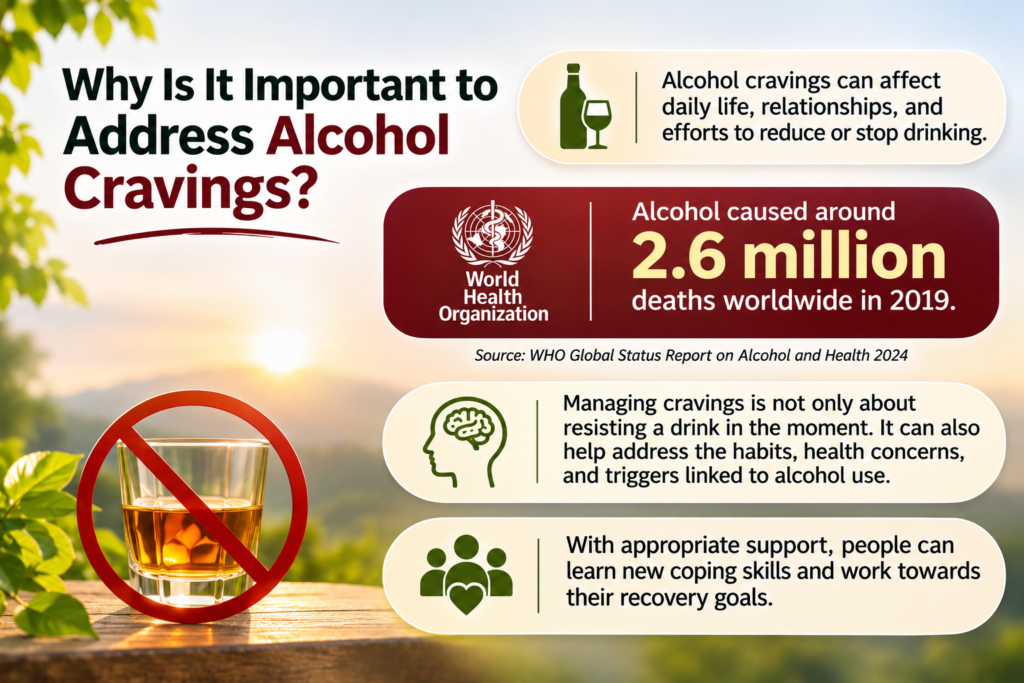
Alcohol cravings can affect daily life, relationships, and efforts to reduce or stop drinking.
The World Health Organization’s Global Status Report on Alcohol and Health and Treatment of Substance Use Disorders 2024 estimated that alcohol caused around 2.6 million deaths worldwide in 2019. This figure includes deaths from different alcohol-related causes and shows the wider health impact of alcohol.
Source: WHO Global Status Report on Alcohol and Health 2024.
Managing cravings is not only about resisting a drink in the moment. It can also be part of addressing the habits, health concerns, and triggers linked to alcohol use.
With appropriate support, people can learn new coping skills and work towards their recovery goals.
Building a Healthier Relationship With Alcohol
Learning how to control alcohol cravings can be an important step towards improving your health and daily life. Understanding your triggers, changing routines, building support, and learning healthier ways to manage stress may help you respond to cravings more effectively.
However, frequent or severe cravings may be a sign that professional treatment is needed. You do not have to manage them alone.
Looking for support with alcohol dependence or recovery?
Connect with Anatta Humanversity to learn more about its approach to addiction recovery and explore possible treatment options for yourself or a loved one. A conversation with the team can help you understand the next steps towards appropriate care.
Frequently Asked Questions
1. How can I control alcohol cravings naturally?
You may find it helpful to identify triggers, change routines linked to drinking, practise relaxation, choose activities that do not involve alcohol, and speak with someone you trust. If cravings are frequent or difficult to manage, seek professional support.
2. How long do alcohol cravings last?
The length and strength of a craving vary from person to person. Some urges may pass relatively quickly, while others may return throughout the day or over a longer period. Repeated cravings may need professional assessment and treatment.
3. Why do I crave alcohol even when I want to stop drinking?
Cravings can be linked to brain changes, stress, daily habits, emotional triggers, or physical dependence. Wanting to stop does not always make cravings disappear. Treatment and coping strategies can help you manage them.
4. How do I control cravings for alcohol at night?
First, identify what usually triggers the urge at night. You could try a calming bedtime routine, a different evening activity, or talking to a trusted person. If you experience shaking, sweating, nausea, or anxiety when you do not drink, seek medical advice because these may be withdrawal symptoms.
5. Can drinking water stop alcohol cravings?
Drinking water may help with hydration, but it does not directly treat alcohol dependence or reliably stop cravings. It should not be used as a replacement for medical care.
6. Are there medicines that help reduce alcohol cravings?
Yes. Certain prescription medicines can help some people reduce alcohol cravings or support recovery. A healthcare professional must assess which options are suitable, taking into account medical history, other medicines, and the person’s drinking pattern.
7. Can stress cause alcohol cravings?
Yes. Stress, anxiety, frustration, loneliness, and other emotions can trigger the urge to drink, particularly if alcohol has become a way to cope with difficult feelings. Counselling and healthier coping skills may help.
8. When should I seek help for alcohol cravings?
Seek professional help if cravings are frequent, you struggle to control your drinking, or alcohol is affecting your health and daily life. Get medical advice before stopping if you drink heavily or have withdrawal symptoms.
9. Can alcohol cravings return after stopping drinking?
Yes. Cravings can return during recovery, especially when a person faces familiar triggers or stressful situations. A recovery plan and ongoing support can help people manage these urges.
10. How can family members help someone with alcohol cravings?
Family members can listen without judgment, encourage professional support, and help create an environment that does not encourage drinking. They should avoid shaming the person and seek professional guidance if the person may be physically dependent on alcohol.