Recovery rarely begins with a dramatic collapse. More often, it begins quietly with exhaustion. With the slow realization that life is being lived on autopilot, numbed, managed, and survived rather than felt. Addiction, in many Indian households, hides behind functionality for years before it demands attention. When families finally begin searching for rehabilitation, they are not choosing between buildings or amenities. They are choosing a philosophy of healing. In India, this choice is usually framed as traditional rehab versus luxury rehab. The labels are convenient. The implications are not.
The Traditional Rehab Model: Stability Through Structure
Traditional rehabilitation centres in India were built to solve an urgent problem: access. Their core strength lies in reach and routine. Most follow a standardized treatment framework, fixed schedules, group therapy as the primary mode of intervention, and clearly defined behavioural rules. For individuals whose lives have become chaotic, this structure can be grounding. Group sessions provide shared language for pain. There is comfort in knowing others are fighting similar battles. Accountability is external, which is often necessary in early recovery. However, structure has limits. Traditional rehabs operate on scale. Time is divided. Emotional histories are compressed. Trauma, grief, identity crises, or long-standing family patterns are often addressed only insofar as they relate directly to substance use. The counsellor-to-client ratio is very low, so each client gets one-on-one counselling probably once a week. The in-depth emotional and long-standing patterns might not all get individual attention. Privacy is minimal, not by neglect but by design. Recovery is public, verbal, and collective. For some personalities, this accelerates healing. For others, especially high-functioning individuals, professionals, caregivers, or those carrying private shame, it creates emotional resistance. Traditional rehabs save people from crisis. Regular counselling through experienced addiction counsellors needs to be continued, and in-depth work on oneself needs to be continued on a regular follow-up.
Luxury Rehab: Slowing Down the Process to Go Deeper
Luxury rehab is often misinterpreted as comfort-first recovery. In reality, its defining feature is not luxury; it is depth. Addiction is rarely the root problem. It is a symptom of a coping mechanism layered over unresolved emotional pain, chronic stress, suppressed trauma, or fractured identity. Without addressing these layers, sobriety becomes fragile. A luxury rehab gives the luxury of being able to deal with oneself individually, with one-on-one care to each client on a daily basis. The luxury model limits the number of clients. Fewer people allow therapists to observe patterns that group-based models miss how a person avoids vulnerability, intellectualizes emotions, seeks approval, or disconnects under pressure. Therapy is not rushed toward confession. Silence is not treated as resistance but as information. Individual sessions form the spine of treatment. Group work, when present, is curated rather than crowded. Recovery is not forced into a single narrative. It is allowed to unfold. This approach is particularly relevant in the Indian context, where emotional expression is often delayed by years of social conditioning. Many clients arrive not knowing what they feel, only that something is broken. Luxury rehab creates the space to discover that language.
Environment Is Not Aesthetic, It Is Therapeutic
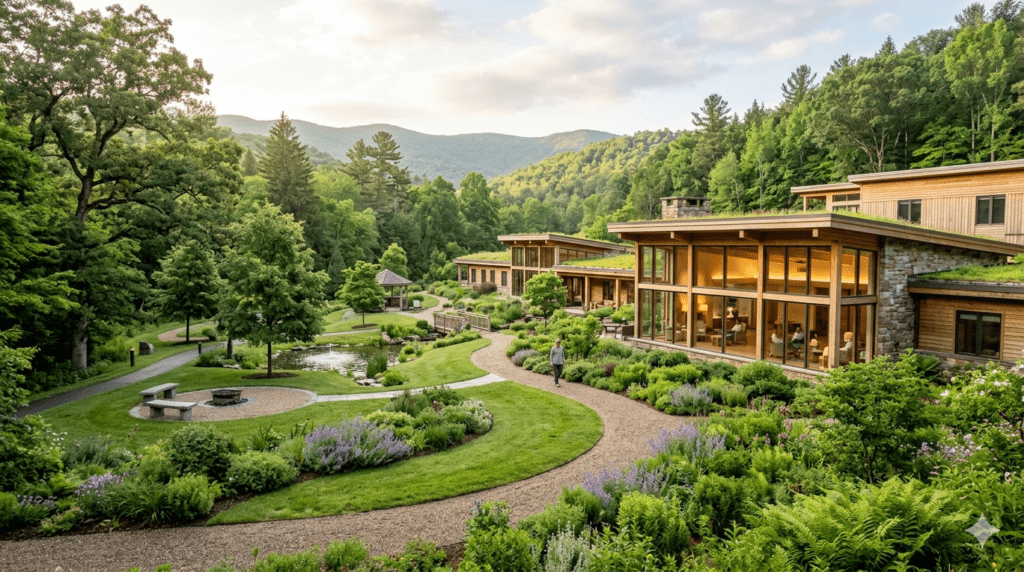
Healing does not occur only in therapy rooms. It happens in the nervous system. Traditional rehabs are often located in busy or institutional environments. While functional, they can keep the body in a low-grade state of alert, noise, crowding, and lack of personal space. Emotional work then happens under subtle stress. Luxury rehabs are designed to slow the system down. Natural surroundings, calm sensory input, and physical comfort are not indulgences; they are regulators. When the body feels safe, emotional access becomes possible. This matters deeply for clients dealing with anxiety, burnout, or trauma-driven addiction rather than impulsive substance use. Environment, in this sense, is not decoration. It is part of the treatment.

Family Involvement: The Hidden Variable
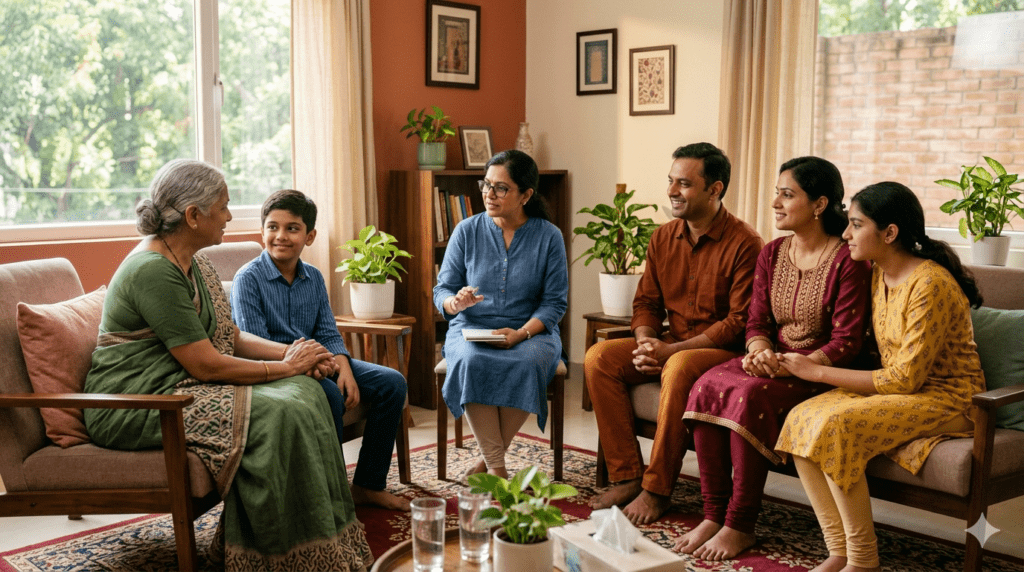
Recovery across the world rarely belongs to one person alone. Families are deeply enmeshed in both the problem and the solution. Traditional rehabs often include family counselling, usually focused on education boundaries, relapse prevention, and behavioural expectations. These sessions are useful, but they tend to remain surface-level due to time constraints. Luxury rehabs approach family involvement more cautiously and more deeply. Instead of asking families to manage the client, they explore how emotional roles, overprotection, unspoken guilt, or dependency patterns may have shaped the addiction. This work is uncomfortable. It requires families to reflect as individuals, not as a collective, not just supervise. When done well, it reduces relapse not through control, but through systemic change.
The Indian Financial Reality: No Illusions
There is an uncomfortable truth that must be stated clearly. Rehabilitation treatment in India is not covered by insurance. Most families pay out of pocket, whether they choose traditional or luxury rehab. The difference lies in scale, not eligibility. Traditional rehabs are chosen because they are financially accessible. Luxury rehabs demand significant investment, which makes the decision heavier and more deliberate. This is why luxury rehab is not a universal recommendation. It is a strategic one best suited for individuals where deeper psychological intervention is critical, and relapse would carry severe personal or professional consequences.

Where Anatta Fits In
It is within this landscape that Anatta positions itself not as an alternative to traditional rehab, but as a different answer to a different kind of question. Anatta works with the understanding that recovery cannot be rushed into compliance. Its approach moves beyond symptom control toward identity restoration. Treatment is highly individualized, drawing from therapeutic psychology, emotional processing, and what it terms Alternate Life Therapy, a framework that focuses on helping clients transform themselves to discover their true nature and rebuild a life that no longer requires escape. Privacy is central. Clients are not reduced to labels or timelines. Therapy unfolds at a pace aligned with emotional readiness, not programme schedules. Family involvement is intentional and selective, designed to break cycles of co-dependency rather than reinforce them. What distinguishes Anatta most clearly is outcomes. With an 80–85% success rate, the focus is not merely on sobriety at discharge, but on sustained reintegration, emotional stability, relational repair, and functional independence after treatment ends. This is achieved not through intensity alone, but through continuity of care and depth of engagement. Anatta is not designed for everyone. It is designed for those who have tried functionality and found it hollow, who are not looking to merely stop using, but to understand why they needed to begin.
Choosing Between the Two
The real question is not about choosing between luxury and traditional rehab, but about understanding the kind of recovery an individual truly needs. Traditional rehab focuses on structure, discipline, and immediate stability, while more personalized approaches allow for deeper emotional exploration and long-term transformation. Neither approach is superior; both serve different purposes in the recovery journey.
What truly matters is alignment. Recovery is most effective when the environment supports the individual’s emotional and psychological needs, rather than forcing them into a rigid system. Seeking support through discreet rehabilitation in Mumbai can provide the privacy and space required for honest self-reflection and meaningful healing.
Ultimately, healing is not about where you go; it’s about whether the environment allows you to confront your truth and begin lasting change.
Our Centers
Rehabilitation Centre in India, Rehabilitation Centre in Mumbai, Rehabilitation Centre in Delhi, Drug Rehabilitation Centre in Chandigarh, Rehabilitation Centre in Pune, Rehab Centre in Kolkata, Rehabilitation Centre in Bangalore, Rehabilitation Centre in Ahmedabad, Rehab Centre in Indore, Rehabilitation Centre in Kochi, Rehabilitation Centre in Bhopal, Rehabilitation Centre in Punjab, Rehabilitation Centre in Amritsar, Rehab Centre in Jaipur, Rehabilitation Centre in Amritsar, Rehabilitation Centre in Nagpur, Rehabilitation Centre in Lucknow, Rehabilitation Centre in Chennai, Rehabilitation Centre in Hyderabad, Rehabilitation Centre in Jalandhar, Rehabilitation Centre in Coimbatore