Party drugs also known as club drugs are often perceived as harmless substances used for “fun” during parties, festivals, and nightlife experiences. However, what begins as experimentation can quickly evolve into dependency, serious health risks, and long term psychological harm. In India, the growing popularity of party drugs among young adults has raised concerns among addiction specialists working in drug addiction rehabilitation.
Understanding how party drugs affect the mind and body and when to seek professional help is essential for prevention, early intervention, and recovery through trusted rehabilitation centres in India
What Are Party Drugs (Also Known as Club Drugs)?
Party drugs, commonly referred to as club drugs, are psychoactive substances used in social settings such as nightclubs, music festivals, private parties, and raves. These drugs are taken to enhance mood, increase energy, intensify sensory perception, or reduce inhibitions.
The terms party drugs and club drugs are used interchangeably because they describe the same substances and usage patterns. These drugs are often consumed alongside alcohol or other substances, significantly increasing the risk of harm and substance use disorder.
Party drug use is strongly linked to peer influence, fear of missing out, and emotional escape factors that can quickly shift casual use into dependency.
Party Drug Use in India
India has seen a steady rise in party drug use, particularly in metropolitan cities and nightlife hubs. Increased exposure to global party culture, music festivals, and social media trends has normalized experimentation among young adults.
Urban environments such as Mumbai, Delhi, Bengaluru, and Pune report higher cases of recreational drug misuse, often requiring structured treatment for addiction.
Beyond legal consequences, party drug use in India leads to serious health risks including overdose, unsafe sexual behavior, impaired judgment, and long term addiction often worsened by unregulated and adulterated substances.
Recreational Drugs in India and Where Party Drugs Fit In
Recreational drugs are substances used for pleasure rather than medical reasons. Party drugs fall within this category but carry higher risks due to their synthetic nature and strong effects on brain chemistry.
Occasional use becomes abuse when substances are used to cope with stress, anxiety, or emotional pain. Over time, this leads to changes in brain function associated with addiction progression
Types of Party Drugs Commonly Used in India
Party drugs in India can be classified based on their effects on the nervous system:
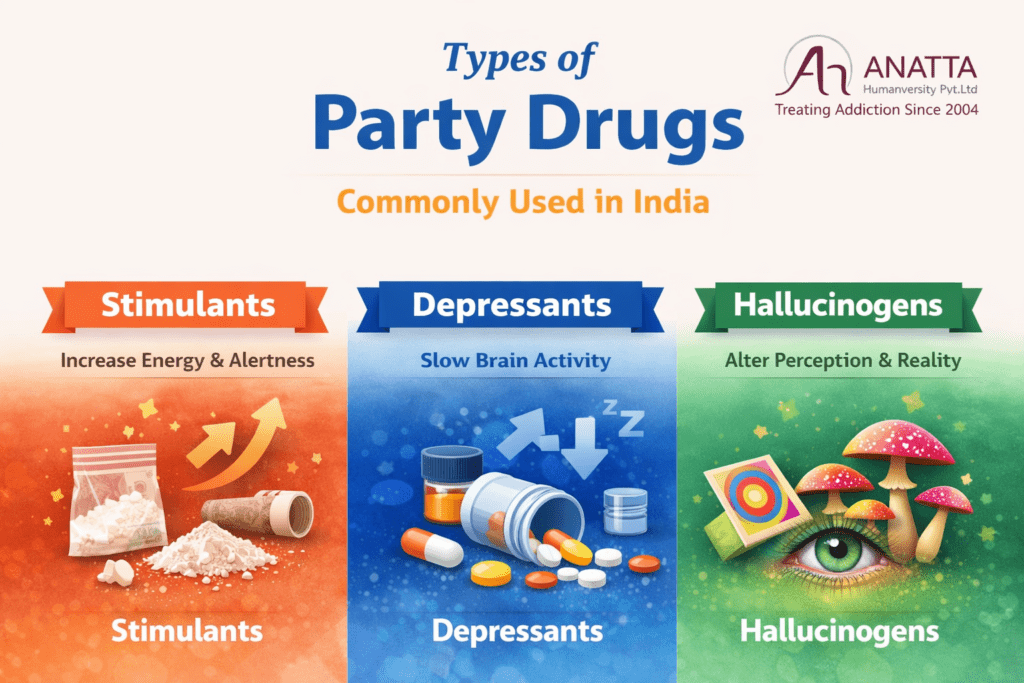
- Stimulants – increase energy and alertness
- Depressants – slow brain activity
- Hallucinogens – alter perception and reality
Many party drugs are synthetic, making their effects unpredictable and contributing to the rise of synthetic drugs in India
Common Party (Club) Drugs and Their Effects
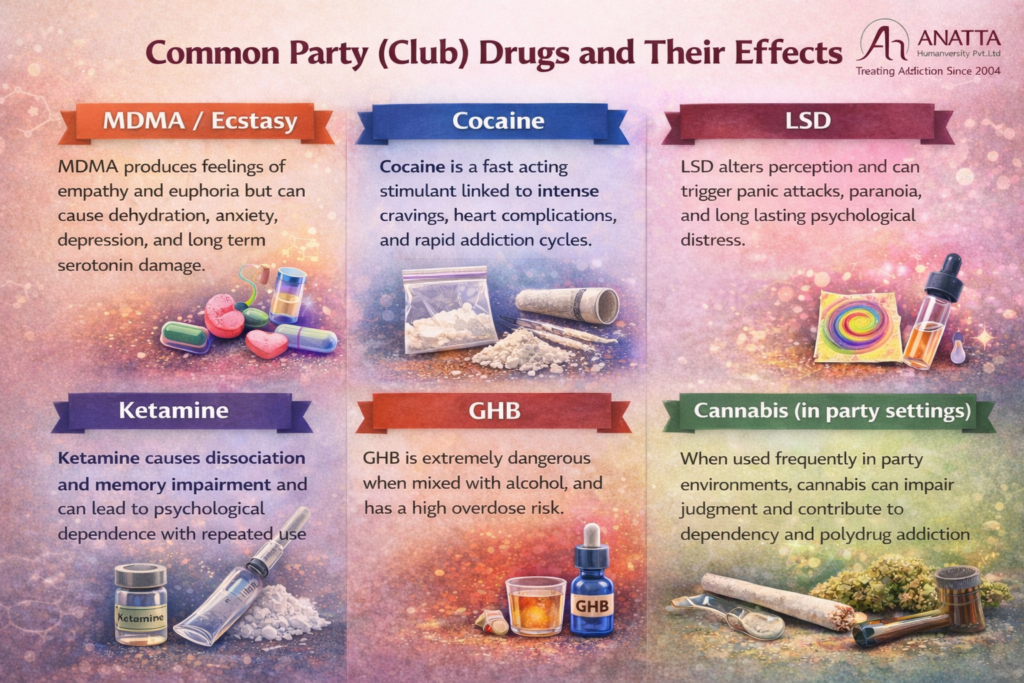
MDMA / Ecstasy
MDMA produces feelings of empathy and euphoria but can cause dehydration, anxiety, depression, and long term serotonin damage.
Learn more about MDMA addiction and effects
Cocaine
Cocaine is a fast acting stimulant linked to intense cravings, heart complications, and rapid addiction cycles.
LSD
LSD alters perception and can trigger panic attacks, paranoia, and long lasting psychological distress.
Read about LSD effects and risks
Ketamine
Ketamine causes dissociation and memory impairment and can lead to psychological dependence with repeated use.
GHB
GHB is extremely dangerous when mixed with alcohol and has a high overdose risk.
Understand the dangers of GHB drug use
Methamphetamine
Meth is highly addictive and causes severe neurological, emotional, and physical damage.
Cannabis (in party settings)
When used frequently in party environments, cannabis can impair judgment and contribute to dependency and polydrug addiction
What Are the Effects of Party (Club) Drugs?
Short term physical effects include rapid heartbeat, overheating, dehydration, nausea, and tremors.
Psychological effects include anxiety, paranoia, mood swings, and emotional crashes.
Longer exposure contributes to serious effects of substance use.
Risky behaviours such as unsafe sex, accidents, and overdose are common especially when drugs are mixed.
How Party Drugs Affect the Brain and Body
Party drugs overstimulate dopamine and serotonin pathways, disrupting natural pleasure and emotional balance. Over time, users experience sleep problems, hormonal imbalance, anxiety, and depression.
Chronic use often leads to long-term effects of addiction on health
Understanding the Addictive Nature of Party Drugs
Repeated use rewires the brain’s reward system. Tolerance builds quickly, requiring higher doses for the same effect, while emotional lows drive compulsive use.
Without intervention, this cycle results in loss of control and dependence requiring structured addiction treatment
Recognizing Signs of Party Drug Use and Addiction
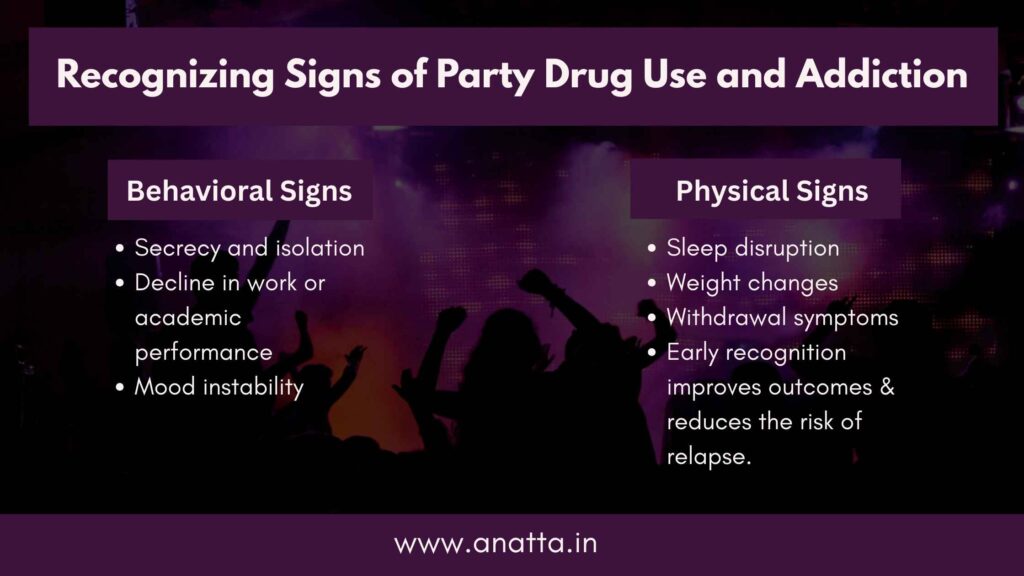
Behavioral signs
- Secrecy and isolation
- Decline in work or academic performance
- Mood instability
Physical signs
- Sleep disruption
- Weight changes
- Withdrawal symptoms
- Early recognition improves outcomes and reduces the risk of relapse.
Party Drug Addiction: Signs, Symptoms, and Treatment
Party drug addiction is diagnosed when substance use continues despite physical, psychological, or social harm. Withdrawal symptoms can include depression, anxiety, fatigue, and intense cravings.
Effective recovery requires professional detoxification, therapy, and relapse prevention through a structured addiction rehab process
Party Drugs and Young People
Adolescents and young adults are especially vulnerable due to peer pressure, identity exploration, and social media influence. Early exposure increases the likelihood of long term addiction.
Explore the growing concern of youth and addiction
Can the Risks of Harm from Party Drugs Be Reduced?
Harm reduction strategies may lower immediate dangers, but they do not eliminate the risk of addiction, overdose, or mental health damage. The safest option remains abstinence supported by professional care.
Have I Got a Problem with Party Drugs?
Ask yourself:
- Do I need substances to socialize or relax?
- Have I tried to stop and failed?
- Is my use affecting relationships or work?
If yes, it may be time to seek help from an experienced rehabilitation centre
Long Term Effects of Party Drug Use
Long term use increases the risk of dependence, anxiety disorders, depression, memory loss, and relationship breakdowns. Many individuals also face professional and financial instability.
Recovery is possible but early intervention matters.
Party Drug Treatment in India
Effective party drug treatment in India includes:
- Medical detoxification
- Therapy and relapse prevention
- Inpatient or outpatient rehabilitation, depending on severity
Where to Go for Help
Professional rehab is recommended when self control is lost, withdrawal symptoms appear, or mental health is affected. Choosing the right centre ensures safety, dignity, and sustainable recovery.
Hope and Healing at Anatta Rehab Center
Anatta follows a root cause healing approach that addresses emotional, psychological, and behavioral patterns not just substance use. Their philosophy emphasizes treatment with dignity, confidentiality, and long term transformation.
How Anatta Treats Women Struggling with Party Drug Use
Women face unique challenges in addiction, including trauma, burnout, and stigma. Anatta offers women centric, trauma informed care that integrates therapy, mindfulness, and holistic healing.
Learn more about women and substance abuse recovery
Anatta City-Based Rehabilitation Support
Anatta offers discreet and luxurious rehabilitation services across India, including:
- Mumbai – https://anatta.in/rehab-in-mumbai/
- Delhi – https://anatta.in/rehab-in-delhi/
- Bengaluru – https://anatta.in/rehab-in-bengaluru/
- Chennai – https://anatta.in/rehab-in-chennai/
- Pune – https://anatta.in/drug-rehabilitation-centre-in-pune/
- Kolkata – https://anatta.in/rehab-in-kolkata/
This allows families to choose a location that ensures comfort, privacy, and continuity of care.
Frequently Asked Questions
Ques. How do I know if party drug use has become a serious problem?
Ans. Party drug use becomes a concern when substances start controlling decisions rather than enhancing experiences. If someone notices emotional dependence, secrecy, or repeated failed attempts to stop, it may indicate a deeper issue related to addiction progression and behavioral loss of control.
Ques. Can someone seek help even if they only use party drugs occasionally?
Ans. Yes. Many individuals entering treatment are not daily users. Even weekend or event-based use can disrupt emotional regulation, sleep, and mental health. Early support can prevent escalation into full dependency and reduce the need for intensive interventions later.
Understand why early help matters: https://anatta.in/the-importance-of-seeking-professional-help-for-addiction/
Ques. Why do party drugs lead to relapse more easily than expected?
Ans. Party drugs are strongly associated with specific social settings, music, people, and emotional states. These environmental triggers make relapse more likely if coping strategies are not rebuilt. Effective recovery includes structured relapse prevention planning and lifestyle changes.
Ques. Is party drug addiction usually linked to mental health issues?
Ans. In many cases, yes. Anxiety, depression, trauma, ADHD, and burnout often exist before substance use begins. Party drugs may temporarily mask emotional discomfort, but long-term use worsens mental health. Integrated treatment that addresses both aspects leads to better outcomes.
Learn more about co-occurring conditions: https://anatta.in/understanding-co-occurring-disorders-dual-diagnosis/
Ques. Does treatment focus only on stopping drug use?
Ans. No. Sustainable recovery focuses on why substances were needed in the first place. Treatment addresses emotional awareness, coping skills, relationship patterns, and self-regulation not just abstinence.
Ques. How does family involvement affect recovery outcomes?
Ans. Family dynamics can unintentionally enable substance use through overprotection, denial, or conflict. When families are educated and involved appropriately, recovery outcomes improve significantly. Healthy boundaries and communication play a crucial role.
Understand the family’s role in healing: https://anatta.in/why-is-family-support-crucial-in-addiction-recovery/
Ques. Is confidentiality maintained during treatment?
Ans. Yes. Confidentiality is fundamental to ethical addiction care. Personal identity, medical details, and treatment history are protected to ensure emotional safety—especially for professionals, women, and public-facing individuals.
Ques. Do women experience party drug addiction differently?
Ans. Women often face layered challenges such as emotional burnout, trauma histories, caregiving stress, and societal stigma. These factors require a gender-sensitive approach that prioritizes emotional safety, dignity, and empowerment.
Ques. What types of therapy help with party drug addiction recovery?
Ans. Therapy focuses on emotional regulation, behavioral change, and self-awareness. Approaches may include cognitive therapies, trauma-informed work, and mindfulness-based practices that rebuild internal stability and decision-making capacity.
Ques. Can someone continue working or studying during treatment?
Ans. Depending on severity, treatment plans can be designed to balance recovery with professional or academic responsibilities. Structured schedules, discretion, and personalized care planning are essential factors.
Ques. What makes Anatta’s approach different from traditional rehab models?
Ans. Rather than focusing solely on control or abstinence, Anatta Rehab Center emphasizes self-understanding, emotional healing, and long-term transformation. Recovery is viewed as a journey toward wholeness, not punishment or compliance.
Ques. What is the first step if someone is unsure about entering rehab?
Ans. The first step is an informed, pressure-free conversation. Understanding treatment options, readiness, and personal concerns helps individuals make empowered decisions rather than fear-driven ones.