Women and substance abuse are clinically significant and evolving public-health concern that requires gender-specific understanding and intervention. While substance use disorders affect all populations, extensive clinical evidence shows that women experience faster progression from use to dependence, greater biological harm, and a higher psychosocial burden compared to men. These differences are closely linked to emotional stress, trauma, and co-occurring mental health conditions, which are explored further in substance use disorder symptoms, causes, and treatment. Despite these differences, women are less likely to seek early treatment due to stigma, caregiving responsibilities, and fear of social consequences. As a result, women often present later in the course of addiction, with more complex physical, emotional, and relational challenges. Understanding the broader impact of addiction on family and relationships helps highlight why early, women-centred intervention is essential for sustainable recovery.
What Is Women and Substance Abuse?
Women and substance abuse refers to patterns of alcohol or drug consumption in women that result in health impairment, psychological distress, or functional decline. Although diagnostic criteria are gender-neutral, clinical presentation differs significantly in women due to biological, emotional, and social factors discussed in effects of substance abuse.
Women are more likely to:
- Initiate substance use for emotional regulation rather than recreation, often linked to stress, trauma, or mood disorders
- Progresses more rapidly from use to dependence due to metabolic and hormonal differences
- Experience greater toxicity and health damage at lower levels of consumption compared to men
These accelerated effects are explained in greater detail in effects of drug addiction. Women and substance use describes alcohol or drug consumption patterns in women that lead to faster dependence and earlier physical, emotional, and social harm than typically observed in men, reinforcing the need for women-specific, clinically informed intervention approaches.
Epidemiology and Clinical Significance
Substance use among women has increased steadily over recent decades, particularly in urban populations. However, prevalence data often underrepresents the true incidence due to underreporting, social stigma, and delayed diagnosis. Broader patterns of addiction progression are discussed in drug addiction problems and solutions to overcome.
From a clinical perspective, women with substance use disorders frequently present with:
- Co-occurring mental health conditions, including anxiety, depression, and emotional dysregulation
- Trauma histories that influence coping mechanisms and relapse risk
- Family and caregiving stressors that complicate treatment access and continuity
The overlap between addiction and psychological conditions is explored further in substance use disorder symptoms, causes, and treatment. These combined factors necessitate women-specific substance abuse treatment models rather than generic approaches, ensuring care addresses emotional safety, family dynamics, and long-term recovery needs.
Biological Factors Affecting Substance Use in Women
Metabolism and Pharmacokinetics
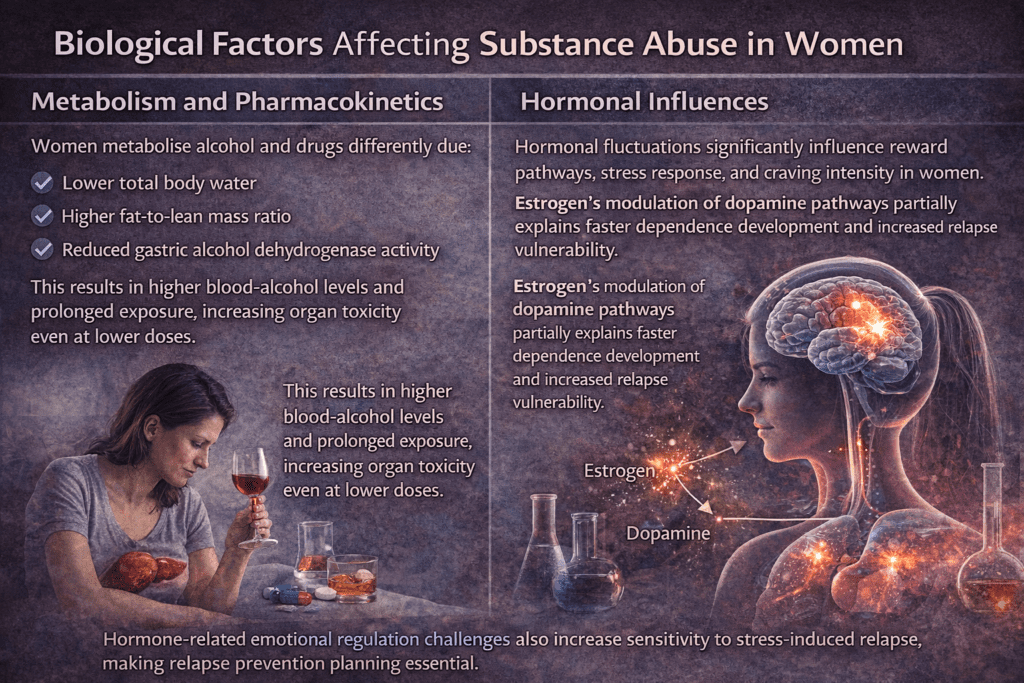
Women metabolize alcohol and drugs differently due to:
- Lower total body water
- Higher fat-to-lean mass ratio
- Reduced gastric alcohol dehydrogenase activity
This results in higher blood-alcohol levels and prolonged exposure, increasing organ toxicity even at lower doses.
Hormonal Influences
Hormonal fluctuations significantly influence reward pathways, stress response, and craving intensity in women. Estrogen’s modulation of dopamine pathways partially explains faster dependence development and increased relapse vulnerability. These biological mechanisms are further explained in addiction and the brain.
Hormone-related emotional regulation challenges also increase sensitivity to stress-induced relapse, making relapse prevention planning essential. A deeper understanding of these patterns is available in relapse and relapse prevention.
Psychological and Social Risk Factors
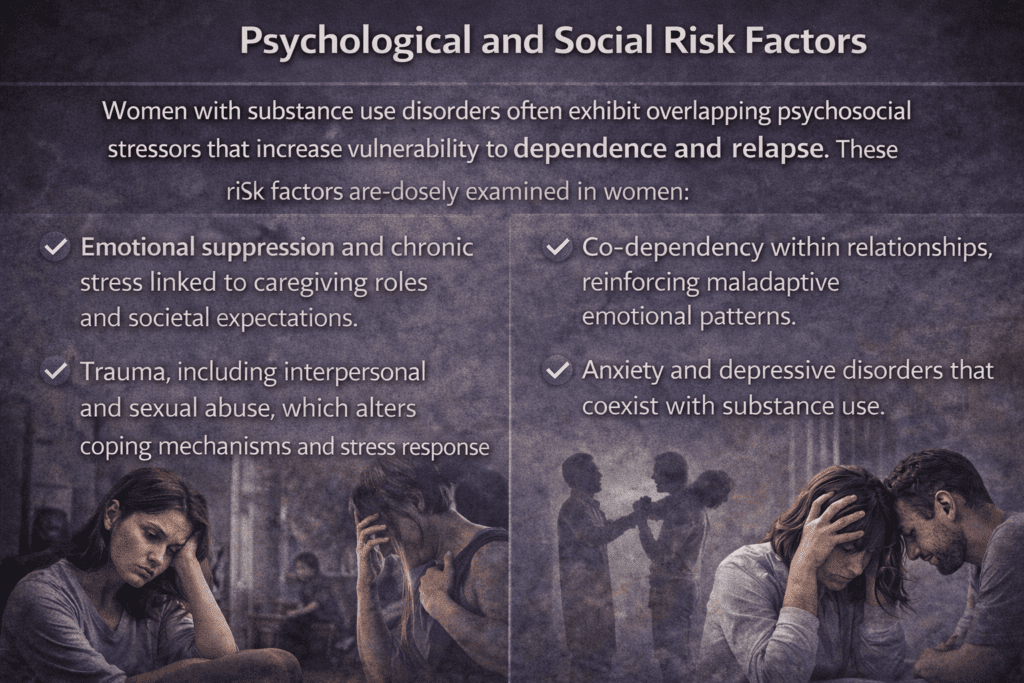
Women with substance use disorders often exhibit overlapping psychosocial stressors that increase vulnerability to dependence and relapse. These risk factors are closely examined in how does trauma influence addiction.
Common contributing factors include:
- Emotional suppression and chronic stress linked to caregiving roles and societal expectations
- Trauma, including interpersonal and sexual abuse, which alters coping mechanisms and stress response
- Co-dependency within relationships, reinforcing maladaptive emotional patterns
- Anxiety and depressive disorders that coexist with substance use
Substance use in women is frequently reinforced by guilt, secrecy, and fear of judgment, leading to delayed treatment engagement and poorer outcomes. For structured insight into recovery without enabling behaviours, refer to co-dependency in addiction and how families heal without enabling.
Health Consequences of Substance Use in Women
Physical Effects
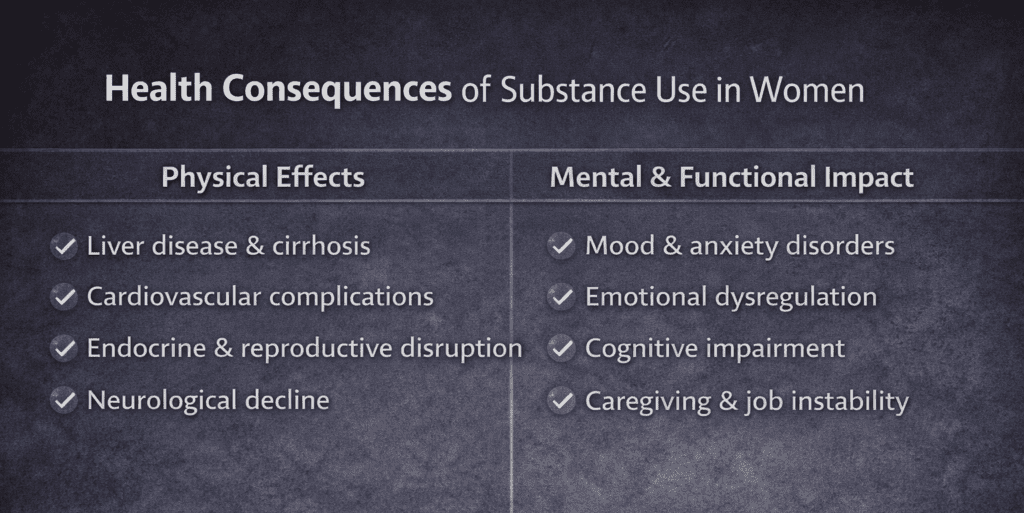
Women experience accelerated physical damage, including:
- Liver disease and cirrhosis
- Cardiovascular complications
- Endocrine and reproductive disruption
- Neurological decline
Alcohol-related mortality occurs earlier in women despite lower lifetime consumption. A clinical overview is discussed in 10 devastating effects of addiction on health.
Mental and Functional Impact
Substance use disorders in women are strongly associated with:
- Mood and anxiety disorders
- Emotional deregulation
- Cognitive impairment
Functional consequences include disrupted caregiving roles, occupational instability, and relationship breakdown.
Pregnant Women and Substance Use
Substance use during pregnancy is a medically critical concern. Alcohol and drugs cross the placenta directly, affecting fetal brain and organ development. There is no safe level of alcohol or drug exposure during pregnancy. Any substance use during this period can result in permanent cognitive, behavioural, or physical impairment in the child. The biological and developmental impact of prenatal exposure is further outlined in effects of substance abuse.
Maternal and Fetal Outcomes
Maternal substance use during pregnancy is associated with several adverse outcomes, including:
- Foetal growth restriction.
- Neurodevelopmental disorders affecting learning, behaviour, and emotional regulation.
- Increased obstetric complications for both mother and child.
A detailed explanation is provided in Foetal Alcohol Syndrome: signs, effects, and prevention.
Maternal Substance Abuse and Intergenerational Impact
Maternal substance abuse extends beyond pregnancy-related medical risks and has long-term implications for child development, family stability, and future generations. Children born to mothers with untreated substance use disorders are at increased risk for emotional insecurity, behavioural challenges, and developmental delays. These patterns are further explored in substance use disorder symptoms, causes, and treatment.
Early childhood exposure to unstable caregiving environments associated with maternal substance abuse may contribute to difficulties in emotional regulation, learning, and social attachment. Over time, these children may also demonstrate a higher vulnerability to substance use and mental health disorders themselves, reinforcing intergenerational cycles of addiction.
Addressing maternal substance abuse through timely intervention and family-centred care plays a critical role in breaking these cycles. The broader family impact and pathways toward healing are discussed in impact of addiction on family and understanding healing.
Why Women Delay Seeking Treatment
Despite experiencing faster progression and greater health risks, many women delay seeking professional help for substance use disorders. Common barriers include fear of social stigma, concern about being judged as a parent or caregiver, and anxiety around loss of privacy. These barriers are frequently reinforced by emotional dependency and family dynamics, which are examined in help a loved one with addiction without losing yourself.
Women are also more likely to normalise substance use as a coping mechanism for stress, trauma, or emotional exhaustion. As a result, treatment is often sought only after significant physical, emotional, or relational harm has occurred. Early identification of warning signs is discussed in signs you need drug detoxification and when to seek help.
Clinical Need for Women-Specific Substance Abuse Treatment
Clinical evidence supports the need for women-specific substance abuse treatment models that address the unique biological, emotional, and social realities faced by women. Generic treatment approaches often fail to consider trauma histories, caregiving responsibilities, and emotional safety requirements. Women-centred treatment models prioritise confidentiality, emotional dignity, and individualised care. These principles align with recovery frameworks described in non-medical rehab: a holistic path to addiction recovery.
By addressing underlying emotional drivers rather than focusing solely on substance cessation, women-specific treatment improves engagement, retention, and long-term recovery outcomes.
Evidence-Based Therapeutic Modalities for Women
Effective treatment for women with substance use disorders integrates evidence-based psychotherapeutic approaches tailored to emotional regulation and trauma processing. Cognitive Behavioural Therapy (CBT) helps women identify maladaptive thought patterns linked to substance use, while Dialectical Behaviour Therapy (DBT) supports emotional regulation and distress tolerance.
A comparative overview is available in CBT vs DBT: choosing the right therapy. Motivational approaches further support readiness for change and sustained engagement, especially when ambivalence or guilt delays recovery. These methods complement structured recovery planning.
Non-Medical and Holistic Rehabilitation
Non-medical rehabilitation focuses on psychological healing, behavioural change, and emotional resilience rather than long-term pharmacological dependence. This approach is particularly relevant for women whose substance use is rooted in trauma, emotional suppression, or maladaptive coping strategies. Holistic recovery frameworks emphasize self-awareness, emotional independence, and sustainable lifestyle restructuring. Anatta’s philosophy is explored in restoring wholeness: Anatta’s non-medical rehab approach. Such models support long-term recovery by addressing the person as a whole rather than treating addiction in isolation.
Recovery, Relapse Prevention, and Long-Term Outcomes
Sustained recovery in women requires structured relapse-prevention planning, emotional regulation skills, and awareness of personal triggers. Hormonal changes, emotional stress, and interpersonal conflict can increase relapse vulnerability if unaddressed.
Education around relapse indicators and prevention strategies is essential for maintaining recovery stability. These strategies are detailed in signs of drug addiction relapse and prevention.
Long-term outcomes improve significantly when recovery plans include family education, emotional support systems, and ongoing therapeutic engagement.
Women-Centred Care at Anatta
Anatta provides confidential, clinically informed care designed specifically for women seeking recovery from substance use disorders. The treatment approach prioritizes emotional safety, dignity, and personalized healing within a structured, non-medical framework.
Women benefit from an environment that supports self-respect, emotional independence, and long-term transformation beyond substance use. A broader overview of Anatta’s recovery philosophy is available in holistic recovery: Anatta’s journey to addiction freedom.
Frequently Asked Questions
Ques. Why is substance use in women considered a serious public-health concern?
Ans. Women experience faster addiction progression, greater biological harm, and higher emotional burden. These patterns are explained in substance use disorder symptoms, causes, and treatment.
Ques. Why do women develop substance dependence faster than men?
Ans. Differences in metabolism, body composition, and hormonal regulation cause substances to remain longer in women’s bodies, increasing toxicity and accelerating dependence, as discussed in alcoholism and the brain.
Ques. How does emotional stress influence substance use in women?
Ans. Emotional stress alters coping mechanisms, increasing reliance on substances for relief. This relationship is examined in how does trauma influence addiction.
Ques. Are women more likely to hide substance use?
Ans. Yes. Fear of stigma, caregiving responsibilities, and social judgment often lead women to conceal substance use, delaying diagnosis and treatment.
Ques. How does substance use affect women’s mental health?
Ans. Substance use commonly coexists with anxiety, depression, and emotional dysregulation, worsening psychological outcomes and complicating recovery.
Ques. Is substance use during pregnancy always harmful?
Ans. Yes. There is no safe amount or timing. Even minimal exposure can disrupt fetal development and cause long-term cognitive or behavioural effects.
Ques. What are the risks of maternal substance abuse?
Ans. Maternal substance abuse increases risks of developmental delays, emotional instability, and long-term behavioural challenges in children.
Ques. Does substance use affect family dynamics?
Ans. Yes. Addiction disrupts relationships, caregiving roles, and emotional security. Family impact is discussed in impact of addiction on family and understanding healing.
Ques. Why do women delay seeking substance abuse treatment?
Ans. Women often delay treatment due to shame, fear of judgment, and concerns about confidentiality, as explored in help a loved one with addiction without losing yourself.
Ques. When should professional help be sought for substance use?
Ans. Professional help is recommended when substance use affects health, relationships, pregnancy, or daily functioning, regardless of perceived severity.
Ques. Why is women-specific substance abuse treatment important?
Ans. Women benefit from trauma-informed, confidential care addressing emotional safety, identity, and relational stress rather than generic treatment models.
Ques. What role does trauma play in women’s addiction?
Ans. Trauma alters stress response and emotional regulation, increasing vulnerability to substance dependence and relapse without trauma-informed intervention.
Ques. Are women more prone to relapse?
Ans. Women may face higher relapse risk during emotional stress or hormonal changes, highlighting the importance of relapse planning discussed in relapse and relapse prevention.
Ques. How does co-dependency affect women with substance use disorders?
Ans. Co-dependency reinforces emotional reliance and enables substance use patterns. Recovery strategies are outlined in co-dependency in addiction and how families heal without enabling.
Ques. What therapies are effective for women with substance use disorders?
Ans. Evidence-based therapies such as CBT and DBT improve emotional regulation and recovery outcomes, explained in CBT vs DBT: choosing the right therapy.
Ques. Is detox always required for women with substance use disorders?
Ans. Detox may be necessary when physical dependence exists. Early warning signs are discussed in signs you need drug detoxification and when to seek help.
Ques. Is non-medical rehabilitation effective for women?
Ans. Yes. Non-medical rehabilitation addresses emotional and behavioural drivers of addiction, supporting long-term recovery, as explained in non-medical rehab: a holistic path to addiction recovery.
Ques. Can women recover fully from substance use disorders?
Ans. Yes. With personalised therapy, emotional healing, and structured support, many women achieve long-term stability and sustained recovery.
Ques. How does substance use affect women physically long-term?
Ans. Women experience earlier organ damage, hormonal disruption, and neurological decline, as detailed in effects of drug addiction.
Ques. How does family involvement support women’s recovery?
Ans. Educated, supportive families improve treatment engagement, emotional stability, and long-term outcomes when enabling behaviours are addressed appropriately.