Anatta.in

June 2026

Substance Abuse and Emotional Dissociation What Families Miss

Substance Abuse and Emotional Dissociation: What Families Miss

When families confront the challenging reality of addiction, their focus often gravitates toward visible signs like substance use, secrecy, or financial issues. However, an underlying issue that frequently goes unnoticed is emotional dissociation. Long before addiction manifests in an overt manner, many individuals experience an emotional disconnection from themselves and their surroundings. Families might observe behavioral changes […]

Substance Abuse and Emotional Dissociation: What Families Miss Read More »
Why Emotional Isolation Fuels Addiction in Affluent Lifestyles

Why Emotional Isolation Fuels Addiction in Affluent Lifestyles

Affluence, often associated with success and privilege, can mask a deeply rooted emotional emptiness that fuels addiction. This juxtaposition between external achievements and internal voids is rarely discussed. The veneer of wealth and status creates a false perception of invulnerability, where addiction and dependency are seen as distant possibilities. Yet, in affluent circles, emotional isolation

Why Emotional Isolation Fuels Addiction in Affluent Lifestyles Read More »

How Dopamine Dysregulation Impacts Decision-Making in Addiction

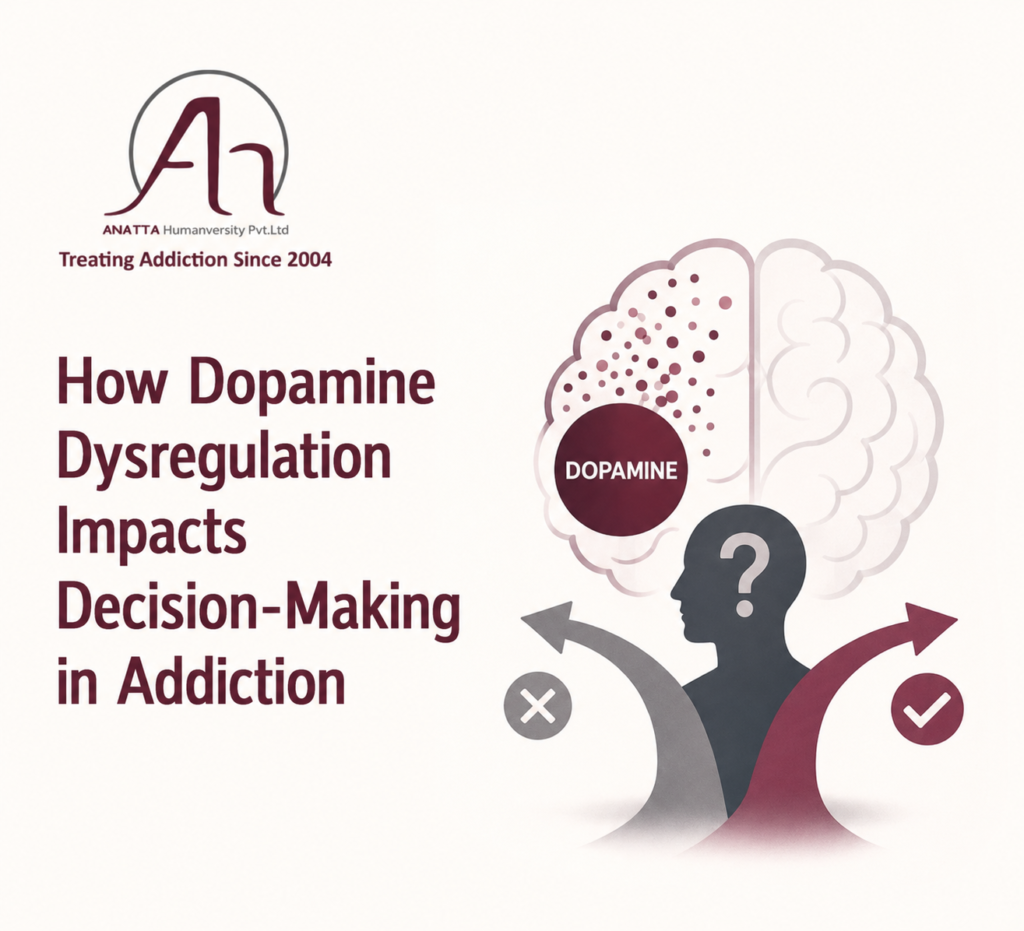
How Dopamine Dysregulation Impacts Decision-Making in Addiction

Understanding addiction requires more than just observing behavior; it involves delving into the intricate workings of the brain. At the center of this exploration is dopamine, a neurotransmitter often misunderstood as merely the “pleasure chemical.”  In reality, dopamine plays a complex role in When dysregulated, it profoundly impacts decision-making in addiction. This article aims to

How Dopamine Dysregulation Impacts Decision-Making in Addiction Read More »

Addiction Transfer Why One Addiction Often Replaces Another

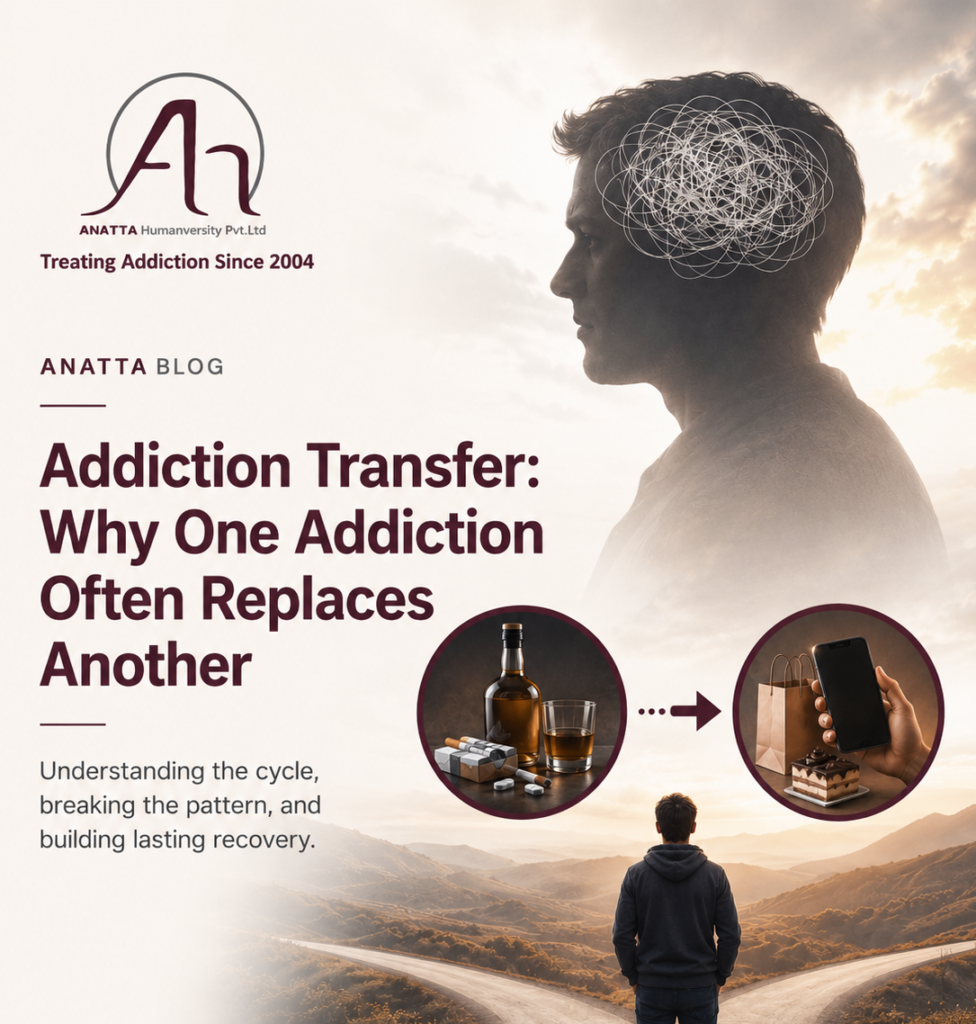
Addiction Transfer: Why One Addiction Often Replaces Another

In the journey of recovery, the transition from one addiction to another is a phenomenon known as addiction transfer/ Cross-addiction/Substitute addiction. This shift doesn’t imply merely a change in the substance or behaviour but highlights an ongoing emotional and neurological dependency pattern. Essentially, while the coping mechanism may change, the underlying emotional drivers remain untreated,

Addiction Transfer: Why One Addiction Often Replaces Another Read More »

Relapse Triggers in High-Stress Environments

Psychology of Relapse Triggers in High-Stress Environments

Relapse is often mischaracterized as a failure or a step backward in the journey of recovery from addiction. However, research suggests otherwise. According to the National Institute on Drug Abuse (NIDA), 40% to 60% of individuals treated for substance use disorders experience relapse at some point in recovery, a rate comparable to other chronic medical

Psychology of Relapse Triggers in High-Stress Environments Read More »

Scroll to Top
Call Now Enquire Now