Relapse is often mischaracterized as a failure or a step backward in the journey of recovery from addiction.
However, research suggests otherwise. According to the National Institute on Drug Abuse (NIDA), 40% to 60% of individuals treated for substance use disorders experience relapse at some point in recovery, a rate comparable to other chronic medical conditions such as asthma and hypertension. This highlights an important reality: relapse is not a sign of failure but often a signal that emotional, psychological, or environmental stressors need further attention. High-stress environments, emotional overload, unresolved trauma, and unhealthy coping mechanisms can silently reactivate old behavioral patterns, making relapse prevention an ongoing process of emotional healing and resilience building.
Understanding Relapse Beyond Substance Use
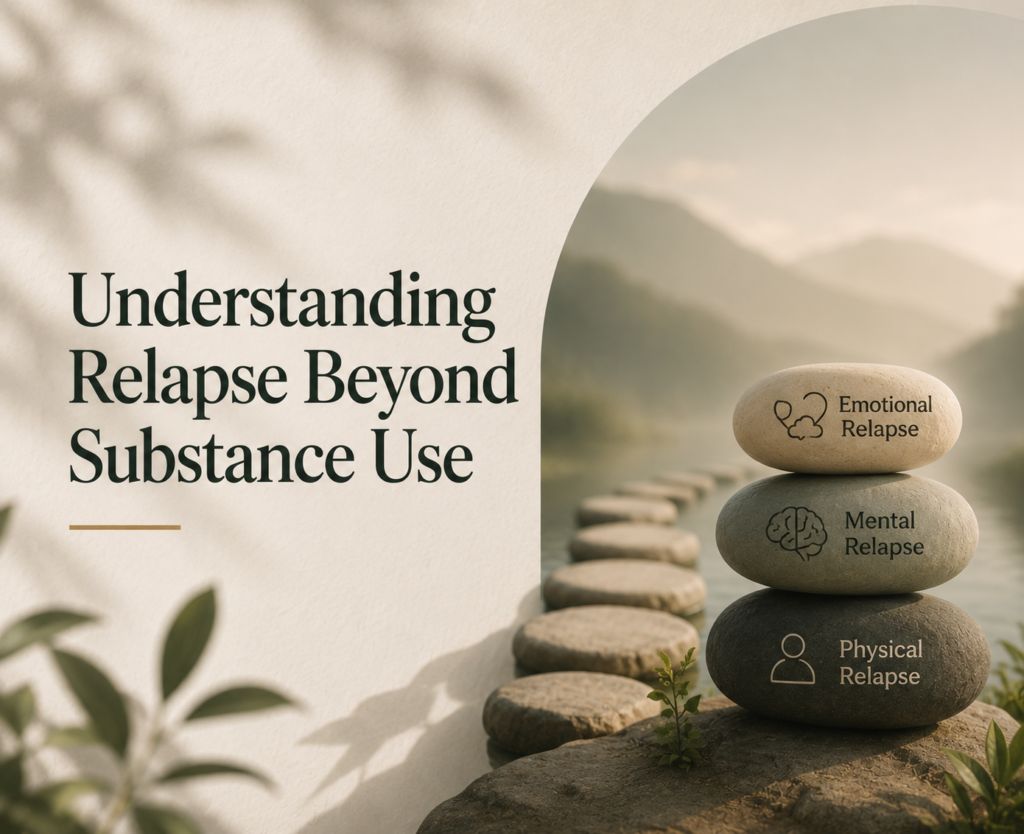
Relapse is a process, not a single event, and it often starts long before substance use resumes. It transitions through three stages:
- Emotional relapse,
- Mental relapse, and finally,
- Physical relapse.
Emotional exhaustion, suppressed stress, and avoidance can initiate this process, leading to internal distress that may not be immediately apparent. By understanding relapse as a process, we can approach it with compassion and realism.
Emotional exhaustion can creep in unnoticed, making individuals feel overwhelmed and disconnected. Suppressed stress accumulates over time, creating a pressure cooker effect that can explode into a relapse if not addressed. Emotional avoidance, in which individuals try to escape uncomfortable feelings, can exacerbate the situation by preventing necessary emotional processing and healing.
Isolation and cognitive fatigue further complicate the emotional landscape, making it harder for individuals to access support systems. Recognizing these emotional precursors is crucial for effective relapse prevention, as it allows for early intervention and emotional recalibration before substance use becomes a consideration.
Why High-Stress Environments Increase Relapse Risk
High-stress environments, such as those found in demanding workplaces, significantly increase the risk of relapse. Chronic pressure, performance expectations, and burnout contribute to emotional suppression and a lack of recovery time. The nervous system becomes overloaded, and stress hormones increase emotional impulsivity, creating a constant state of high alert.
For example, executives may turn to alcohol nightly as a way to decompress, while others might use stimulants to maintain productivity or sedatives to regulate sleep. These behaviors are attempts to manage the overwhelming stress, but they can quickly spiral into addictive patterns.
Without adequate recovery time, individuals are unable to recalibrate their emotional and physical states. This lack of downtime keeps the nervous system in a perpetual state of stress, making it difficult to develop healthier coping mechanisms. High-stress environments thus not only trigger relapse but also impede the development of resilience needed for long-term recovery.
Common Emotional Relapse Triggers
Several emotional triggers can unconsciously reactivate old coping patterns associated with addiction. Loneliness, shame, anxiety, anger, emotional numbness, unresolved trauma, and boredom after recovery are potent emotional relapse triggers.
Loneliness and isolation can lead to feelings of being disconnected, prompting individuals to seek solace in substances. Shame and anxiety may cause individuals to withdraw further, exacerbating feelings of unworthiness and self-doubt. Anger and emotional numbness can suppress emotional processing, while unresolved trauma may resurface, demanding attention and healing.
Boredom after recovery is particularly insidious, as it can create a void that individuals attempt to fill with substances. Emotional memory and conditioned behavior play significant roles here, as past associations with substance use can be reactivated by these emotional states, leading to cravings based on emotional associations rather than physical need.
Environmental and Social Triggers That Often Go Unnoticed
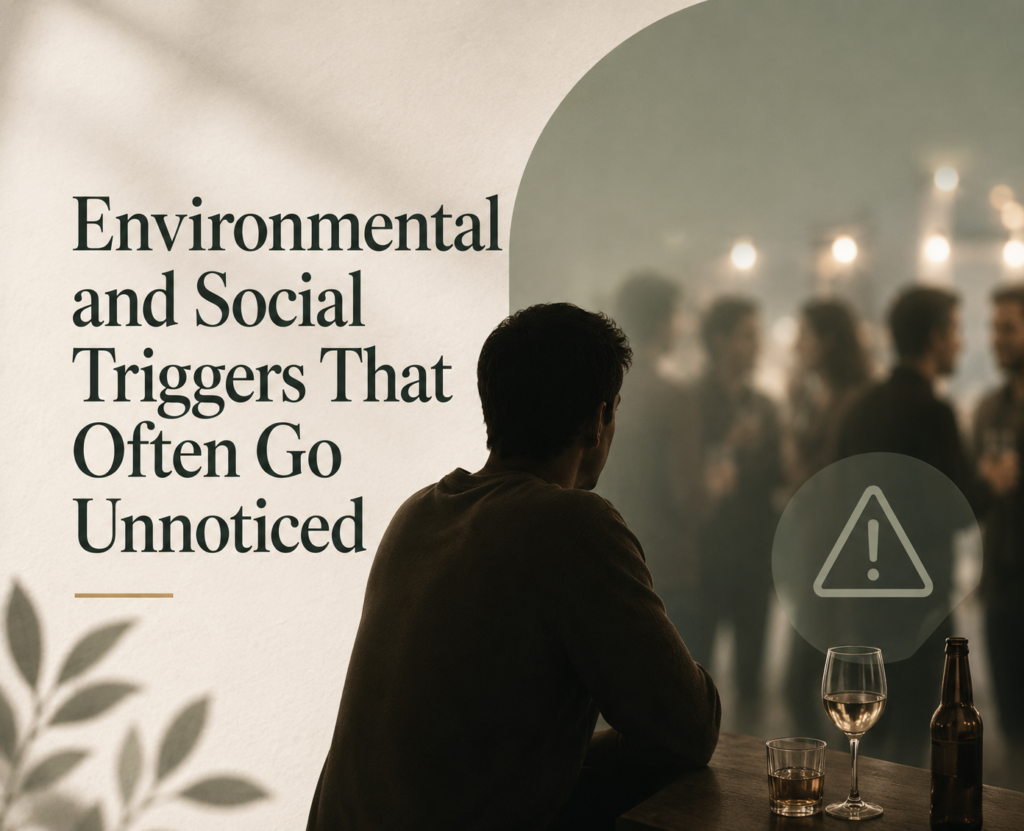
Environmental and social triggers, such as toxic work cultures and social drinking environments, often go unnoticed yet play a substantial role in relapse. Strained relationships and isolation, even in the presence of social activity, can create a fertile ground for relapse.
Exposure to old routines or social circles that normalize substance use can condition individuals to fall back into habitual behavior loops. Environmental conditioning creates familiar emotional states that can trigger relapse, even if the substance itself is not the primary focus.
Social normalization of substance use, such as casual drinking at social events, can subtly pressure individuals into relapse. It’s crucial to recognize that sometimes, it is the emotional familiarity with these environments, rather than a direct desire for the substance, that triggers relapse.
The Psychological Warning Signs Before Relapse
Before relapse occurs, several psychological warning signs often emerge. Irritability, emotional withdrawal, secrecy, romanticizing past substance use, loss of routine, failure in stress tolerance, and avoiding support systems are critical indicators.
Denial patterns can mask the severity of these signs, while emotional dysregulation can lead to impulsive decisions. Overconfidence after periods of sobriety can create a false sense of security, making individuals vulnerable to relapse.
Recognizing these warning signs requires self-awareness and a willingness to seek support. By understanding these psychological cues, individuals can take proactive steps to address their emotional needs before relapse becomes a tangible risk.
Building Emotional Resilience in Recovery
Building emotional resilience is a cornerstone of successful recovery. Therapy, mindfulness, structured routines, emotional processing, support systems, lifestyle restructuring, and healthy coping mechanisms all contribute to this resilience.
Recovery is not just about abstaining from substances but about learning emotional regulation, building stress tolerance, and reconnecting with self-awareness. Creating emotionally safe environments allows individuals to process their emotions healthily, reducing the risk of relapse.
In alignment with Anatta’s philosophy, recovery is seen as an ongoing emotional journey. Personalized recovery support that addresses both substance use and underlying emotional pressures can significantly improve long-term outcomes.
Seeking Support Before Relapse Escalates
Early intervention is crucial in managing relapse risk. Recognizing relapse triggers early can create space for intervention before emotional distress turns into dependency again. Asking for help is not a weakness but a proactive step in sustaining recovery.
Personalized recovery support, such as that provided by Anatta, focuses on individual treatment rather than group therapy, offering a confidential and holistic approach to overcoming addiction. This type of support respects the individual’s privacy and leverages Alternate Life Therapy to address the complexities of addiction.
Recovery often becomes more sustainable when individuals receive support that addresses both the substance use and the underlying emotional pressures driving it. By focusing on emotional healing and stress management, individuals can build a foundation for long-term relapse prevention.
Frequently Asked Questions
Q1. What are the stages of relapse?
Ans. Relapse typically progresses through three stages: emotional relapse, mental relapse, and physical relapse. Emotional relapse involves stress and avoidance, mental relapse includes thoughts about using again, and physical relapse is the actual return to substance use.
Q2. How do high-stress environments contribute to relapse?
Ans. High-stress environments can lead to chronic pressure, burnout, and emotional suppression, which increase the risk of relapse by overwhelming the nervous system and reducing recovery time.
Q3. What are some common emotional triggers for relapse?
Ans. Common emotional triggers include loneliness, shame, anxiety, anger, unresolved trauma, and boredom. These emotions can reactivate old coping mechanisms and lead to cravings.
Q4. Why is early intervention important in preventing relapse?
Ans. Early intervention helps manage relapse risk by addressing emotional distress before it leads to substance use. Recognizing triggers early allows for timely support and emotional recalibration.
Q5. How can emotional resilience be built during recovery?
Ans. Emotional resilience can be developed through therapy, mindfulness, structured routines, support systems, and healthy coping mechanisms, all of which help regulate emotions and build stress tolerance.