In the journey of recovery, the transition from one addiction to another is a phenomenon known as addiction transfer/ Cross-addiction/Substitute addiction. This shift doesn’t imply merely a change in the substance or behaviour but highlights an ongoing emotional and neurological dependency pattern. Essentially, while the coping mechanism may change, the underlying emotional drivers remain untreated, leaving recovery fragile and incomplete.
Understanding addiction goes beyond viewing it as a mere attachment to substances. It always involves deeper emotional voids, stress responses, compulsive behaviour patterns, and reward-seeking tendencies that persist even after the substance is removed. In this article, we will explore why addiction transfer occurs, the emotional and psychological drivers behind it, and how holistic recovery can address these underlying issues.
What Is Addiction Transfer?
Addiction transfer, also known as cross addiction, is the process by which an individual shifts from one compulsive behaviour to another. This can occur with substances, behaviours, or emotional patterns. Common examples include transitioning from alcohol to gambling, drugs to excessive work, smoking to overeating, or substance addiction to compulsive relationships.
This phenomenon is closely linked to unresolved emotional distress. When the original addiction is removed, the brain continues to seek relief, stimulation, or escape through alternative means. The emotional and psychological pain that was temporarily alleviated by the initial addiction may persist, leading to the adoption of new compulsive behaviours.
It is important to note that not every individual in recovery will experience addiction transfer. However, recognising the potential for this shift is crucial in understanding the comprehensive nature of addiction and recovery.
Why the Brain Seeks Replacement Behaviours
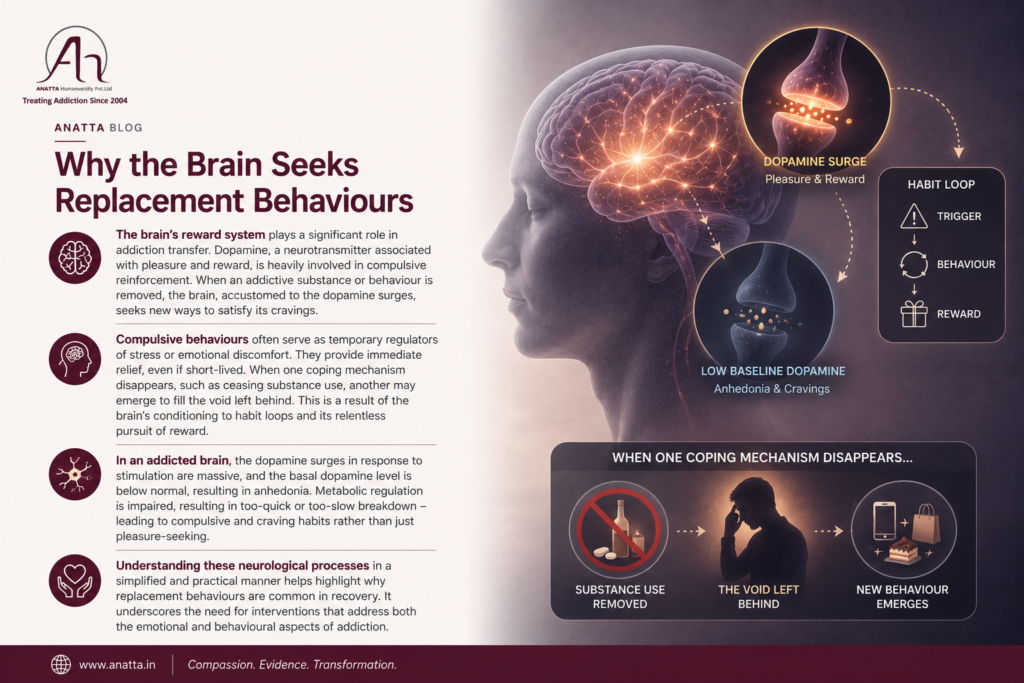
The brain’s reward system plays a significant role in addiction transfer. Dopamine, a neurotransmitter associated with pleasure and reward, is heavily involved in compulsive reinforcement. When an addictive substance or behaviour is removed, the brain, accustomed to the dopamine surges, seeks new ways to satisfy its cravings.
Compulsive behaviours often serve as temporary regulators of stress or emotional discomfort. They provide immediate relief, even if short-lived. When one coping mechanism disappears, such as ceasing substance use, another may emerge to fill the void left behind. This is a result of the brain’s conditioning to habit loops and its relentless pursuit of reward.
In an addicted brain, the dopamine surges in response to stimulation are massive, and the basal dopamine level is below normal, resulting in anhedonia. Metabolic regulation is impaired, resulting in too-quick or too-slow breakdown – leading to compulsive and craving habits rather than just pleasure-seeking.
Understanding these neurological processes in a simplified and practical manner helps highlight why replacement behaviours are common in recovery. It underscores the need for interventions that address both the emotional and behavioural aspects of addiction.
The Emotional Drivers Behind Addiction Transfer
Several emotional factors significantly contribute to addiction transfer. Loneliness, anxiety, trauma, shame, boredom, emotional emptiness, and stress intolerance are among the primary drivers. If untreated, one does not have the ability to sit with the discomfort of one’s emotions are thereby uncomfortable in one’s own company. This results in adopting the easiest escape route, substance use. This, when it reaches addictive proportions, no longer proves to be the solution to distress. In many cases, these emotions are avoided or suppressed through addiction, leading to unresolved psychological pain that persists beyond sobriety.
Addiction transfer is often rooted in emotional avoidance. The new compulsive behaviour becomes a substitute for the emotional void left by the original addiction. This behaviour provides momentary relief but often exacerbates the underlying issues, as the core emotional discomfort remains unaddressed.
Therapist-informed insights suggest that addressing these emotional drivers is crucial for sustainable recovery. Emotional healing involves processing trauma, developing healthy coping mechanisms, and building resilience against stress and discomfort.
Common Forms of Addiction Transfer in Recovery
Replacement behaviours in recovery can manifest in various forms. Examples include excessive work and productivity, compulsive exercise, gambling, shopping addiction, unhealthy relationships, social media dependency, overeating, and prescription medication misuse. These behaviours may initially appear socially acceptable or even productive, making them harder to recognise as forms of addiction transfer.
Beneath the functionality or ambition of these behaviours often lies emotional dependency. Compulsive patterns can be disguised as discipline or ambition, yet they serve the same purpose as the original addiction: to escape or alleviate emotional distress.
Recognising these patterns is essential for individuals in recovery, as it allows for the identification and addressing of emotional and psychological dependencies that persist beyond substance use.
Warning Signs That Addiction Transfer May Be Happening
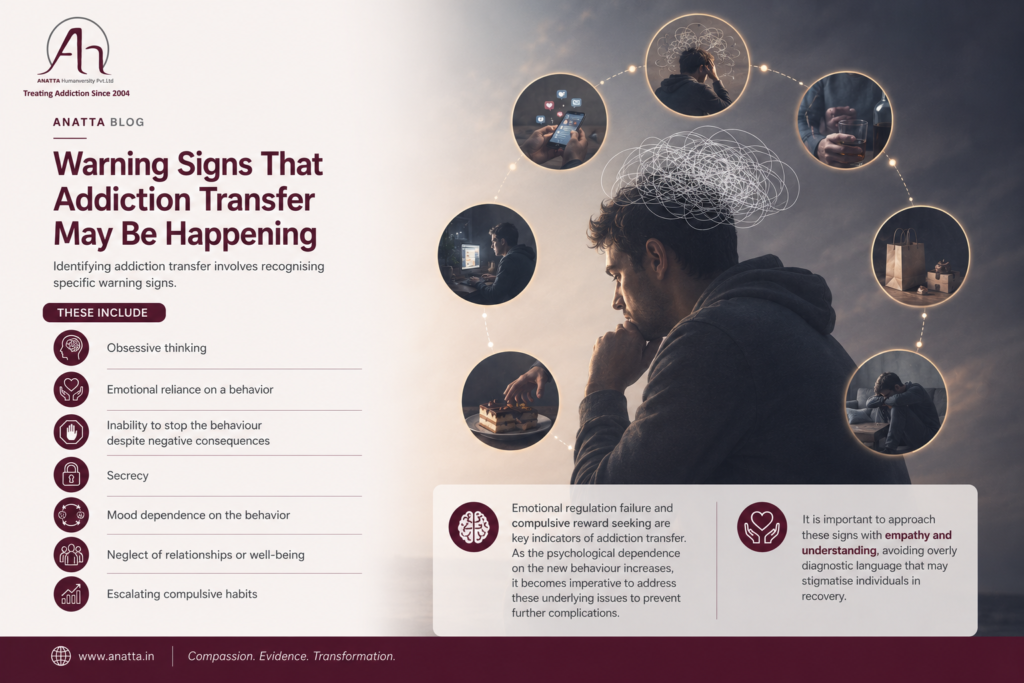
Identifying addiction transfer involves recognising specific warning signs.
These include
- Obsessive thinking
- Emotional reliance on a behavior
- Inability to stop the behaviour despite negative consequences
- Secrecy
- Mood dependence on the behavior
- Neglect of relationships or well-being
- Escalating compulsive habits.
Emotional regulation failure and compulsive reward seeking are key indicators of addiction transfer. As the psychological dependence on the new behaviour increases, it becomes imperative to address these underlying issues to prevent further complications.
It is important to approach these signs with empathy and understanding, avoiding overly diagnostic language that may stigmatise individuals in recovery.
Why Emotional Healing Matters in Long-Term Recovery
For sustainable recovery, emotional healing is paramount. This is done in residential holistic voluntary systems that provide tools to deal with unprocessed emotions. This involves therapy, trauma processing, mindfulness, self-awareness, healthy coping mechanisms, and strong support systems. Recovery should be framed as a journey of understanding oneself, one’s thoughts, irrational self-beliefs, patterns of behaviour and emoting, learning to tolerate discomfort, building emotional resilience, and developing healthy reward systems.
Rebuilding identity beyond addiction is a critical aspect of this process. Anatta’s approach to recovery, for instance, emphasises individual treatment and holistic processes such as Alternate Life Therapy to help clients overcome their addictions.
By focusing on emotional healing, individuals can address the root causes of addiction transfer and work towards long-term recovery that is not only about abstinence but also about emotional and behavioural restructuring.
Building Sustainable Recovery Without Replacement Dependencies
Creating a sustainable recovery plan involves structured routines, emotional support, behavioural awareness, lifestyle balance, and meaningful human connections. Relapse prevention strategies should be framed in a soft and emotionally safe manner, emphasising the importance of understanding the emotional and behavioural patterns that drive compulsive dependency.
Sustainable recovery often requires more than merely eliminating a substance. Long-term healing becomes stronger when individuals are supported in recognising and addressing the emotional and psychological factors that contribute to addiction transfer.
By focusing on holistic recovery and emotional healing, individuals can break free from the cycle of addiction transfer, fostering a healthier and more fulfilling life beyond compulsive dependencies. For those seeking personalised addiction recovery support, exploring a trusted rehabilitation centre can be an important first step toward lasting healing.
Anatta Recovery Centres for Holistic Addiction Treatment
If you or a loved one is experiencing challenges related to addiction transfer or recurring compulsive behaviours, professional support can play an important role in long-term healing. At Anatta, recovery focuses on emotional healing, behavioural awareness, trauma-informed care, and holistic rehabilitation tailored to individual needs through specialised addiction treatment programs.
For individuals looking for support in specific cities, explore our centres:
- Rehabilitation Centre in Kolkata
- Rehabilitation Centre in Delhi
- Rehabilitation Centre in Mumbai
- Rehabilitation Centre in Pune
- Rehabilitation Centre in Chennai
- Rehabilitation Centre in Hyderabad
Seeking support early can help address the emotional roots of addiction and reduce the risk of substitute dependencies during recovery.
Further reading:
Recovery becomes Fragile — Explain holistic recovery
Frequently Asked Questions
Ques. Why does one addiction replace another?
Ans. One addiction may replace another because the brain continues to seek relief, stimulation, or emotional escape even after the original addiction stops. Unresolved trauma, anxiety, loneliness, stress, or emotional emptiness can increase the likelihood of replacement behaviours.
Ques. What are common examples of addiction transfer?
Ans. Common examples of addiction transfer include:
- Alcohol addiction shifting to gambling
- Smoking is replaced by overeating
- Drug addiction is replaced by compulsive exercise
- Substance use was replaced by shopping addiction
- Recovery leading to unhealthy relationship dependency or excessive social media use
Ques. Is addiction transfer common during recovery?
Ans. Addiction transfer can occur during recovery, especially when emotional healing and behavioural patterns are not addressed. However, not everyone in recovery experiences cross-addiction. Proper therapy, emotional support, and self-awareness can significantly reduce the risk.
Ques. What are the warning signs of addiction transfer?
Ans. Some warning signs include obsessive thinking, emotional dependence on a behaviour, secrecy, inability to stop despite negative consequences, mood changes linked to the behaviour, neglect of responsibilities, and escalating compulsive habits.
Ques. Why does addiction transfer happen in the brain?
Ans. Addiction transfer is linked to the brain’s reward system. Addictive behaviours can create dopamine-driven habit loops. When one addiction is removed, the brain may search for alternative sources of stimulation or emotional relief if healthier coping skills are not developed.
Ques. How can addiction transfer be prevented?
Ans. Prevention involves addressing the emotional roots of addiction through therapy, trauma healing, behavioural counselling, mindfulness, emotional regulation, healthy routines, and strong support systems. Holistic addiction treatment often helps reduce dependency replacement.
Ques. Can therapy help with addiction transfer?
Ans. Yes. Therapy can help identify unresolved emotional triggers, trauma, stress responses, and behavioural patterns that contribute to addiction transfer. Therapeutic support also helps individuals build healthier coping mechanisms for long-term recovery.
Ques. What is the difference between relapse and addiction transfer?
Ans. Relapse refers to returning to the original addictive substance or behaviour, while addiction transfer occurs when a person replaces one addiction with a different compulsive behaviour or dependency.
Ques. How does holistic recovery help prevent substance addiction?
Ans. Holistic recovery focuses on emotional healing, self-awareness, behavioural restructuring, trauma recovery, and lifestyle balance. Instead of only treating substance use, it addresses the underlying reasons that contribute to compulsive dependency.