Understanding addiction requires more than just observing behavior; it involves delving into the intricate workings of the brain. At the center of this exploration is dopamine, a neurotransmitter often misunderstood as merely the “pleasure chemical.”
In reality, dopamine plays a complex role in
- motivation,
- reward anticipation,
- and reinforcement, and
When dysregulated, it profoundly impacts decision-making in addiction.
This article aims to demystify how dopamine dysregulation alters reward processing, impulse control, emotional regulation, and ultimately, decision-making.
Addiction is not a simple matter of choice or lack of willpower. It fundamentally changes how the brain evaluates reward, risk, and motivation, often impairing rational decision-making over time. This neurochemical imbalance explains why individuals may continue harmful behaviors despite knowing the consequences, why willpower alone is insufficient, and how emotional triggers intertwine with dopamine pathways to sustain addiction.
What Is Dopamine Dysregulation?
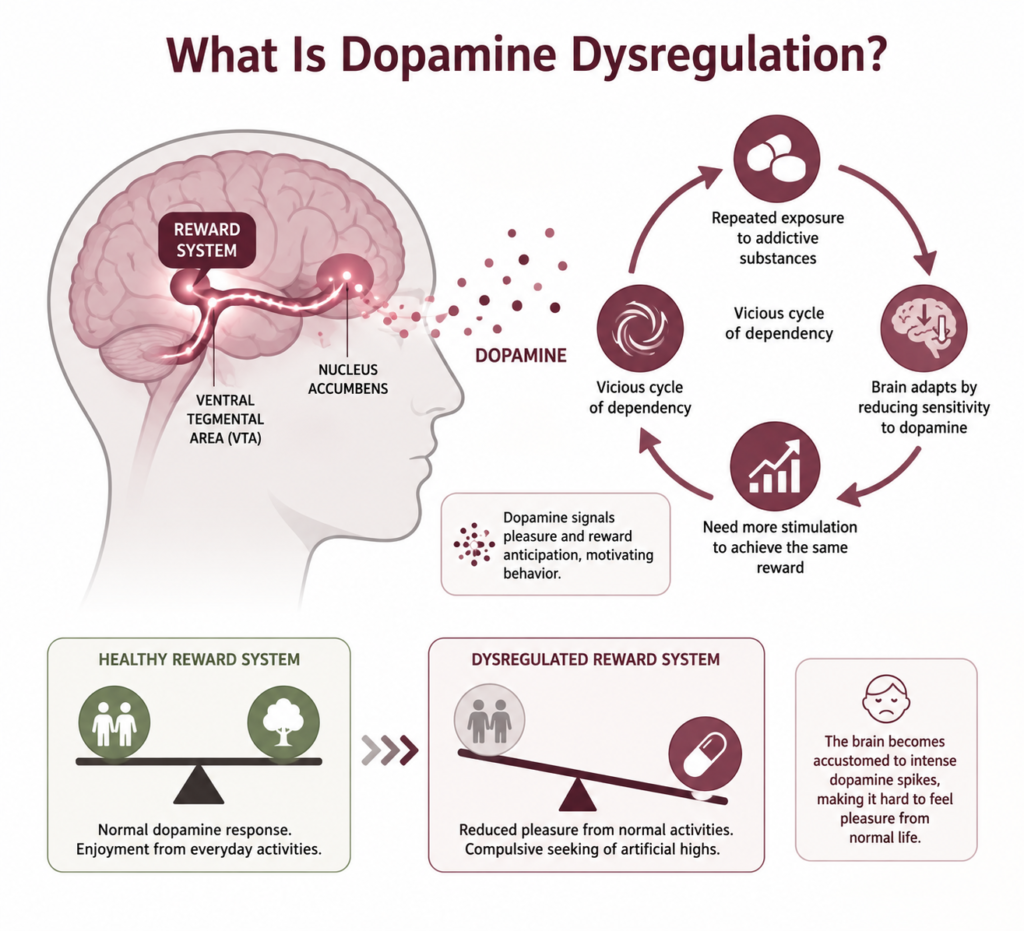
Dopamine is a critical neurotransmitter involved in the brain’s reward system, essential for motivating behaviour by signalling pleasure and reward anticipation. However, with repeated exposure to addictive substances, this system becomes dysregulated. Dopamine dysregulation refers to the overstimulation of these pathways, leading to an imbalance that skews the brain’s natural reward processing.
When substances artificially surge dopamine levels repeatedly, the brain starts to adapt by reducing its sensitivity to dopamine. This phenomenon requires individuals to seek increasing levels of stimulation to achieve the same reward sensation, creating a vicious cycle of dependency. The brain’s natural ability to regulate dopamine becomes compromised, leading to significant changes in behavior and decision-making.
This imbalance makes it difficult for individuals to experience pleasure from normal activities, as the brain becomes accustomed to the intense dopamine spikes provided by substances. This altered state of reward processing is a hallmark of addiction, driving compulsive behaviors in pursuit of artificial highs.
How Addiction Alters the Brain’s Reward System
Addiction hijacks the brain’s natural reward circuitry, a system evolved to reinforce behaviors essential for survival, such as eating and socializing. Substances of abuse, however, provide a shortcut to reward by flooding the brain with dopamine, eclipsing natural rewards and leading to reduced pleasure from everyday activities.
This hijacking creates a pattern of compulsive reward-seeking behavior, where the pursuit of substance-induced highs takes precedence over other life activities. Tolerance develops as the brain adjusts to these elevated dopamine levels, requiring more of the substance to achieve the same effect. This cycle of craving and use becomes emotionally reinforced, offering short-term relief at the cost of long-term consequences.
Over time, the brain prioritizes immediate relief over rational evaluation, leading to decisions driven by the need to alleviate discomfort rather than a balanced assessment of risks and benefits. This shift in priority highlights the profound impact of addiction on decision-making processes.
Why Decision-Making Becomes Impaired in Addiction
The impairment of decision-making in addiction is closely tied to impulsivity, poor risk assessment, impacted judgement in making rational decisions, and emotional reasoning. These challenges arise from the altered functioning of the prefrontal cortex, the brain region responsible for executive functions, including self-regulation and impulse control.
Emotional triggers and stress exacerbate these difficulties, as the brain’s reward system becomes more responsive to cues associated with substance use. This increased sensitivity to triggers makes it challenging for individuals to delay gratification, even when they are intellectually aware of the negative consequences.
Despite knowing the potential harm, the emotional pull of addiction can overpower rational thought. This struggle underscores the need for a compassionate understanding of addiction, recognizing the emotional and neurobiological factors that contribute to impaired decision-making.
Emotional Stress and Dopamine Dysregulation
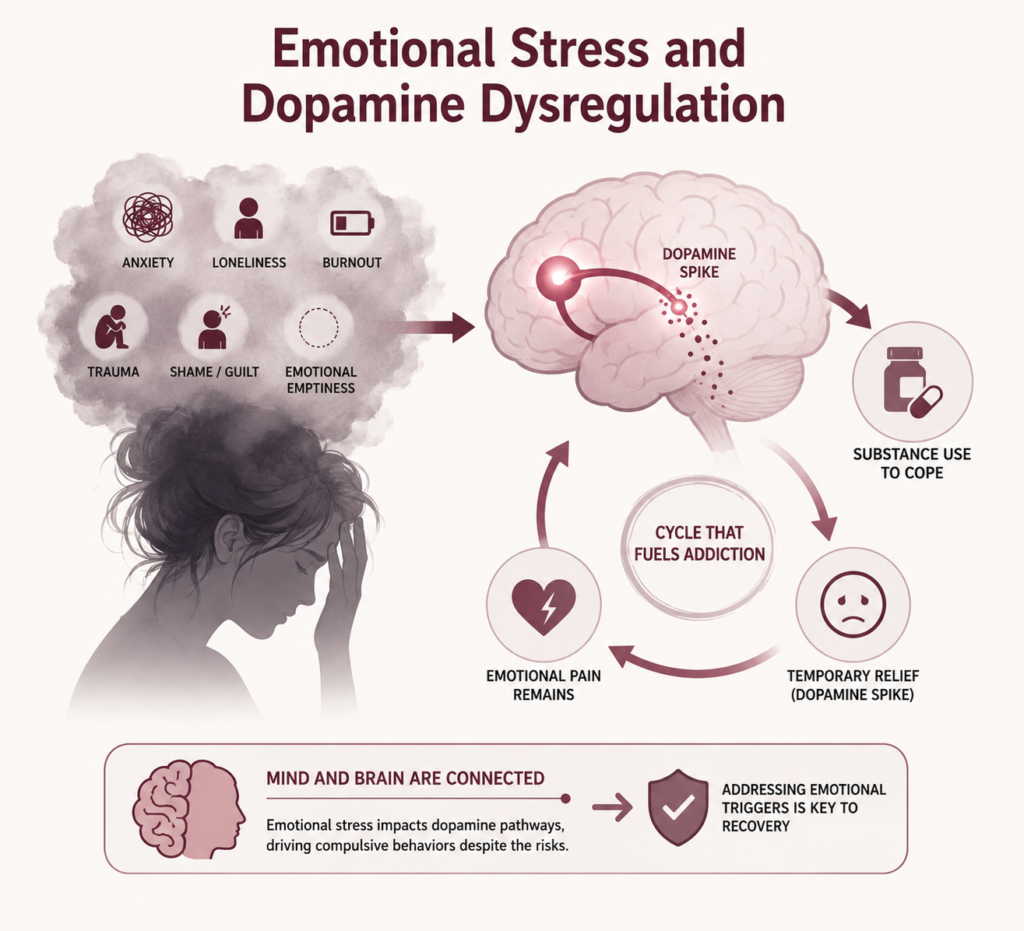
Emotional stress, including anxiety, loneliness, burnout, trauma, shame, guilt, and emotional emptiness, significantly contributes to dopamine dysregulation in addiction. These feelings intensify the desire for reward-seeking behaviors as individuals turn to substances to cope with emotional discomfort.
Substances become a tool for managing distress, providing temporary dopamine spikes that mask underlying emotional pain. This reliance on substances for emotional relief creates a cycle where emotional discomfort fuels addiction, perpetuating dopamine dysregulation.
The connection between psychology and neurobiology is evident here, as emotional stress directly impacts dopamine pathways, driving compulsive behaviors despite the potential for harm. Addressing these emotional triggers is essential for effective addiction recovery.
Behavioral Signs of Dopamine Dysregulation in Addiction
Dopamine dysregulation manifests behaviorally in several ways, including compulsive substance seeking, emotional numbness, and an inability to enjoy normal experiences. Mood instability and impulsive decisions are common, as obsessive thinking about substances dominates the individual’s focus.
These behavioral signs are accompanied by declining motivation, social withdrawal, and patterns of dependency. Emotional dysregulation further compounds these issues, as individuals struggle to manage their emotions without resorting to substance use.
While these behaviors can be distressing, it is important to approach them with empathy and understanding, recognizing the underlying neurobiological factors at play rather than viewing them as purely behavioral choices.
Can the Brain Recover From Dopamine Dysregulation?
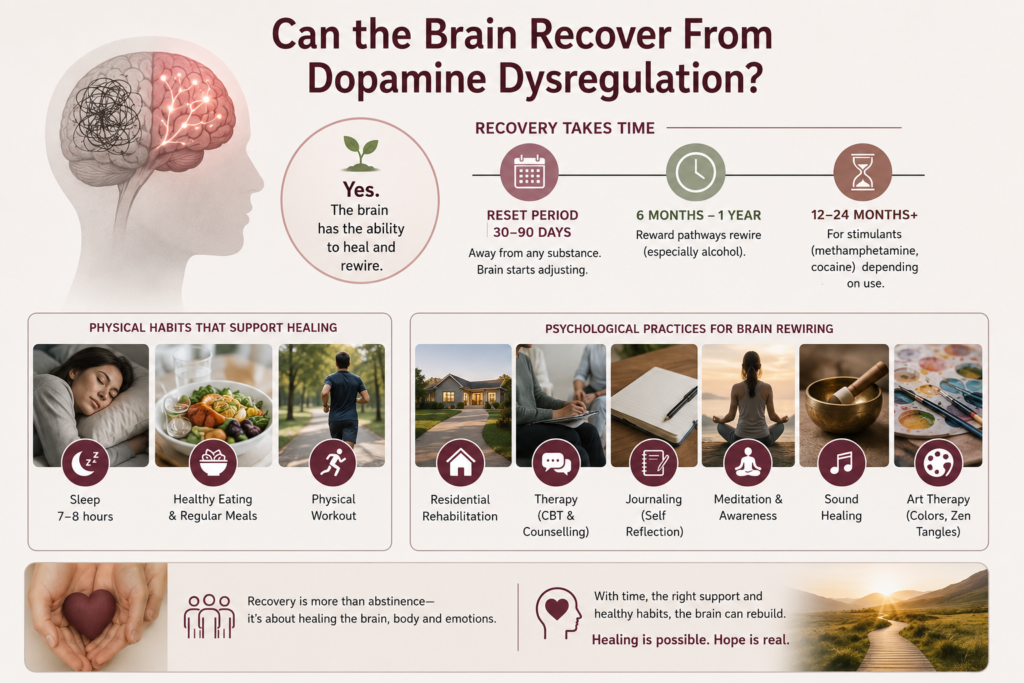
Recovery from dopamine dysregulation is possible, thanks to the brain’s remarkable capacity for neuroplasticity. Gradual healing occurs as individuals engage in healthy routines, therapy, and recovery support, allowing the brain to rebuild its natural reward systems.
The initial 30-90 days are called the reset period away from any substance. The brain starts adjusting to regular pleasures, and dopamine starts regulating.
It takes about 6 months to one year for the reward pathways to rewire, especially if the substance is alcohol
However, in the case of stimulants like methamphetamine and cocaine, recovery of the pathways can take 12-24 months, depending on the quantum and duration of use in which case it can take longer.
Physical activities that can aid in rewiring and regulation:-
- Sleep for 7-8 hours
- Adopting healthy eating habits and regular meal timings
- Physical working out.
Psychological activities that can enable healthy rewiring
- Residential rehabilitation treatment for addictive traits
- CBT and other counselling techniques tailored to each client to change and recalibrate thought patterns and emotional reaction patterns.
- Also attained through regular introspective structured journaling. These help in dealing with past emotional issues and traumas in a healthy manner.
- Awareness and active meditation practices that enable one to loosen stuck emotions in the cellular memory.
- Sound healing practices that calm the nervous system
- Art therapy, using colors, Zen tangles, etc, aids in brain rewiring.
- Neurobiological healing is accentuated by the above practices, which create, through neuroplasticity, new healthy pathways in the brain.
Thus, recovery is not simply about abstaining from substances; it involves emotional healing and behavioral restructuring. Consistent support, whether through therapy or other recovery programs, significantly improves long-term outcomes by addressing both the neurobiological and emotional aspects of addiction.
Rebuilding a healthy routine involves prioritizing sleep, structure, and emotional regulation, creating an environment conducive to recovery. Although the process takes time, the potential for healing offers hope for individuals struggling with addiction.
Supporting Long-Term Recovery and Emotional Balance
Supporting long-term recovery involves a multifaceted approach that includes therapy, mindfulness, behavioral restructuring, and healthy social connections. Stress management and personalized recovery environments play vital roles in maintaining emotional balance and preventing relapse.
Understanding the impact of addiction on the brain can reduce shame and encourage individuals to seek support early. Recovery becomes more sustainable when emotional healing and behavioral rehabilitation are approached together, rather than focusing solely on substance use.
Anatta’s treatment philosophy aligns with these principles, offering non-medical, individualized treatment that respects the privacy and unique needs of each client. By fostering emotional healing and supporting behavioral change, Anatta provides a pathway to recovery that emphasizes rebuilding healthy reward systems and restoring balance.
FAQs
1. What is dopamine dysregulation in addiction?
Ans. Dopamine dysregulation is an imbalance in the brain’s reward system caused by repeated exposure to addictive substances. Dopamine spikes far beyond natural levels, so the brain reduces its own sensitivity over time. This forces a person to need more of the substance to feel the same reward, driving the cycle of dependency.
2. Is dopamine really the brain’s “pleasure chemical”?
Ans. Not exactly. Dopamine is more accurately involved in motivation, reward anticipation, and reinforcement of behavior rather than pleasure alone. In addiction, this system drives the urge to seek a substance even before use, which is why cravings can feel stronger than the high itself.
3. Why can’t people with addiction just use willpower to stop?
Ans. Addiction physically changes how the brain’s prefrontal cortex — the region responsible for impulse control and rational decision-making — functions. Dopamine dysregulation weakens this system, making self-regulation significantly harder. This is why addiction is considered a neurobiological condition, not simply a failure of willpower.
4. How does dopamine dysregulation affect decision-making?
Ans. It impairs the brain’s ability to accurately assess risk versus reward. People with dysregulated dopamine systems tend toward impulsivity, poor judgment, and emotionally-driven choices, prioritizing immediate relief from cravings over long-term consequences, even when they are fully aware of the potential harm.
5. Why do people lose interest in things they used to enjoy?
Ans. Repeated substance use produces dopamine spikes far more intense than everyday rewards like food, socializing, or hobbies can trigger. Over time, the brain recalibrates to expect these extreme highs, making normal activities feel flat or unrewarding by comparison — a condition sometimes called anhedonia.
6. What role does emotional stress play in dopamine dysregulation?
Ans. Stress, anxiety, loneliness, trauma, shame, and emotional emptiness intensify reward-seeking behavior. Many people use substances to numb this emotional discomfort, which produces temporary dopamine relief but deepens the underlying dysregulation over time, creating a self-reinforcing cycle between emotional pain and substance use.
7. What are the behavioral signs of dopamine dysregulation?
Ans. Common signs include compulsive substance-seeking, emotional numbness, reduced ability to enjoy everyday activities, mood instability, impulsive decisions, obsessive thoughts about using, declining motivation, and social withdrawal. These are neurobiological symptoms of addiction, not simply behavioral choices.
8. Can the brain recover from dopamine dysregulation?
Ans. Yes. The brain’s neuroplasticity allows dopamine pathways to gradually rebalance with sustained abstinence, therapy, and healthy routines. Recovery is not instant, but it is well documented and achievable with consistent support.
9. How long does it take for the brain to recover from dopamine dysregulation?
Ans. Recovery timelines vary by substance. The first 30–90 days act as an initial “reset period.” Reward pathways generally take 6 months to a year to rewire for alcohol use, while recovery from stimulants like methamphetamine or cocaine can take 12–24 months or longer, depending on the duration and intensity of use.
10. What helps the brain rewire during addiction recovery?
Ans. Physical habits that support recovery include 7–8 hours of sleep, regular healthy meals, and consistent exercise. Psychological support such as CBT, residential rehabilitation, structured journaling, meditation, sound healing, and art therapy also promote neuroplasticity and help rebuild healthier dopamine pathways.
11. Does recovery from addiction only mean stopping substance use?
Ans. No. True recovery involves emotional healing and behavioral restructuring alongside abstinence. Addressing the underlying emotional stress, trauma, or psychological patterns that fueled dopamine dysregulation is essential for lasting recovery, not just physically removing the substance.
12. Where can someone get help for addiction and dopamine dysregulation?
Ans. Non-medical, individualized rehabilitation programs — like Anatta’s — combine therapy, structured routines, mindfulness, and emotional support to help rebuild healthy reward systems. Early professional support improves long-term recovery outcomes and reduces the shame often associated with seeking help.