The World Health Organization (WHO) defines addiction as the repeated, compulsive use of psychoactive substances characterized by chronic intoxication, difficulty stopping, and a strong drive to obtain the substance.
Drug addiction can affect a person’s health, family, work, and daily life. What may begin as occasional drug use can become difficult to control. Over time, a person may continue using drugs even when they know it is harming them.
Understanding drug addiction problems and solutions can help people recognise the risks, find suitable treatment, and support a loved one through recovery.
Drug addiction is a health condition, not a lack of willpower. The will, in fact, is very strong as they are using against their own will and against the will of their close loved ones who beseech them to stop. With suitable treatment, care, and ongoing support, people can work towards a healthier life.
In this guide, we explain the common problems caused by drug addiction, why addiction develops, and the solutions that can help people recover.
What Is Drug Addiction?
Drug addiction is a condition in which a person struggles to control their use of a substance, even when it causes harm, the craving to use turns into an obsession and a compulsion which drives to using.
Healthcare professionals often use the term substance use disorder (SUD). It can affect how the brain handles pleasure, stress, motivation, and decision-making.
Classification of Drugs
- Central Nervous System (CNS) Depressants: Slow down brain activity and body functions.
- Examples: Alcohol, barbiturates, benzodiazepines (e.g., Valium, Xanax)
Central Nervous System (CNS) Stimulants: Speed up brain activity and body functions.
- Examples: Cocaine, methamphetamine, amphetamines, nicotine, and caffeine.
Hallucinogens: Alter perception, mood, and cognitive processes, causing users to see or experience things differently.
- Examples: LSD, psilocybin (magic mushrooms), and peyote.
Dissociative Anesthetics: Cause a sense of detachment from the body or environment and interfere with sensory perception.
- Examples: Ketamine, PCP (phencyclidine), and dextromethorphan.
Narcotic Analgesics (Opioids): Relieve severe pain by binding to opioid receptors in the brain and body, while depressing the central nervous system.
- Examples: Heroin, morphine, fentanyl, oxycodone, and codeine.
Inhalants: Chemical vapors found in household or industrial products that are breathed in to produce psychoactive effects.
- Examples: Solvents, aerosols, glues, and nitrous oxide.
Cannabis: Derived from the Cannabis sativa plant, containing active cannabinoids like THC and CBD that act on specific brain receptors.
- Examples: Marijuana, hashish, and THC concentrates
All drugs if used in excess can get one addicted to them. Certain drugs can get one hooked on to them even with one use, depending on the susceptibility of the individual. . The risk depends on many factors, including the substance, how it is used, a person’s health, and their life experiences.
The National Institute on Drug Abuse (NIDA) explains how addiction affects the brain and behaviour.
For more information, read Anatta’s guide to substance use disorder, its symptoms, causes, and treatment.
How Big Is the Drug Addiction Problem?
Drug use is a major public health concern around the world.
According to the United Nations Office on Drugs and Crime (UNODC), an estimated 316 million people used drugs worldwide in 2023, excluding alcohol and tobacco. The UNODC’s World Drug Report 2025 also reported that an estimated 64 million people were living with drug use disorders in 2023.
These figures show why prevention, early support, and access to treatment matter.
Source: UNODC World Drug Report 2025 — Key Findings.
Drug addiction does not affect only the person using drugs. It can also affect family members, friends, workplaces, and communities.
The World Health Organization (WHO) explains the importance of effective prevention, treatment, and care for drug use disorders.
What Are the Common Problems Caused by Drug Addiction?
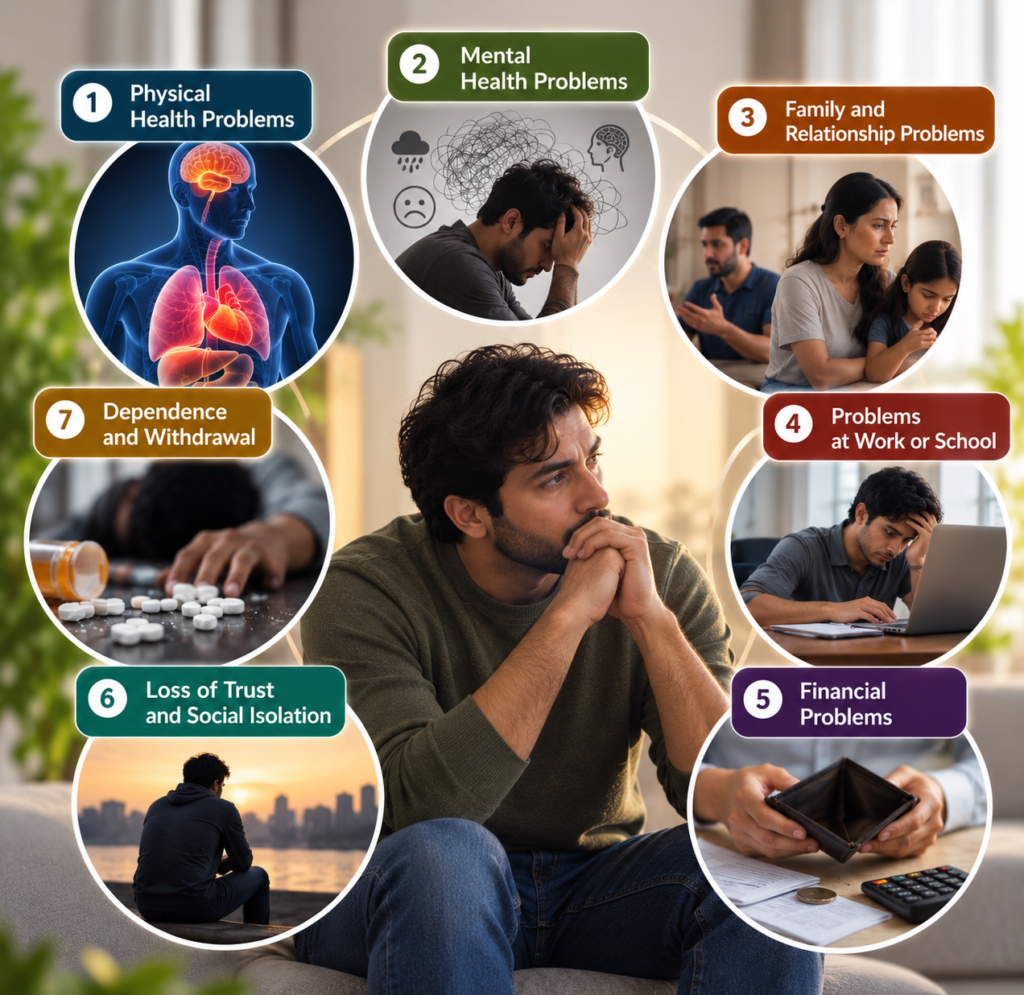
Drug addiction can affect several parts of a person’s life. The effects depend on the substance, the amount used, and the person’s health.
1. Physical Health Problems
Drug use can harm the body in different ways. Some substances affect the heart, lungs, liver, or brain. Others may affect appetite, sleep, and energy levels.
Possible health problems include:
- Poor sleep and constant tiredness.
- Changes in appetite and body weight.
- Heart and breathing problems.
- Poor memory and coordination.
- A higher risk of overdose.
- Other long-term health problems.
Using more than one substance at a time can increase the risks.
Read more about the effects of drug addiction on health.
2. Mental Health Problems
Drug addiction can affect thoughts, feelings, and behaviour.
Some people may experience anxiety, low mood, confusion, or strong changes in their emotions. Drug use can also worsen existing mental health conditions.
In some cases, mental health problems and addiction occur together. Both may need care for the person to make progress.
A healthcare professional can help assess these concerns and recommend suitable support.
3. Family and Relationship Problems
Drug addiction can create stress between family members and loved ones.
A person may become distant, miss family events, or struggle to keep promises. Arguments may happen over money, trust, or daily responsibilities.
Family members may also feel worried, helpless, or emotionally tired.
Open communication, clear boundaries, and professional guidance can help families manage these challenges.
Learn more about the impact of addiction on families and relationships.
4. Problems at Work or School
Drug addiction can make it harder to focus, remember tasks, or complete daily responsibilities.
A person may miss classes, arrive late for work, or struggle to meet deadlines. Their performance may decline over time.
These problems can affect education, career growth, and financial stability.
Early support may help a person address drug use before these difficulties become more serious.
5. Financial Problems
Drug use can lead to repeated spending on substances. Some people may struggle to pay for food, housing, education, or other basic needs.
Financial stress can also increase conflict within families.
A person may benefit from professional treatment alongside practical support for budgeting, work, and daily responsibilities.
6. Loss of Trust and Social Isolation
Some people hide their drug use because they fear judgment or conflict. They may stop meeting friends or avoid family members.
Over time, this can lead to loneliness and a loss of social support.
Recovery often includes rebuilding trust, developing healthy routines, and reconnecting with supportive people.
7. Dependence and Withdrawal
Repeated drug use can lead to physical dependence on some substances. When the person reduces or stops using them, withdrawal symptoms may occur.
These can include anxiety, sweating, shaking, nausea, body aches, or sleep problems. The symptoms depend on the substance.
Some types of withdrawal can be dangerous and require medical care.
Important: Do not assume that stopping suddenly is always safe. Speak with a qualified healthcare professional before stopping regular drug use, especially if the substance is unknown or several substances are involved.
Read about signs that drug detoxification may be needed.
What Causes Drug Addiction?
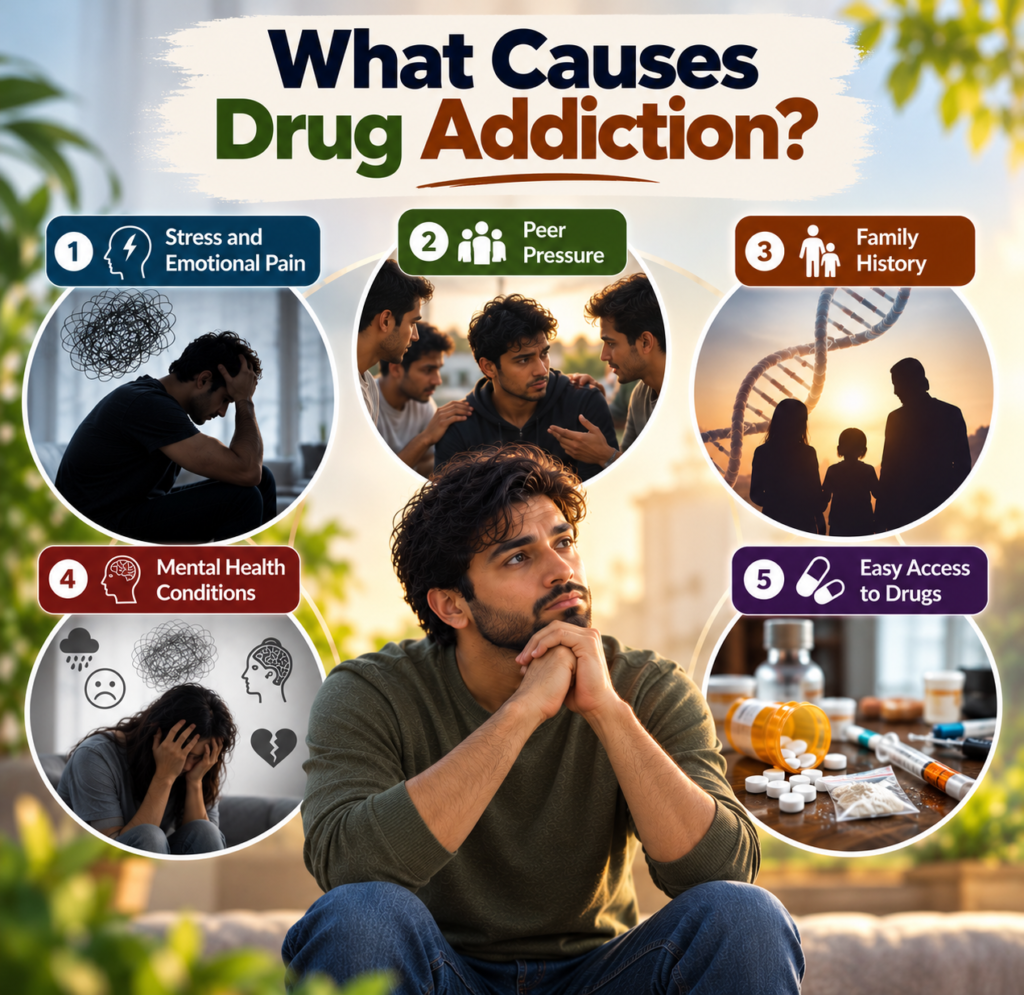
There is no single cause of drug addiction. It usually develops through a mix of personal, biological, and environmental factors.
Common risk factors include:
1. Stress and Emotional Pain
Some people use drugs to cope with stress, grief, loneliness, or painful experiences. Although drugs may offer short-term relief, repeated use can create further problems.
2. Peer Pressure
Friends or social groups may influence a person to try drugs. Repeated exposure can increase the risk of continued use.
3. Family History
A family history of addiction may increase a person’s risk. However, it does not mean that the person will develop an addiction.
4. Mental Health Conditions
Anxiety, depression, trauma, and other mental health concerns may occur alongside substance use. Some people may use drugs to cope with difficult feelings, which can make the situation worse.
5. Easy Access to Drugs
Easy access to drugs can increase opportunities for use. Misusing prescription medicines can also lead to serious health risks.
Understanding these risk factors can help people and families recognise when additional support may be needed.
For more information, explore Anatta’s article on how trauma can influence addiction.
Drug Addiction Problems and Solutions: What Can Help?
Drug addiction can be treated. The right approach depends on the person’s health, the substance involved, and the level of support they need.
Here are some important steps that may help.
1. Seek a Professional Assessment
The first step is to speak with a qualified healthcare professional or addiction specialist.
They can assess the person’s drug use, physical health, mental health, and withdrawal risks. This helps them recommend a suitable treatment plan.
Early assessment can help people understand their options before the problems become more severe.
2. Follow a Safe Detoxification Plan When Needed
Some people need supervised withdrawal management when stopping drug use.
The process depends on the substance and the person’s health. Medical professionals can help manage withdrawal symptoms and identify complications.
Detoxification is only one part of care. It does not address every cause of addiction, so continued treatment may be needed.
3. Take Part in Counselling and Therapy
Counselling can help people understand why they use drugs and what makes them want to use them again.
Therapy may help them:
- Recognise situations that trigger cravings.
- Manage stress and difficult emotions.
- Build healthier coping skills.
- Improve decision-making.
- Strengthen relationships.
- Plan for challenges during recovery.
One option is cognitive behavioural therapy (CBT), which helps people identify unhelpful thought patterns and develop healthier ways to respond.
Read more about cognitive behavioural therapy for addiction treatment.
This can happen best in a voluntary, residential rehabilitation treatment program.
4. Consider a Suitable Rehabilitation Programme
Some people may benefit from a structured rehabilitation programme that provides a daily routine, counselling, recovery activities, and support from trained professionals.
The right setting depends on the person’s health, home environment, safety, and level of support required. Residential rehabilitation may be suitable for some people, while others may benefit from outpatient care.
For families researching different treatment settings, Anatta’s guide to rehabilitation services in Mumbai provides a starting point for exploring available care options.
A qualified healthcare professional can help determine which type of treatment is appropriate for the individual.
5. Build Healthy Daily Habits
Healthy habits can support recovery alongside professional treatment.
Helpful steps may include:
- Following a regular sleep schedule.
- Eating balanced meals.
- Staying physically active when able.
- Practising relaxation and meditation techniques.
- Spending time with supportive people.
- Keeping a regular daily routine.
These habits do not replace treatment, but they can help people manage stress and improve their overall well-being.
6. Involve Family Members When Appropriate
Family support can help a person feel less alone during recovery.
Loved ones can encourage treatment, listen without judgment, and help maintain a supportive home environment.
However, family members should also protect their own health and set clear boundaries. They do not need to manage addiction on their own.
Read Anatta’s guide on how to help a loved one with addiction without losing yourself.
7. Make a Plan to Prevent Relapse
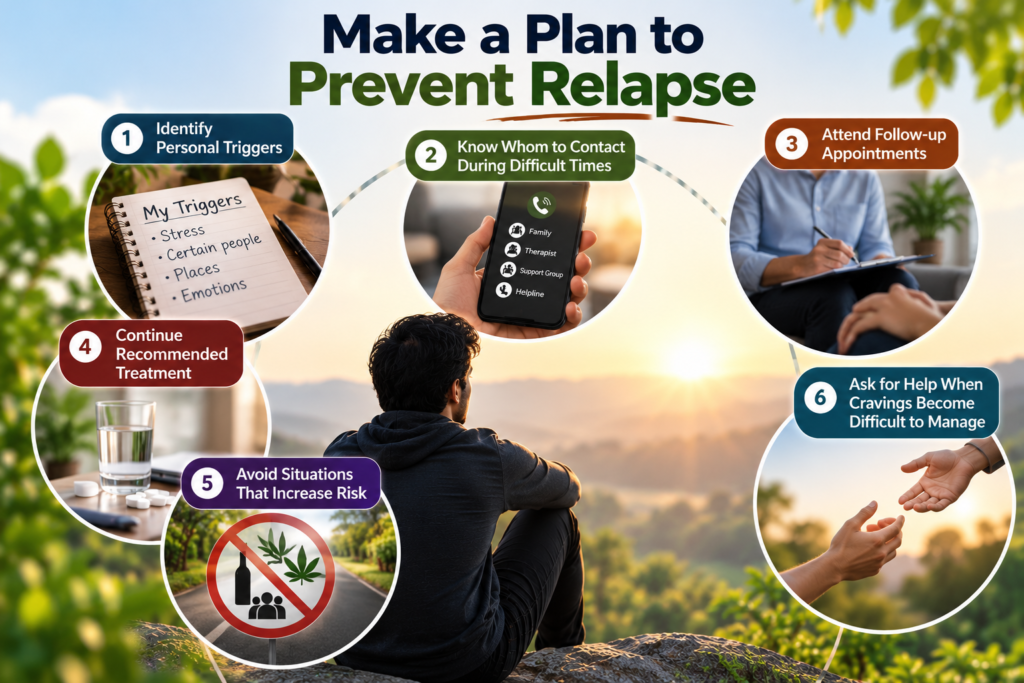
A return to drug use can happen during recovery. It does not mean that treatment has failed or that recovery is impossible.
A relapse-prevention plan can help a person recognise warning signs and respond early.
The plan may include:
- Identifying personal triggers.
- Knowing whom to contact during difficult times.
- Attending follow-up appointments.
- Continuing recommended treatment.
- Avoiding situations that increase risk.
- Asking for help when cravings become difficult to manage.
Read more about relapse and relapse prevention.
What Does Evidence-Based Treatment Mean?
Evidence-based treatment uses methods supported by scientific research and clinical guidance. Depending on the person’s needs and the substance involved, treatment may include counselling, behavioural therapies, medicines, and recovery support.
The WHO and UNODC International Standards for the Treatment of Drug Use Disorders explain the key principles of effective and ethical treatment.
The US Substance Abuse and Mental Health Services Administration (SAMHSA) also explains how medicines, counselling, and behavioural therapies can support treatment for substance use disorders.
Treatment should be selected with a qualified healthcare professional. Not every person needs the same approach.
How Can Families Help Someone With Drug Addiction?
If someone you love is struggling with drug use, your support can make a difference.
Here are some ways to help:
Speak calmly. Choose a private time to talk. Explain your concerns without blaming or shaming the person.
Encourage professional help. Offer to help them find a qualified healthcare professional or discuss treatment options.
Set healthy boundaries. Support recovery without giving money or taking actions that may unintentionally support harmful behaviour.
Learn about addiction. Understanding addiction as a health condition can help families respond with greater care and less judgment.
Look after yourself. Family members may also need counselling or support to manage stress.
Family members may also need guidance on treatment options, recovery planning, and how to support a loved one without neglecting their own well-being.
For those exploring rehabilitation options in Maharashtra, Anatta’s information about its drug rehabilitation services in Pune may help them learn more about the available approach to care.
Every person’s needs are different, so treatment decisions should be made after an appropriate professional assessment.
When Is Drug Addiction a Medical Emergency?
Seek emergency medical help if a person who may have used drugs:
- Has slow, irregular, or stopped breathing.
- Cannot be woken up.
- Has a seizure.
- Has severe chest pain.
- Collapses or becomes extremely confused.
Call your local emergency service immediately. In India, dial 112 for emergency assistance.
Do not leave the person alone or try to make them vomit. Tell emergency responders what you know about the substance and when it may have been taken.
Taking the First Step Towards a Healthier Life
Understanding drug addiction problems and solutions can help individuals and families recognise when support is needed. Drug addiction may affect physical health, mental well-being, relationships, work, and finances, but appropriate treatment can help people work towards recovery.
The first step is to speak with a qualified healthcare professional who can assess the situation and recommend suitable care. Depending on the person’s needs, treatment may include counselling, medical support, withdrawal management, or a structured rehabilitation programme.
Recovery takes time, and each person’s journey is different. With the right guidance, continued support, and healthy coping skills, people can make progress towards a healthier life.
Looking for guidance on addiction treatment?
Connect with Anatta Humanversity to learn more about its approach to recovery and explore the support that may be suitable for you or your loved one. Seeking help early can make it easier to understand the available options and plan the next step.
Frequently Asked Questions
1. What are the main problems caused by drug addiction?
Drug addiction can affect physical health, mental health, family relationships, work, education, and finances. It can also lead to dependence, withdrawal symptoms, and a higher risk of overdose.
2. What are the best solutions for drug addiction?
Possible solutions include professional assessment, suitable medical care, counselling, rehabilitation when needed, family support, and ongoing recovery planning. Treatment should match the person’s health and needs.
3. Can drug addiction be treated successfully?
Yes. Many people make progress with suitable treatment and ongoing support. Recovery may take time, and treatment plans may need to change as a person’s needs change.
4. How can a person stop drug addiction?
The safest approach is to seek advice from a qualified healthcare professional. The person may need withdrawal management, counselling, medication for certain substance use disorders, and a rehabilitation programme. Stopping suddenly can be dangerous with some substances.
5. How does drug addiction affect the brain?
Addictive substances can affect brain systems involved in reward, motivation, stress, and decision-making. These changes can make it harder to control drug use, even when a person wants to stop.
6. How can family members help someone with drug addiction?
Family members can listen without judgment, encourage professional treatment, support healthy routines, and set clear boundaries. They should also seek support for their own well-being.
7. Is rehabilitation necessary for every person with drug addiction?
Yes. For anybody with drug addiction, a residential rehabilitation program is a must. There are self-help groups also present; however, recovery can take longer.
8. What is the difference between detoxification and rehabilitation?
Detoxification focuses on managing the effects of reducing or stopping a substance. Rehabilitation addresses broader needs, such as behaviour, coping skills, mental health, relationships, and recovery planning. Detoxification alone is never enough.
9. Can a person return to normal life after drug addiction?
Many people rebuild their health, relationships, work, and daily routines during recovery. Progress differs from person to person, and ongoing support can help them manage challenges.
10. How can drug addiction relapse be prevented?
Relapse prevention may include recognising triggers, following a treatment plan, attending follow-up sessions, maintaining healthy routines, and asking for support early. No plan can remove every risk, but preparation can help a person respond to challenges.