Drug addiction can affect a person’s physical health, mental health, behaviour, and relationships. It may start with occasional drug use, but over time, a person may find it difficult to control their use, even when it causes problems in daily life.
Recognising the signs and symptoms of drug addiction early can help a person get the right care and support.
Common warning signs include sudden mood changes, strong cravings, poor sleep, secretive behaviour, and loss of interest in daily activities.
Drug addiction is a health condition, not a sign of weak character. With the right treatment and support, recovery is possible.
In this article, we explain the 10 common signs and symptoms of drug addiction, how to recognise them, when to seek professional help, and what treatment options may be available.
What Is Drug Addiction?
Drug addiction is a condition in which a person struggles to control drug use, even when it harms their health, work, family, or personal life. In addiction, the substance starts controlling the individual
Healthcare professionals often use the term substance use disorder (SUD) to describe this condition. It can affect the brain systems involved in reward, motivation, and decision-making.
Drug-related disorders may involve substances such as heroin, cocaine, cannabis, methamphetamine, and the misuse of prescription medicines.
Learn more about substance use disorder, its symptoms, causes, and treatment.
How common is drug addiction?
According to the United Nations Office on Drugs and Crime (UNODC), an estimated 64 million people worldwide were living with drug use disorders in 2022. The UNODC’s 2024 World Drug Report also estimated that only about one in 11 people with a drug use disorder received treatment.
These figures show why early recognition and access to suitable care are important.
Source: UNODC World Drug Report 2024.
10 Signs and Symptoms of Drug Addiction
The signs of drug addiction can vary from person to person. They depend on the substance used, the amount taken, the frequency of use, and the person’s overall health.
Here are 10 common warning signs.
1. Sudden Changes in Mood and Behaviour
One of the common signs of drug addiction is a change in a person’s usual behaviour.
They may seem happy or excited at one moment and angry, anxious, or upset the next. Some people may become restless, suspicious, or easily irritated.
You may notice that the person:
- Gets angry over small things.
- Becomes anxious or restless without a clear reason.
- Acts in ways that are unusual for them.
- Has trouble controlling their emotions.
- Can have rage episodes
- Can get violent
- Can get secretive
Drugs can affect the brain and change how a person feels and reacts. However, mood changes can have other causes, so they should not be used alone to identify addiction.
2. Changes in Sleep Patterns
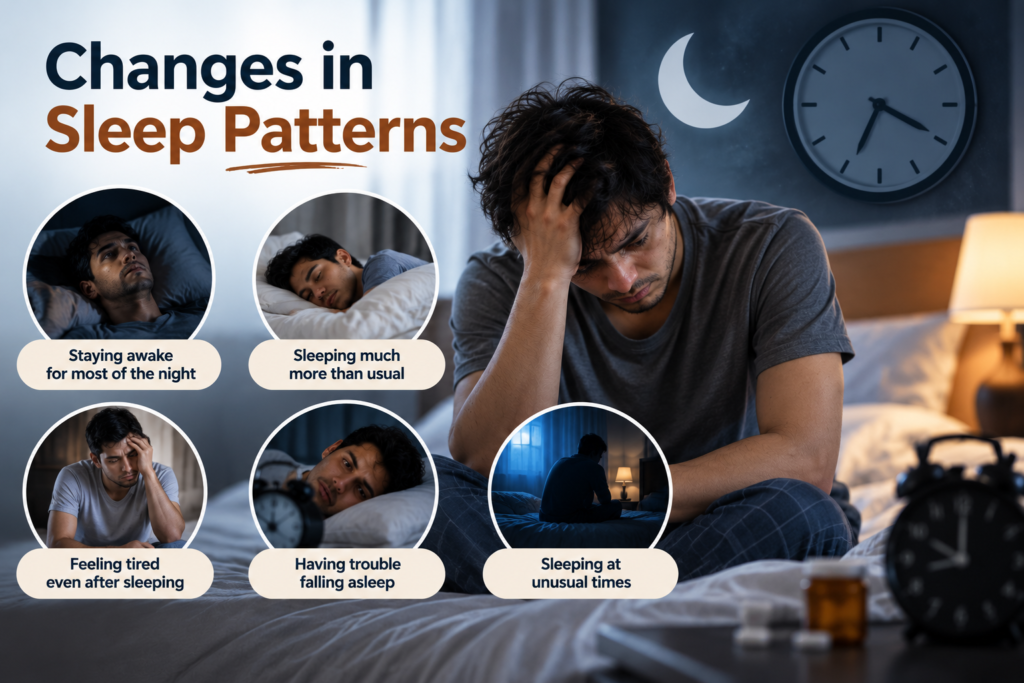
Drug use can affect the body’s natural sleep cycle.
Some substances may keep a person awake for long periods. Others may cause unusual sleepiness or make it difficult to stay awake during the day.
Common warning signs include:
- Staying awake for most of the night.
- Sleeping much more than usual.
- Feeling tired even after sleeping.
- Having trouble falling asleep.
- Sleeping at unusual times.
Sleep problems can also occur when a person reduces or stops using a substance.
Read more about how sleep patterns affect recovery after addiction treatment.
3. Loss of Interest in Daily Activities
A person struggling with drug addiction may slowly lose interest in activities they once enjoyed.
They may stop playing sports, meeting friends, following hobbies, or taking part in family events. Their attention may shift towards getting, using, or recovering from the effects of drugs.
For example, someone who once enjoyed spending time with family may begin avoiding family gatherings.
This loss of interest can affect their social life, work, studies, and overall well-being.
Learn how addiction can affect relationships in Anatta’s article on the impact of addiction on families and relationships.
4. Secretive Behaviour and Dishonesty
Some people hide their drug use because they fear judgment, conflict, or the consequences of their actions.
They may give unclear answers about where they have been or why they need money. They may also hide their activities from family members.
Possible warning signs include:
- Hiding where they go or whom they meet.
- Lying about spending money.
- Avoiding questions about their behaviour.
- Keeping their activities secret.
- Becoming defensive when someone expresses concern.
- One finds money missing that should have been there
- One might find remnants of substances or drug use paraphernalia like rolled up notes, pieces of aluminium foil, syringes, rubber tubings etc. ownership of which can be denied.
Secretive behaviour does not prove that a person has an addiction. However, repeated changes in behaviour combined with other warning signs may be a reason to seek help.
5. Strong Cravings for Drugs
A craving is a strong urge or desire to use a substance.
A person with a drug use disorder may think about drugs often, even when they want to focus on something else.
They may spend much of their time planning when or how to use drugs. These thoughts can affect their ability to concentrate on work, studies, and family responsibilities.
Cravings may become stronger during stressful situations or when a person encounters people, places, or activities linked to past drug use.
Strong cravings are an important warning sign because they can make it difficult to control drug use.
6. Needing More Drugs to Feel the Same Effect
This is known as tolerance.
Over time, a person’s body may respond less to the same amount of a substance. They may then take larger amounts or use it more often to feel the same effect.
Tolerance can increase the risk of harmful effects and overdose, especially when a person takes higher doses or mixes substances.
Important: Never increase a prescription drug dose to overcome tolerance. Speak with a qualified healthcare professional before making changes to prescribed medicines.
The effects can vary by substance. For example, you can learn more about the risks and warning signs of prescription drug abuse.
7. Poor Physical Health and Changes in Appearance
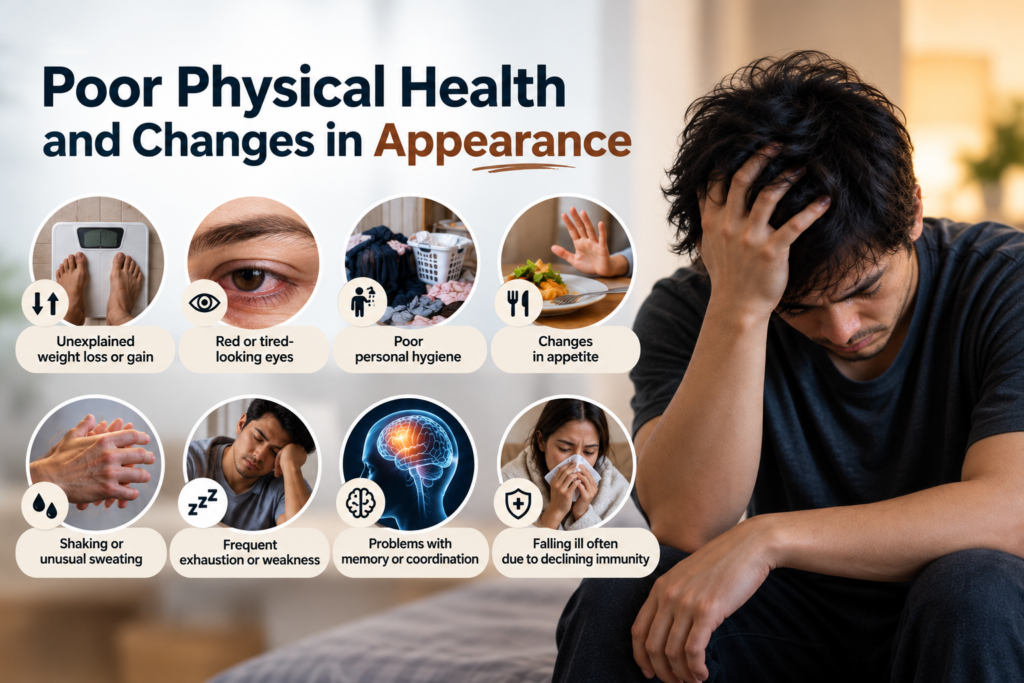
Drug addiction can affect physical health in many ways. The effects depend on the substance, the amount used, and the person’s overall health.
Possible warning signs include:
- Unexplained weight loss or gain.
- Red or tired-looking eyes.
- Poor personal hygiene.
- Changes in appetite.
- Shaking or unusual sweating.
- Frequent exhaustion or weakness.
- Problems with memory or coordination.
- Falling ill often due to declining immunity
Some substances can also affect the heart, lungs, liver, or nervous system.
Read more about the effects of drug addiction on physical and mental health.
These symptoms can have many causes. A medical assessment is important to understand what is happening and whether drug use is involved.
8. Problems at Work, School, or Home
Drug use can begin to affect a person’s ability to manage everyday responsibilities.
They may miss work, skip classes, forget important tasks, or struggle to complete simple duties. Their performance may decline, even if they were previously doing well.
Other signs may include:
- Missing appointments or deadlines.
- Poor concentration and memory.
- Neglecting family responsibilities.
- Repeated arguments with loved ones.
- Financial problems linked to drug use.
When drug use continues despite these problems, it may point to a substance use disorder.
9. Withdrawal Symptoms When Drug Use Stops
Withdrawal symptoms can occur when a person who has developed physical dependence reduces or stops using a substance.
Depending on the substance, symptoms may include:
- Anxiety or irritability.
- Sweating or shaking.
- Nausea or vomiting.
- Trouble sleeping.
- Severe Body aches.
- Abdominal cramps
- Diarrhoea or constipation
- Inability to eat
- Strong cravings and obsessive thoughts.
- Changes in mood.
Some withdrawal symptoms can be dangerous. Withdrawal from certain substances, including some sedatives, may cause seizures or other serious complications.
Do not assume that stopping suddenly is always safe. Seek medical advice before stopping regular drug use, especially if the substance is unknown or several substances are involved.
Read Anatta’s guide to signs that drug detoxification may be needed and learn more about detoxification and withdrawal management.
10. Continuing Drug Use Despite Harm
One of the strongest warning signs of drug addiction is continuing to use drugs even when they cause clear problems.
A person may know that drug use is affecting their health, relationships, or finances but still struggle to stop.
They may try to quit several times and return to using drugs. They may also give up activities or relationships that once mattered to them.
This does not mean the person does not care about their family or future. Addiction can affect the brain systems involved in reward, motivation, and self-control. It hijacks the person’s ability to focus on anything else but the craving to use the substance of choice.
Professional support, from an experiential addiction counsellor [i.e. somebody who has gone through addiction, is sober and clean, is professionally trained in addiction counselling Such a person can ] can help a person understand their behaviour and work towards recovery.
For practical guidance, read how to overcome drug addiction.
How to Recognise Drug Addiction in a Loved One
If you are worried about a family member or friend, look for changes over time rather than focusing on one unusual incident.
You may notice that the person:
- Has become distant from family and friends.
- Has sudden changes in sleep, mood, or appetite.
- Often asks for money without a clear reason.
- Money and valuables might be stolen if funds start running out.
- Has trouble managing work or studies.
- Uses drugs even after facing serious problems.
- Tries to stop using drugs but struggles to do so.
No single sign confirms drug addiction. A trained health professional can assess the person’s symptoms, drug use, and overall health.
Try to speak calmly and privately. Avoid blaming, threatening, or shaming the person. Let them know that you are concerned about their health and want to help them find support.
Family members can also learn how to provide support without harming their own well-being. Read Anatta’s guide on how to help a loved one with addiction without losing yourself.
When Should You Seek Professional Help?
It is a good idea to seek professional help when usage of drugs or abuse of prescription medication is discovered in loved ones, for by then the individual might already be addicted to them. Till addictive use, very often the person manages to hide the usage.
You do not need to wait until the problem becomes severe.
A doctor or addiction specialist can assess the person’s condition and suggest suitable care. For any kind of substance use, a residential rehabilitation program is best, as substance use is a sign of deeper emotional issues that needs to be assessed. If the individual has an identified addictive personality, then residential rehabilitations programs that are voluntary and primarily non-medical are ideal where withdrawals can be medically supervised till they subside.
Explore Anatta’s information about addiction treatment options and drug addiction rehabilitation.
When Is It a Medical Emergency?
Get emergency medical help if a person who may have used drugs:
- Has slow, irregular respiration, or has stopped breathing.
- Cannot be woken up.
- Has a seizure.
- Has severe chest pain.
- Becomes extremely confused or collapses.
Call your local emergency service immediately. In India, dial 112 for emergency assistance.
Do not leave the person alone or try to make them vomit. If an overdose is possible, tell emergency responders what you know about the substance and when it may have been taken.
How Is Drug Addiction Treated?
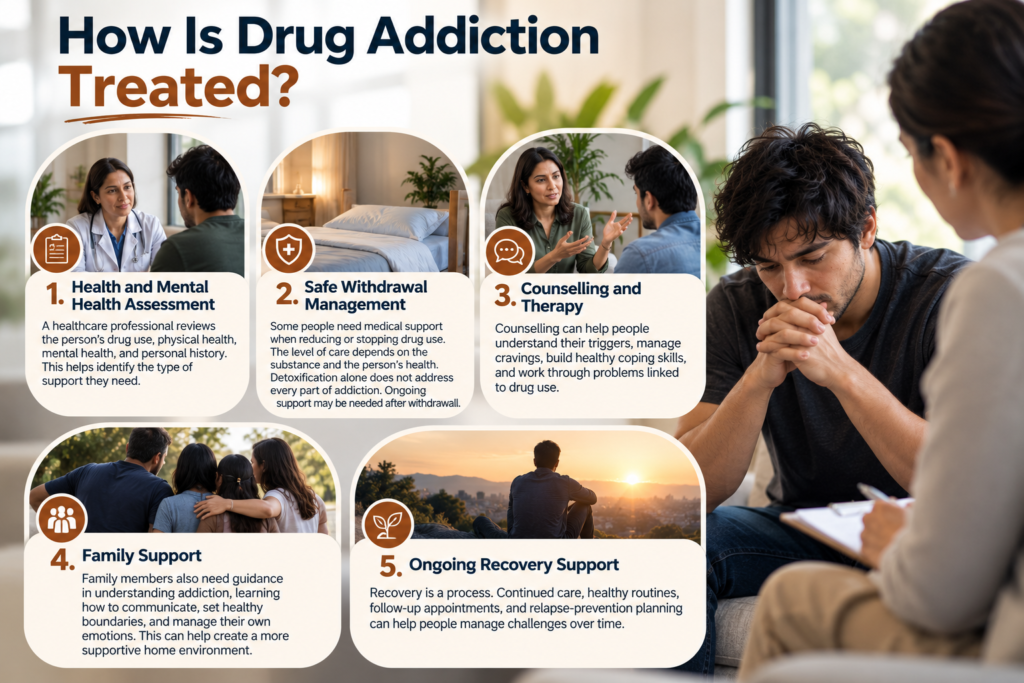
Drug addiction treatment should match the person’s health, needs, and type of substance use. For addiction to drugs/alcohol / prescription medications, treatment is ideally voluntary, residential rehabilitation care that is non-medical.
Residential Treatment may include the following steps.
1. Health and Mental Health Assessment
A healthcare professional reviews the person’s drug use, physical health, mental health, and personal history. This helps identify the type of support they need.
2. Safe Withdrawal Management
Some people need medical support when reducing or stopping drug use. The level of care depends on the substance and the person’s health.
Detoxification alone does not address every part of addiction. Ongoing support may be needed after withdrawal.
3. Counselling and Therapy
Counselling can help people understand their triggers, manage cravings, build healthy coping skills, and work through problems linked to drug use.
4. Family Support
Families and loved ones of the individual suffering from addiction / substance use disorders are impacted emotionally by the addictive use. They try to control the person’s using, can blame themselves or feel they are walking on egg shels around the individual. Spouses and children can lose their sense of identity in the bargain as their lives revolve aound the person actively using. Hence, they need equal counselling help to deal with their emotional issues and balance themselves.
Family members also need guidance in understanding the nature of the disease of addiction, learning how to communicate, set healthy boundaries, and support recovery can help create a more supportive home environment.
5. Ongoing Recovery Support
Recovery is a process. Continued care, healthy routines, follow-up appointments, and relapse-prevention planning can help people manage challenges over time.
Read more about relapse and relapse prevention to understand how ongoing support can help during recovery.
Anatta Humanversity offers information about its addiction recovery approach and available support. Visit the Anatta website to learn more about its services.
Treatment options should be reviewed carefully with qualified healthcare professionals.
Finding the Right Support for Drug Addiction Recovery
Recognising the signs of drug addiction is an important first step towards recovery. If drug use is affecting your health, relationships, work, or daily life, speaking with a qualified professional can help you understand the next steps.
The right treatment plan depends on the person’s needs, health, and level of support required a structured rehabilitation programme is the right solution.
For individuals and families exploring care options in Maharashtra, these resources may be helpful:
- Mumbai: Learn about the available care options at Anatta’s Rehabilitation Centre in Mumbai.
- Pune: Explore information about treatment and rehabilitation through Anatta’s Drug Rehabilitation Centre in Pune.
Choosing the right support early can help people take informed steps towards recovery. There is no need to wait until the problem becomes severe before seeking professional guidance.
Concerned about drug addiction in yourself or someone you love?
Reach out to Anatta Humanversity to discuss your concerns and explore suitable treatment options. A conversation with the team can help you understand the available support and decide on the next step towards recovery.
Visit Anatta Humanversity to learn more.
Frequently Asked Questions
1. What are the first signs of drug addiction?
Early signs may include strong cravings, mood changes, changes in sleep, loss of interest in daily activities, and difficulty controlling drug use. The signs vary depending on the substance and the person.
2. What are the 10 signs and symptoms of drug addiction?
The 10 common signs and symptoms are:
- Sudden mood and behaviour changes.
- Changes in sleep patterns.
- Loss of interest in daily activities.
- Secretive behaviour and dishonesty.
- Strong cravings for drugs.
- Needing more drugs to feel the same effect.
- Poor physical health and changes in appearance.
- Problems at work, school, or home.
- Withdrawal symptoms when drug use stops.
- Continuing drug use despite harm.
These signs can suggest a problem, but they do not confirm a diagnosis.
3. Can someone be addicted to drugs without showing physical signs?
Yes. A person may have a drug use disorder without obvious physical changes. Strong cravings, loss of control, repeated failed attempts to stop, and problems in daily life may be more noticeable than physical symptoms.
4. How can you tell if someone is hiding drug use?
Possible warning signs include unexplained changes in spending, secretive behaviour, unusual sleep patterns, frequent absences, or becoming defensive when asked about drug use. However, these signs can have other causes and should not be treated as proof of addiction.
5. What happens to the body when someone is addicted to drugs?
The effects depend on the substance and the pattern of use. Drug addiction may affect sleep, appetite, memory, mood, heart health, breathing, and other body functions. Some substances also increase the risk of overdose and serious health problems.
6. How does drug addiction affect mental health?
Drug addiction can affect mood, memory, concentration, and decision-making. Some people may experience anxiety, depression, paranoia, or other mental health symptoms. Mental health conditions can also occur before or alongside drug addiction, so both may need assessment and care.
7. Can a person recover from drug addiction?
Yes. Many people improve with suitable treatment and ongoing support. Recovery may include counselling, medical care, family support, and changes in daily habits. The right plan depends on the person’s needs and health.
8. When should someone go to a drug rehabilitation centre?
Consider professional assessment when a person cannot control their drug use, has repeated attempts to stop, experiences withdrawal symptoms, or faces serious problems in daily life. A healthcare professional can help determine the right residential rehabilitation care.
9. Is drug addiction a disease or a bad habit?
Drug addiction is a recognised health condition, not simply a bad habit or a lack of willpower. It can affect brain function and behaviour. With suitable care and support, people can work towards recovery.
10. How can family members help someone with drug addiction?
Family members can offer calm, non-judgmental support, encourage a professional assessment, and learn about treatment options. They should also protect their own well-being and seek guidance when needed. Avoid shaming or trying to manage dangerous withdrawal without medical help.